
Ancient Thera: Visiting the Mountaintop Ruins Above Perissa and Kamari

Ancient Thera is not a single temple or a fenced monument but the remains of an entire Greco-Roman town, stretched along the spine of the Mesa Vouno ridge roughly 370 metres above the sea. The black-sand village of Perissa sits below one flank and Kamari below the other, which is why the same site is described as being above both.
The planning detail that catches most people is the clock. The site keeps short daytime hours and closes on Wednesdays in summer, with last entry well before the gate shuts, so a late-afternoon climb from the beach can end at a locked entrance. Decide your route and your start time together before you set out, and if you are weighing the ridge against the island's other sights, this overview of things to do in Santorini helps you slot it into your days.
Quick Answer: What Ancient Thera Is and Where It Sits
Ancient Thera occupies the top of Mesa Vouno, the long ridge that rises directly behind Perissa and drops toward Kamari on the far side. The ancient city was built along this naturally defensible spine, so the ruins run lengthwise rather than clustering in a compact square.
Because the ridge divides the two villages, your approach shapes your day. Walkers climb from either Perissa or Kamari, while drivers must loop around the mountain to reach the entrance road. There is no shortcut road on the Perissa side.
Allow for the site being a town rather than a viewpoint: the walk along the ridge and back is the core of the visit, and the climb or drive is a separate cost in time. Treat the outing as a half day rather than a quick stop between beach hours.
Where Ancient Thera Is: The Ridge Between Perissa and Kamari
The site sits on the summit of Mesa Vouno on the south-eastern cape of Santorini, part of the island's pre-volcanic core. From the top you look down on Perissa's black sand on one side and Kamari on the other, with the Aegean beyond.
Both villages make sensible bases for a visit, but they are not interchangeable. Perissa gives you the shortest, steepest walk; Kamari gives you the road and the gentler footpath. Getting between the two villages without a car is a separate problem worth solving the day before, and our Santorini Neighborhoods guide covers how each area works as a base.
Walking Up From Perissa: Short, Steep and Shadeless
The Perissa path begins at the northern end of the village, where the beach meets the base of the rock, and switchbacks up the west face to the Sellada saddle. It gains around 350 metres in roughly 45 to 60 minutes.
This is a hike rather than a stroll. Expect loose rock, no shade and no water points on the way, and wear shoes with grip rather than sandals. The west face is in shadow early in the day, which makes a morning start more comfortable than midday.
The reward for the steeper line is the view opening up behind you as you climb. Many walkers go up from Perissa and descend the gentler Kamari side, which means arranging your return transport before you start.
Walking Up From Kamari: Longer but Gentler
From Kamari the approach follows the line of the road for about 3 km and takes roughly an hour. It is longer than the Perissa path but easier underfoot, which suits anyone who wants the ruins without the loose-rock scramble.
If you are staying in Kamari and plan to walk both ways, budget the climb and descent as a chunk of your day rather than an add-on. Carry water for the upper section, where there is little shade and no café inside the site.
Getting There by Road: The Loop via Kamari
There is no drivable road up from Perissa, so cars, quads and taxis go round the coast to Kamari and then climb a narrow switchback road to the Sellada saddle, about 17 km and 25 to 30 minutes in total. From the saddle it is a short walk to the entrance.
Parking near the gate is limited, with more space at the saddle below, so arriving early matters in summer. A seasonal shuttle has run up from Kamari, but no operator publishes a timetable, so ask locally and do not build your day around it.
Tickets: Single Entry or the Three-Day Combined Ticket
Published 2026 information lists a single full ticket at €10 and a €15 combined ticket valid for three days, covering one entry each to Ancient Thera, Akrotiri and the Museum of Prehistoric Thera in Fira. Under-18s and EU citizens under 25 enter free with ID, and some groups pay a reduced rate.
The combined ticket only pays off if you genuinely plan to see the other two sites within three days; a single visit to the ridge does not need it. A handful of free-entry days also apply through the year, and the booth is the place to confirm what covers your date.
Bring cash as a backup for the booth, and carry ID if you intend to claim a free or reduced category. State-site fees were revised recently and can change again, so treat quoted figures as current rather than permanent.
Opening Hours and Closures: The Wednesday Trap
From 1 April to 31 October the site is open 08:30 to 15:30 and closed on Wednesdays, with last entry around 15:00. Note that this is Wednesday, not the Tuesday closure many Greek state sites keep, so check the weekday before you commit.
Outside summer the pattern narrows. In November the site opens Friday to Sunday only, and from December to February visits are by appointment through the Ephorate of Antiquities of the Cyclades. A walker leaving Perissa at 14:15 can reach a gate that has stopped admitting people, so start up well before mid-afternoon.
What You See at the Top
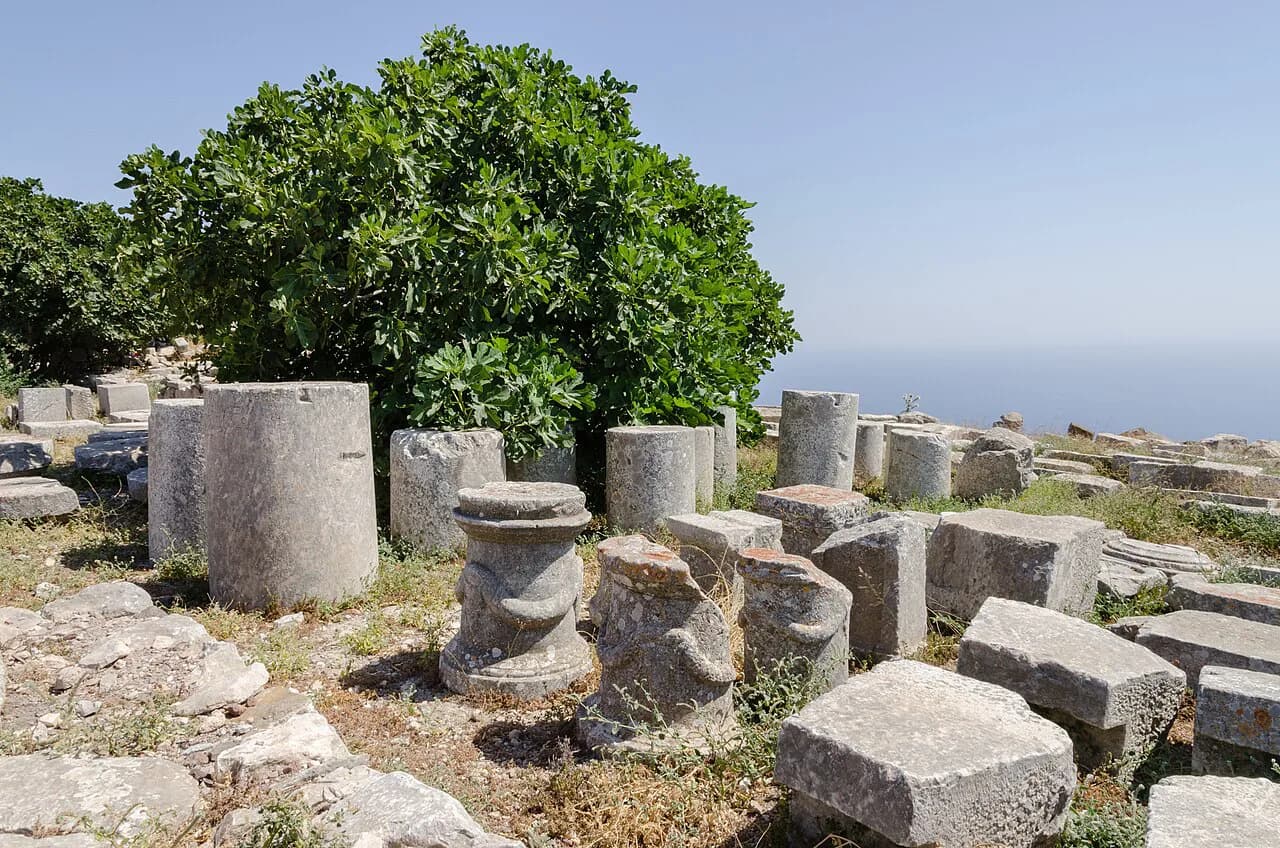
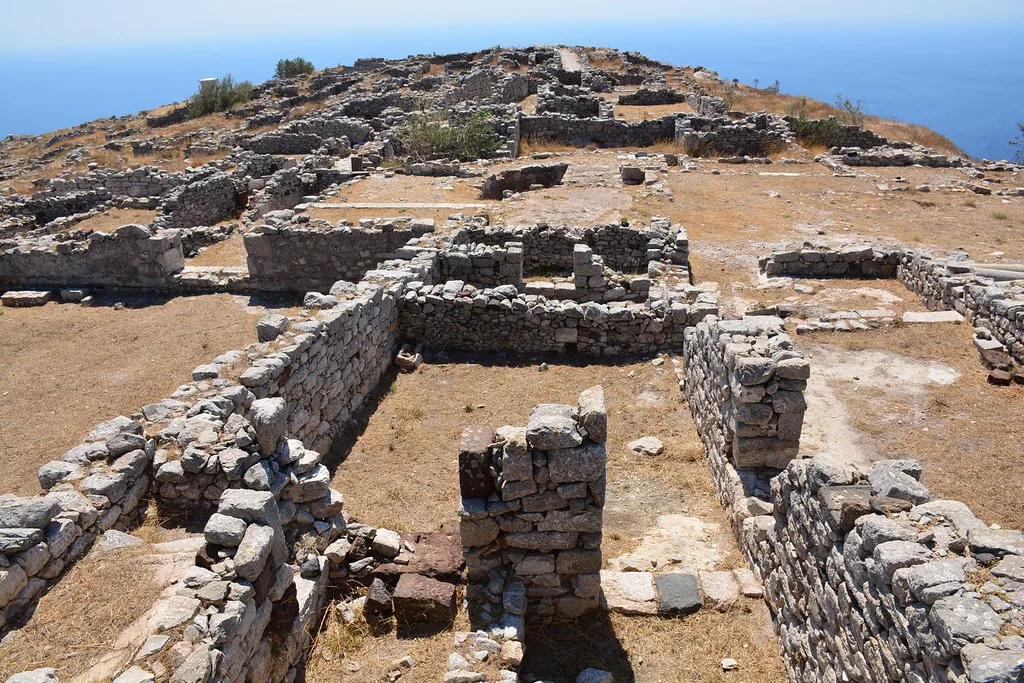
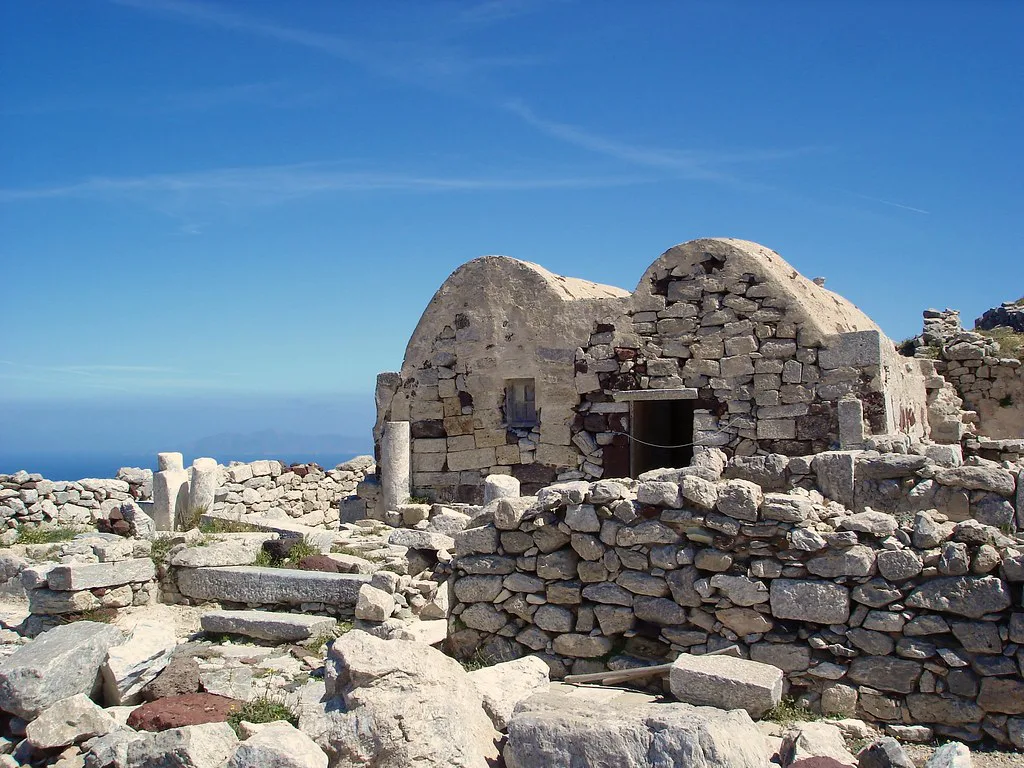
The ruins line the ridge along a long processional street, flanked by the foundations of houses, temples, the agora and cisterns. Rock-cut inscriptions survive around the sanctuary of Apollo Karneios and the Terrace of the Festivals, including some of the earliest alphabetic Greek writing.
The theatre and the temples give the site its structural set pieces, but the continuous street and the views down to both villages are what make the visit distinctive. The Terrace of the Festivals is the great viewpoint, where youths once danced for Apollo.
Because the remains spread along the rock rather than sitting in one courtyard, you cover ground steadily rather than circling a single monument. That has a bearing on timing, especially if you still have to descend before the gate closes.
A Short History of the City on the Ridge
Ancient Thera was founded by Dorian settlers from Sparta, traditionally in the 9th century BCE, under a leader named Theras who gave the city and the island their name. It was built up through the Hellenistic and Roman periods, most spectacularly when the Ptolemies of Egypt used it as a naval base for the Aegean in the 3rd century BCE.
Under the Ptolemies much of the town was rebuilt on a grid for the fleet's officers, and cults of Egyptian gods such as Isis and Serapis came with them. The city occupied the ridge for over a thousand years, which is why excavations have turned up houses, an agora, temples, cisterns and inscriptions rather than a single ceremonial centre.
How Much Time to Allow
Allow one and a half to two hours on the ridge to walk the full spine and back. Add the climb, roughly 45 to 60 minutes from Perissa or about an hour from Kamari, or the 25 to 30 minute drive via Kamari, and the outing fills a half day.
If you are combining the ruins with a beach afternoon, do the site first and the beach afterwards. The 15:30 close with last entry around 15:00 makes the reverse order risky, particularly for walkers coming up from Perissa.
What to Bring and What to Expect
Sturdy shoes, at least a litre of water each and sun protection are the basics for the ridge, which has almost no shade and no water supply on the path or inside the site. There is no café within the ruins; a small snack stop below the entrance should not be counted on being open.
Parking near the entrance is scarce in high season, and the narrow approach road rewards an early arrival. Wind on the exposed ridge is part of the experience, so a light layer helps even on a warm day.
Check the day and the closing time before you set off, either at the gate, through the Ephorate, or by consulting the Santorini Attractions: 7 Visitor Guides for how this site fits alongside the island's other stops.
Nearby After Your Visit: Perissa and Kamari
Both villages below the ridge have long black-sand beaches backed by tavernas, which makes either a natural place to eat after the descent. Compare menus on foot and look for places busy with locals rather than the first table facing the sand.
The trade-off is the usual one on Santorini: a seafront table buys the view, while a back-street taverna usually gives more food for the same money. In Perissa the beachfront strip is the obvious choice for convenience; in Kamari the seafront promenade works the same way.
For a different archaeological day, the Akrotiri Archaeological Site, Santorini is the island's other major excavation, while the village of Pyrgos Kallistis inland offers a quieter base away from the beach strips. If you are weighing the ridge against the island's headline sights, this overview of the things to do in Santorini helps you compare them, and our guide to Santorini Neighborhoods covers which base suits each kind of day.
Common Mistakes to Avoid
The three reliable ways to waste a trip are leaving Perissa too late to clear last entry, assuming a road exists on the Perissa side, and turning up on a Wednesday in summer. Each is easily checked the evening before.
A fourth is under-budgeting the walk itself: the Perissa path is steep and loose, so trainers with tread beat flip-flops, and the descent takes concentration when your legs are tired. Plan the route down as carefully as the route up.
Plan Your Visit
Ancient Thera rewards a little planning more than most Santorini stops. Fix your route first, on foot from Perissa or Kamari or by road via Kamari, then set your start time backwards from a last entry around 15:00 and a Wednesday closure in summer. If you are weighing the ridge against the island's other headline sights, this overview of the things to do in Santorini helps you slot it in.
Carry water, wear proper shoes and allow a half day rather than an hour. If you want the wider context of what else the island holds, start with the Santorini Attractions: 7 Visitor Guides and build the ridge into a day that also makes sense on the ground.
Explore more Santorini sauna guides
Frequently Asked Questions
What is Ancient Thera?
Ancient Thera is the excavated Greco-Roman city on the Mesa Vouno ridge above Perissa and Kamari in Santorini. It was founded by Dorian settlers and built up through the Hellenistic and Roman periods, and its remains include a processional street, house and temple foundations, an agora, cisterns and rock-cut inscriptions.
How much does it cost to enter Ancient Thera?
Published 2026 information lists a single full ticket and a three-day combined ticket that also covers Akrotiri and the Museum of Prehistoric Thera in Fira, with free entry for under-18s and EU citizens under 25 and reduced rates for some groups. Fees for Greek state sites have been revised recently, so confirm the current price at the booth or with the Ephorate of Antiquities of the Cyclades before you rely on a figure.
What are the opening hours of Ancient Thera?
In summer the site opens in the morning and closes in the mid-afternoon, with last entry roughly half an hour before closing, and it is shut on Wednesdays. In November it opens at weekends only, and from December to February visits are by appointment through the Ephorate of Antiquities of the Cyclades. Check the day and time before setting out, since the early close catches walkers out.
Is Ancient Thera closed on Wednesdays?
Yes, during the summer season the site closes on Wednesdays rather than the Tuesday that many Greek state sites take. That makes Wednesday the one day to avoid if the ruins are the purpose of your day, and it is worth confirming at the gate or through the Ephorate if you are visiting at the edges of the season.
How do you get to Ancient Thera from Perissa?
On foot, a steep path starts at the northern end of Perissa where the beach meets the base of the rock and climbs around 350 metres in roughly 45 to 60 minutes. There is no drivable road from the Perissa side, so drivers must loop round the coast to Kamari and up the switchback road from there.
Can you drive to Ancient Thera?
Yes, but only via Kamari. The road runs along the coast to Kamari and then climbs a narrow switchback to the Sellada saddle, a trip of about 17 km and 25 to 30 minutes, with parking near the entrance limited and more space at the saddle below. There is no road up from Perissa.
How long does it take to walk up to Ancient Thera?
The Perissa path takes about 45 to 60 minutes and is steep with loose rock and no shade. The Kamari approach is longer, around 3 km and roughly an hour, but gentler underfoot, which makes it the better choice if you prefer an easier gradient over a shorter climb.
How long should you spend at Ancient Thera?
Allow one and a half to two hours on the ridge to walk the full length of the ruins and back. Add the climb or the drive, and the visit becomes a half day, so it is best paired with a beach afternoon rather than squeezed between other stops.