
Nafplio Old Town: A Practical Guide to the Historic Quarter
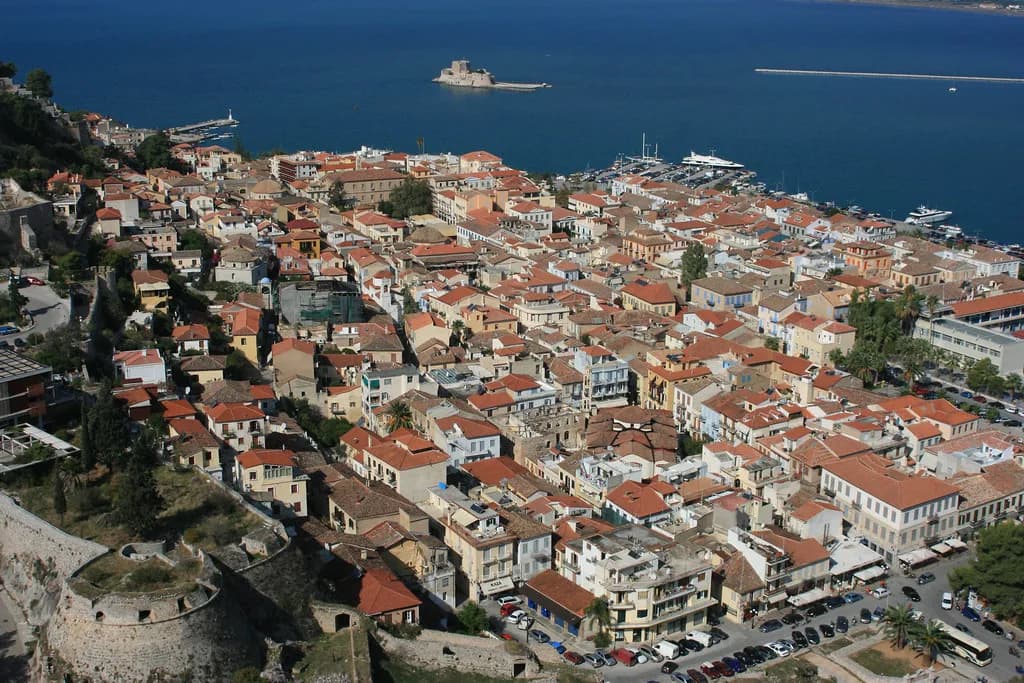
Nafplio Old Town is the historic core of a small Peloponnese town that served as Greece's first capital in the early 1830s, and the quarter still reads as a layered mix of Venetian, Ottoman and neoclassical building. It sits below the Akronafplia ridge, faces the Argolic Gulf, and has the Palamidi fortress on the hill above and the Bourtzi fort on an islet just offshore. The whole district is small enough to cross on foot, which is the single most useful thing to know before you plan a day here.
Plan around three anchors: Syntagma Square as the social heart, the long main street locals still call the Great Road as the spine, and the waterfront as the place where the fortresses are best seen together. Everything else — churches, museums, shops, tavernas — hangs off those. This guide stays inside the Old Town and treats Palamidi, Bourtzi and the wider Argolid as context rather than a city-wide itinerary.
What the Old Town Is and Where It Sits
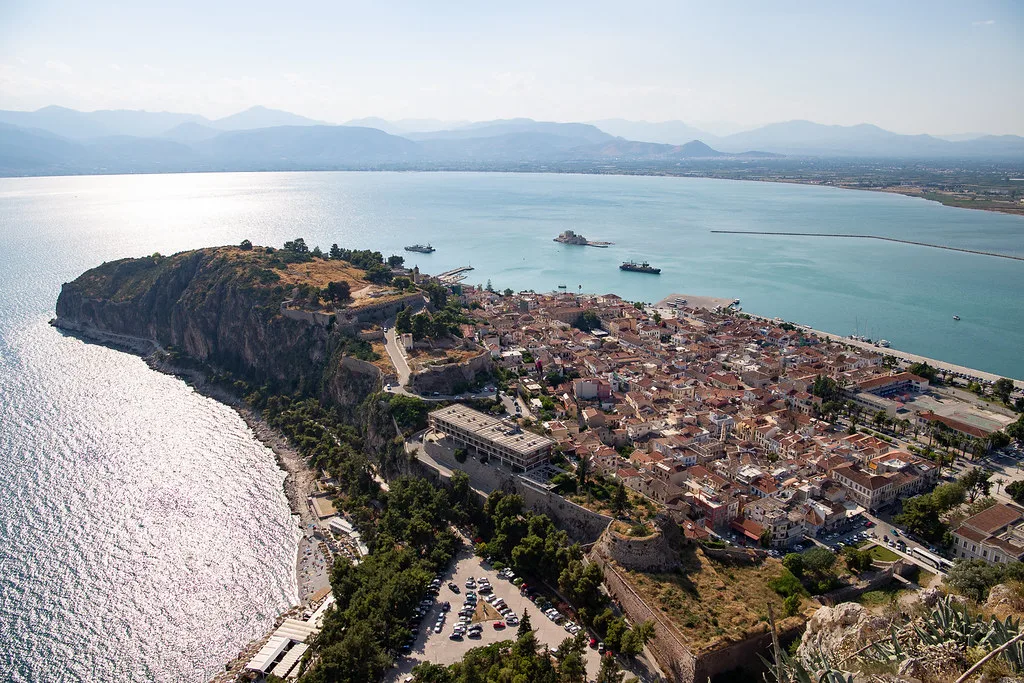
The Old Town occupies the flat-to-sloping ground between the water and the steep hill of Akronafplia, Nafplio's oldest fortress, which rises directly at the top of the quarter. Above and behind that ridge stands Palamidi, the large Venetian-era fortification that dominates views from almost everywhere in town, while the small Bourtzi fortress sits in the Argolic Gulf close to the shore. Together they frame the district: you are always aware of stone above you and water in front.
The street plan was shaped for defense rather than convenience, so lanes twist, narrow and occasionally end in stairs. That is the charm and also the practical catch: addresses are less useful than landmarks, and a wrong turn usually costs two minutes rather than a detour. Use Syntagma Square and the main artery as reference points and let the alleys do the rest.
Who the Old Town Suits, and Who It Doesn't
This quarter rewards walkers, couples and slow travelers who like unhurried mornings, long coffees and an evening drink a few steps from the room. It is compact, atmospheric and easy to navigate on instinct, and the concentration of tavernas, cafés and small museums means you rarely need transport inside the district. If your idea of a good day is strolling, browsing and eating within a ten-minute radius, the Old Town is the right base. For a broader picture of what a historic Greek quarter offers, the Corfu Old Town Guide covers the same decision at a very different scale.
It suits drivers less well. Much of the core is pedestrian, so a car becomes something you park and forget, and anyone who wants a guaranteed space outside the door should look at accommodation on the edge of the quarter instead. Travelers chasing late-night clubs will also find the Old Town quiet by comparison with bigger Greek cities. The trade-off is deliberate: charm and walkability in exchange for a little friction with vehicles and a low-key night.
Orientation: Squares, Streets and the Compact Scale
Syntagma Square is the place to start, the paved heart where locals take morning coffee and children play in the evening. South of it stands the Vouleftiko, the gray stone building the Turks built in 1730 and Greeks later used as their first parliament. From the square, most of the main sights sit within roughly a fifteen-minute walk, which is the usual guidance for the quarter rather than a strict rule.
The Great Road — now named Vasileos Konstantinou — is the main artery through the Old Town and still carries its old nickname among locals. Stadiou Street works as the commercial thread linking the square with the waterfront, useful for orientation and for shops and cafés, while Staikopoulou Street holds the densest run of small shops. Learn those three lines and the rest of the district becomes a set of pleasant detours between them.
The town park, split in two by the Great Road into Kolokotronis Park on one side and Railway Park on the other, gives you a green pause and a landmark for finding your way back. The Three Admirals' Square, named for the commanders who fought on the Greek side, is another small node worth locating early. Between these points, the Old Town is short enough that you will pass the same corner twice and stop minding.
What to See Inside the Quarter
The church of Agios Spyridon carries the heaviest historical weight in the district: Ioannis Kapodistrias, Greece's first governor, was assassinated at its doorway in 1831, and the bullet mark is still pointed out. Nearby, the Archaeological Museum occupies a former Venetian warehouse and displays finds from the surrounding Argolid region, giving context to the fortresses and the plain beyond. Both are short stops that fit naturally into a walk rather than a separate excursion.
Two smaller museums round out the indoor options: the Peloponnesian Folklore Foundation Museum, housed in a neoclassical mansion and focused on costumes, textiles and domestic life, and the Komboloi Museum, devoted to worry beads — komboloi are stringed beads Greeks handle as a habit, a bit like a fidget toy with social history attached. A war museum and a national gallery annex also operate in the quarter. Hours and admission at each vary by season, so it is worth asking at the door or at your hotel before building a day around one.
Psaromachalas, the small pocket just below the Nafplia Palace Hotel and outside Akronafplia Castle, is described as the first place people settled in this area and still feels like a corner rather than a thoroughfare. Wander it for the architecture and the slope rather than for a specific address. The same applies to the quarter's many small churches, several of which reward a glance inside when the door is open.
For a wider menu of sights, including the fortresses and the waterfront, use a dedicated list of things to do in nafplio so you are not trying to hold it all in one walk. The Old Town is best treated as one chapter of a larger Nafplio stay, not the whole book.
The Fortresses Above and Beside It
Palamidi is reached either by the famous stepped stairway or by a road, and the climb is typically quoted at 30 to 45 minutes with breaks, so early morning or late afternoon is the sensible window in summer. The interior of the fortress is a separate ticketed visit from the climb itself, and the two are not bundled, so buy the fortress ticket at the entrance if you intend to go inside. Walkers should treat the steps as a small hike, with water and shoes that grip.
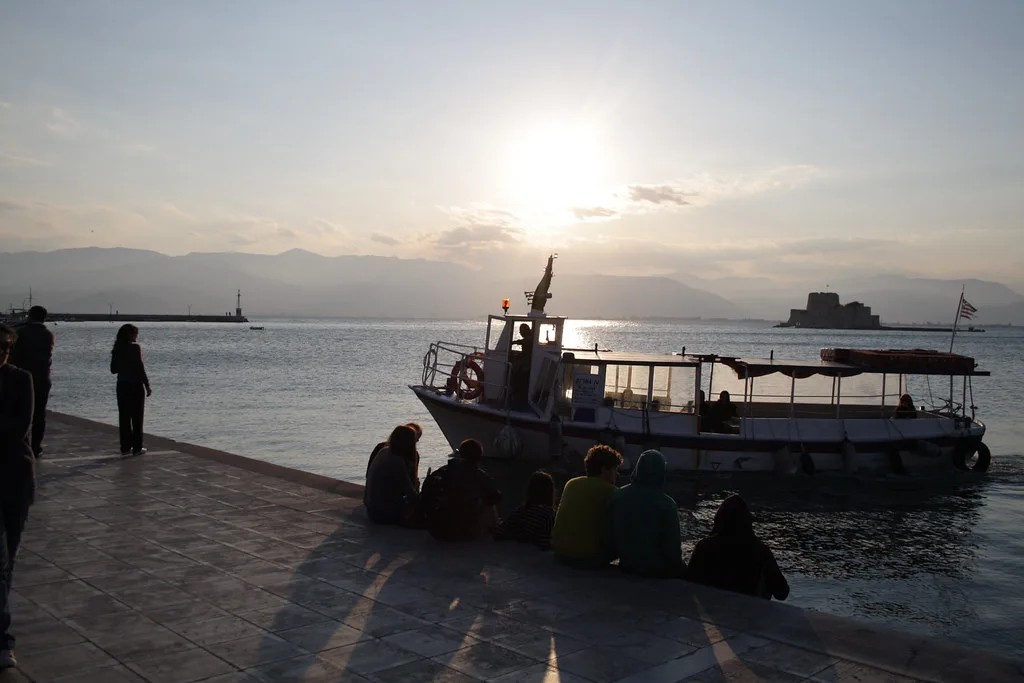
Akronafplia is the easier proposition: the oldest castle sits at the top of the Old Town and connects to it by steep pathways through residential lanes, so you can walk up without committing to a long climb. Bourtzi, built by the Venetians in 1471 on its islet, is generally appreciated from the waterfront rather than visited, which makes it a five-minute pause on an evening stroll. Treat these as context for the quarter, and check boat or access arrangements locally if you want to go further.
Eating in the Old Town: What to Order
Tavernas here often occupy historic buildings, with courtyard tables in summer and warmer rooms in cooler months. The local larder shows up in a handful of names worth knowing before you sit down. Hilopites are thin squares of egg pasta, usually served with rooster or seafood; gogges are small handmade shell-shaped pasta associated with the region; and boureki is a layered pie of zucchini and potato, sometimes with cheese. Order one pasta and one pie between two people and you have the shape of a local meal.
Seafood is the other pillar, with fresh anchovies prepared several ways and fish from the Argolic Gulf on offer. Cheeses from nearby mountain villages, honey from the surrounding hills and citrus from Argolid orchards appear on menus and in shops. Prices vary by season and by how close the table is to a view, so read the menu board before sitting down — that is the reliable check.
Nemea wines from the nearby wine region are the natural pairing, and tsipouro, a clear grape spirit usually served in small glasses, or ouzo, an anise-flavored aperitif, make good pre-dinner stops. An evening here tends to be a slow sequence: a drink on a square, a table in a side street, a walk to the water. If you want a specific restaurant shortlist rather than types, the harbour side offers a different balance of view and value.
Cash still matters for small tavernas and shops, even as cards become more common, and ATMs in the quarter make topping up easy. Keep a little cash for the bakery-and-coffee end of the day.
Where to Stay in the Old Town
Most accommodation in the quarter is boutique scale, often in converted neoclassical mansions with period details in common areas and modern fittings in rooms. Rooftop terraces with views over the terracotta roofs toward the fortresses or the sea are a common selling point. Book well ahead for summer and holiday weekends, and ask specifically for a room away from bars if you sleep lightly.
Ask three practical questions before confirming: whether the property has parking or an arrangement with a nearby lot, whether the room has air conditioning, and whether breakfast is included and where it is served. Higher floors usually mean better views and more stairs, which matters if you are carrying luggage through pedestrian lanes. Hotels with a car park on the edge of the district can be a better fit for drivers than an address in the middle.
Getting There and Getting Around
By road, Nafplio sits roughly 138 kilometers from Athens, about two hours by car on the modern highway. KTEL buses run from Athens with several daily departures, and private transfers or organized tours are alternatives if you would rather not drive. Distances are approximate and schedules change, so check the KTEL Argolidas timetable for the day you travel.
Once inside the Old Town, walking is the whole method. The core is pedestrian, sights cluster within about fifteen minutes of Syntagma Square, and the waterfront promenade gives an easy orientation route with the town rising behind you. Bring comfortable shoes for cobbles and stairs, and plan the fortress climbs for the cooler ends of the day.
Practical Points and Seasonal Rhythms
Public restrooms are limited, so cafés and restaurants effectively serve as the practical option when you are a paying customer. ATMs are plentiful, but a little cash helps in small establishments. In winter, some restaurants and hotels close for the season or for renovation, so check directly with the specific business before a winter trip.
Summer brings heat and crowds in July and August, making early mornings and evenings the better walking hours; spring and autumn give milder conditions and a livelier local rhythm. Winter is quieter and cheaper in feel, with cozy tavernas and fewer open doors. There is a second reason to confirm before booking in the low season: opening patterns shift, and only the business itself can confirm its dates.
Pairing the Old Town With the Region
Mycenae, the Bronze Age citadel with the Lion Gate, lies about 25 kilometers away, and Epidaurus with its ancient theater is another easy half-day. Both work as morning outings with an afternoon back in the Old Town. The 25-kilometer figure is approximate; allow for the actual route and traffic.
Arvanitia Beach is reachable on foot from the quarter along the coastal path, which makes a swim-and-lunch combination possible without a car. For a longer beach day, look further along the coast. If you want to compare coastal neighborhoods before choosing a base, the guides to arvanitia nafplio and karathona nafplio set out the trade-offs between walking distance and sand.
Plan Your Visit
Treat the Old Town as a district to settle into rather than a checklist to clear. Start at Syntagma Square, learn the Great Road and Stadiou as your reference lines, and let the alleys between them supply the day. Save the fortress climbs for the cooler hours, and keep one evening free for a slow table and a walk to the water.
If you are comparing bases around town, the wider guide to Nafplio Neighborhoods: 5 Area Guides puts the Old Town alongside the harbour, Arvanitia and the hillside districts so you can match the area to the kind of trip you are taking.
Explore more Nafplio sauna guides
Frequently Asked Questions
What should I not miss in Nafplio Old Town?
Prioritize Syntagma Square and the Vouleftiko beside it, the church of Agios Spyridon with its mark from the 1831 assassination of Kapodistrias, and one museum — the Archaeological Museum in the old Venetian warehouse or the Folklore Foundation Museum. Add the walk along the main street, Vasileos Konstantinou, and a look at Palamidi and Bourtzi from the waterfront. Most of these sit within about fifteen minutes of the square.
Is Nafplio Old Town very touristy?
It is popular, especially in July and August and on holiday weekends, but it remains a lived-in quarter with residents, schools and everyday shops rather than a reconstructed attraction. Crowds concentrate in the squares and along the main streets, and side lanes thin out quickly. Spring and autumn give a calmer experience, and winter is quieter still, though some businesses close for the season.
How long does it take to walk around Nafplio Old Town?
Allow two to three hours to cover the main squares, streets and one or two museums at an easy pace, and a full day if you add a fortress and a proper meal. The quarter is compact, with most sights within about fifteen minutes of Syntagma Square. The climb to Palamidi is a separate effort, typically quoted at 30 to 45 minutes.
What food is Nafplio known for?
Look for hilopites, thin egg pasta usually served with rooster or seafood; gogges, small handmade shell-shaped pasta; and boureki, a layered zucchini and potato pie. Fresh anchovies and other fish from the Argolic Gulf are common, alongside cheeses from nearby mountain villages, local honey and Argolid citrus. Nemea wines and tsipouro or ouzo are the usual drinks.
Should I stay inside Nafplio Old Town or outside it?
Staying inside gives you atmosphere and walkability, with boutique hotels in converted mansions and everything within a short stroll. The trade-off is parking and noise: much of the core is pedestrian, and rooms above bars can be lively. Drivers and light sleepers may prefer the edge of the quarter, where parking is easier and rooms are quieter.
How do I get from Athens to Nafplio Old Town?
By car it is roughly 138 kilometers and about two hours on the modern highway. KTEL buses run from Athens with several daily departures, and private transfers or organized tours are alternatives. Once you arrive, the Old Town is best covered on foot. Schedules change, so check the operator's timetable for your travel date.
Is it worth climbing the 999 steps to Palamidi?
The climb is typically quoted at 30 to 45 minutes and rewards you with views over the rooftops and the Argolic Gulf. The fortress interior is a separate ticketed visit, so confirm the arrangement at the entrance. If fitness or summer heat is a concern, drive up and walk down, or visit early in the morning or late in the day.
Do restaurants in Nafplio close in winter?
Some restaurants and hotels close for the season or for renovation between roughly November and spring, though the town stays open for residents. No central list publishes current dates, so confirm opening dates with the specific business or your accommodation before a winter trip. Spring and autumn generally offer the fullest choice.