
Nafplio Harbour: The Port, the Promenade and the Old Town Behind It
Nafplio harbour is the flat, open seam between the water and the hill town above it: a quay and promenade where boats moor, drivers park and everyone eventually walks. On one side is the Argolic Gulf with the fortified islet of Bourtzi sitting in it; on the other, one block inland, the lanes of the Old Town climb toward Syntagma Square. The whole port area is small enough to cross on foot in minutes, which is exactly why it works as a base.
This guide stays inside that district rather than ranging across the city. It covers what the waterfront is actually for, how the harbour car park shapes a driving visit, how to split eating between the sea-view strip and the cheaper back streets, and how far you walk to reach the beaches south of town.
What the Harbour Area Is and Where It Sits
Treat the port as two parallel strips. The first is the quay itself, where vessels tie up along the waterfront between the Old Town and the harbour and where the road opens into a large parking area. The second is Bouboulinas, the waterfront avenue that runs along the water and is lined with cafes, moored boats and the sea on one side and the town's historic buildings on the other.
Just inland sits the Old Town, whose commercial spine is Stadiou Street, a pedestrian thoroughfare linking Syntagma Square down to the waterfront. That short axis is your orientation tool: find Stadiou and you can always walk downhill to the sea or uphill to the square. The town served as Greece's first capital from 1829 to 1834, which is why the buildings behind the port carry neoclassical detail rather than resort concrete.
Character and Who the Port Area Suits
The harbour suits walkers, early risers and families who want the sea immediately in front of them and a compact, pedestrian-friendly grid behind. It also suits anyone arriving without a car, because buses and the town centre meet here. Days begin with joggers and swimmers heading around the headland; evenings belong to strollers along the quay.
It suits beach-first travellers less well. The nearest swimming is not on the harbour front itself but a short walk around the Akronafplia headland at Arvanitia, and the long sandy beach at Karathona is a further hike or a drive. Likewise, light sleepers should ask for a room away from the bar strip, since the waterfront and square stay lively late into the night.
Bourtzi: The Fortified Islet in the Harbour
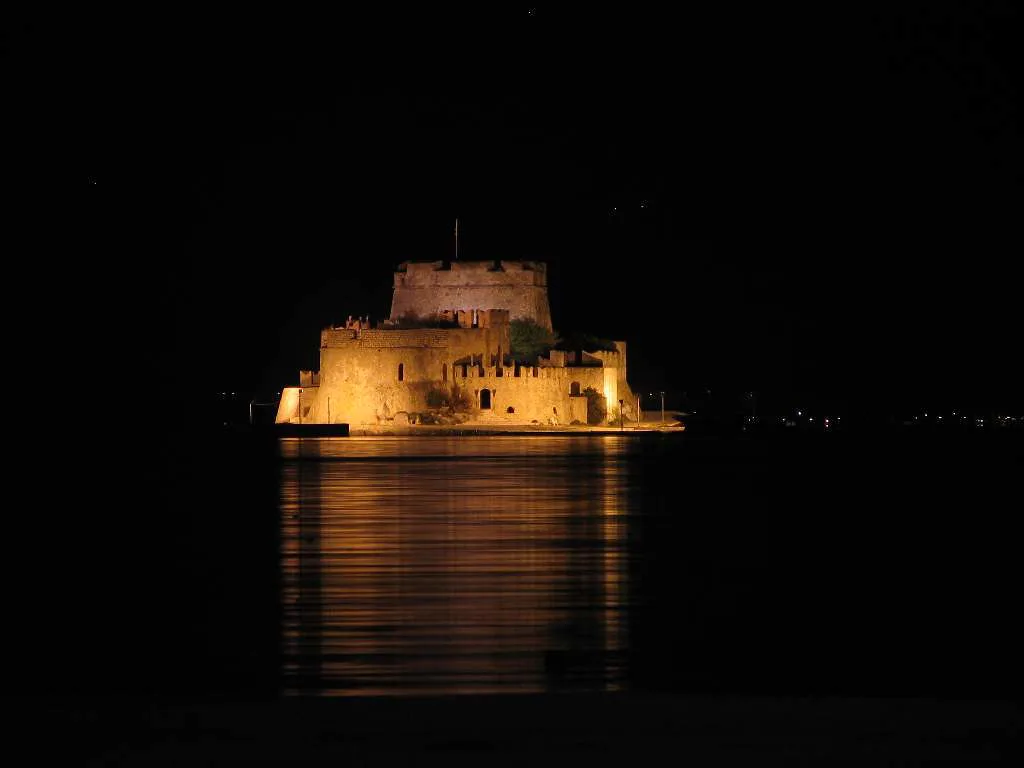
Bourtzi is a small Venetian fort built in 1473 on an islet in the harbour, and it is the image most associated with Nafplio. It has served as a prison, a hotel and now a venue tied to the town's folk music festival; historically it was linked to Akronafplia by a chain that guarded the port entrance. You can see it clearly from the promenade without buying anything, which makes it the harbour's easiest sight.
Access is by small boat from the harbour, and one source notes that visiting is possible in high season and advises checking the arrangement before you plan around it. No operator publishes a fixed timetable or fare in the sources used here, so confirm departure point, frequency and ticket price locally or through the port authority before committing an afternoon.
Sunset and Evening on the Promenade
The waterfront after dark is the town's living room. People walk off dinner along the quay, watch the light fade over the gulf, and buy hot nuts, roast corn and cotton candy from vendors near the big square by the water. A waterfront stretch that functioned as parking during the day turns into a promenade as the evening cools.
It gets busy because locals use it too, not only visitors. If you want the sunset without the crowd, arrive well before it and take the path around the Akronafplia headland, where the water and the Bourtzi view open up. Otherwise accept the company and treat the promenade as the social event it is.
The Old-Town Lanes Behind the Port
Behind the waterfront the street plan turns deliberately confusing, because it grew for defence rather than navigation. Getting momentarily lost is part of the experience, and since the district is compact you are never far from a landmark. The streets worth knowing by name are Stadiou for shops and cafes, Vasileos Konstantinou along the harbour, Staikopoulou for shopping and Papanikolaou for the link to Arvanitia.
Two stops sit within this tangle and are easy to fold into a harbour walk. The Church of Agios Spyridon is where Ioannis Kapodistrias, Greece's first governor, was assassinated in 1831, and the doorway still carries a mark from the shot. The museums, including the Archaeological Museum in a Venetian warehouse and the Peloponnesian Folklore Foundation, cluster in the same quarter.
Eating Around the Harbour: Waterfront Versus Back Street
The trade-off here is straightforward. Waterfront cafes and fish tavernas sell the Bourtzi view and the sunset; you pay for the position and may get competent rather than memorable cooking. Behind them, family-run tavernas on the lanes serve recipes held for generations at lower prices but with no sea in sight. Plan at least one meal of each kind so you stop resenting the premium or missing the view.
Ellas Taverna, on Syntagma Square, is described as an old working-class estiatorion claiming to be the first taverna in Greece, with a good location and an unpretentious style. That is the back-street value model in one sentence: plain room, long history, no view. Menus and prices change, so read the posted list outside before sitting down.
Dishes to Order and What They Are
Local specialities worth recognising on a menu: hilopites are thin egg pasta, often served with rooster or seafood; goggles are handmade pasta shells associated with the region; bouréki is a zucchini and potato pie; and fresh anchovies from the Argolic Gulf appear in several guises. Nearby hills supply honey, and the Argolid plain grows citrus, while Nemea wine comes from the region to the north.
For drinks, ouzo is the anise spirit usually taken with ice and water, and tsipouro is a grape-distilled spirit closer to a rough brandy. Order them with a few small plates rather than as a cocktail. Ask for local Nemea red by the carafe if you want the cheapest way to drink well at a harbour table.
Sweet and Breakfast Stops
Two bakery items make a harbour morning easy. Bougatsa is a phyllo pastry with a custard filling, dusted with cinnamon and sugar, eaten as breakfast; tsoureki is the sweet Easter bread sold in slices the rest of the year. Buy from a bakery in the lanes behind the promenade and eat on the quay rather than paying for a table.
Coffee is the other local ritual worth adopting: order a café freddo, an iced espresso, and sit at a port cafe watching the Bourtzi. One traveller's account rates the food at such cafes as merely acceptable while praising the view, which is a fair warning to eat elsewhere and drink here.
Komboloi and the Shopping Streets Near the Port
Nafplio is known for komboloi, the worry beads that Greeks click as a fidget, made from amber and other materials. Staikopoulou Street holds the densest run of interesting shops, though the side lanes hide smaller workshops. Leather sandals and local olive oil, honey and herbs are the other things visitors carry home.
There is a Komboloi Museum in the town, which is the sensible first stop if you want to understand what you are buying before you buy it. Budget carefully: one account describes local shopping as priced like an upscale European district rather than a bargain stop.
Staying in the Port Area
Accommodation in the harbour quarter is mostly small hotels in converted mansions and apartments rather than large resorts, and staying here removes the need for any transport in the evening. Higher floors tend to give the better view over rooftops toward the fortresses or the water, so ask when booking. Request a room off the bar side if you sleep lightly.
For apartment-style stays, Vida Hospitality lets flats in the heart of town, run by two brothers and pitched at families. At the other end, the Nafplion Palace Hotel and Villas sits up on Akronafplia, where guests get a commanding view of the Bourtzi from the balcony but face a walk or drive down to the port.
Getting There and Getting Around
From Athens the drive is about 138 kilometres, roughly two hours on the modern highway, and KTEL buses run from the capital with multiple daily departures. Once in town, the harbour car park between the water and the Old Town is the key planning fact for drivers, because the lanes themselves are pedestrian. Park once, unload, and then walk everything.
Local buses also connect Nafplio with nearby coastal towns including Tolon, and one account gives a roughly twenty-minute ride with half-hourly departures during the day before switching to taxis. Schedules change with the season, so confirm times at the bus station rather than relying on a blog.
What Is Within Walking Distance
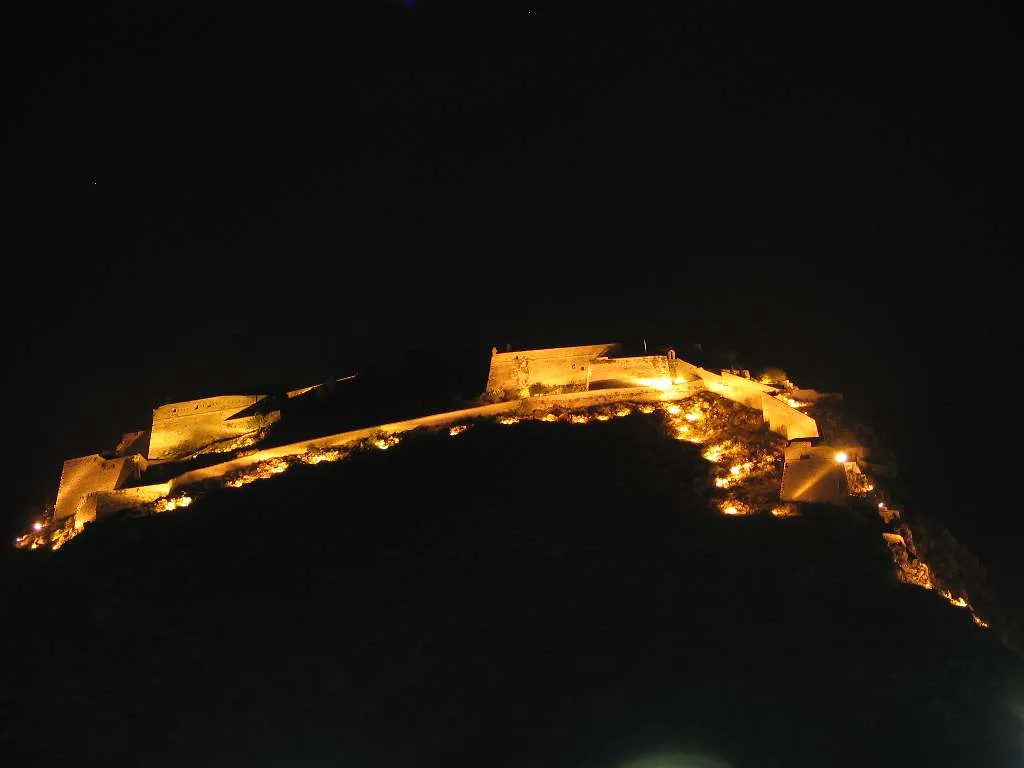
The Old Town's main sights sit within about fifteen minutes on foot of Syntagma Square, and the port is a couple of minutes below that, so the harbour is a practical walking base. The climb to Palamidi Fortress is the exception: the celebrated stairway is counted as 999 steps, though sources openly disagree on the true number, and you can also drive up and walk down.
For a swim, follow the path around Akronafplia to Arvanitia beach, a pebble cove reached through a short pine-lined approach with seasonal loungers, a cafe and changing facilities. Continue past it along the coastal path and you reach Karathona, a long sandy beach roughly forty-five minutes further on foot or a short drive; one account reported hiring two loungers and an umbrella there, though such charges vary by season, so check at the beach.
Practical Notes for the Port Area
Carry some cash. ATMs are plentiful around the Old Town, but many traditional tavernas and small shops still prefer it, and cards are only increasingly accepted. Public toilets are scarce, so plan on using a cafe's facilities as a paying customer; there is no public block on the quay.
Summer heat in the Argolid is serious, and midday is the wrong time to climb stairs or walk to the beach. Shift your walking to the morning before about eleven and again in the early evening, and use the middle of the day for a swim or a shaded courtyard table. High season also fills the waterfront restaurants and the car park first, so book or arrive early.
Plan Your Visit Around the Harbour
Build your days around the harbour rather than treating it as a backdrop. Sleep within walking distance, park once on the waterfront, and split eating between one view table on Bouboulinas and the rest in the lanes behind. Walk south around the headland for a swim, and leave the stair climb for the cool ends of the day.
Before you go, confirm the two details that actually change plans: the current boat arrangement for visiting Bourtzi, and whether your dates fall in a period when town businesses reduce hours. Neither is fixed year-round, and a quick check at the port or with your accommodation saves a wasted afternoon.
Explore more Nafplio sauna guides
Frequently Asked Questions
Can you visit Bourtzi island from Nafplio harbour?
Yes, Bourtzi can be reached by small boat from the harbour, and visiting is described as possible in high season. No fixed timetable or fare is published in the sources used here, so ask at the port or your hotel about current departures and prices before planning your afternoon around it.
Where do you park near Nafplio Old Town?
The main parking is the large waterfront car park between the sea and the Old Town, on the harbour side. The Old Town lanes are pedestrian and narrow, so the sensible routine is to park once, unload luggage, and walk. Spaces fill early in high season.
How far is Nafplio from Athens?
Nafplio is about 138 kilometres from Athens, roughly two hours by car on the modern highway. KTEL buses also connect the two cities with several departures a day; bus times shift with the season, so check current details at the station.
Is the Nafplio harbour area walkable?
Yes. The port, promenade and Old Town form a compact grid, with most main sights within about fifteen minutes on foot of Syntagma Square. The exceptions are the stair climb to Palamidi Fortress and the coastal path to Arvanitia and Karathona beaches.
What should I order in the harbour tavernas?
Look for hilopites (egg pasta), goggles (handmade pasta shells), bouréki (zucchini and potato pie) and fresh anchovies from the Argolic Gulf. For drinks, try ouzo, tsipouro or a Nemea wine. Menus change, so read the posted list before choosing a table.
How do I get to Arvanitia and Karathona beaches?
Walk around the Akronafplia headland from the port to reach Arvanitia, a pebble beach with seasonal facilities. Continue on the coastal path for roughly forty-five minutes to reach Karathona, a long sandy beach, or drive there. Lounger charges vary, so check on arrival.