
Platani, Kos: Village Character, Food and Getting There
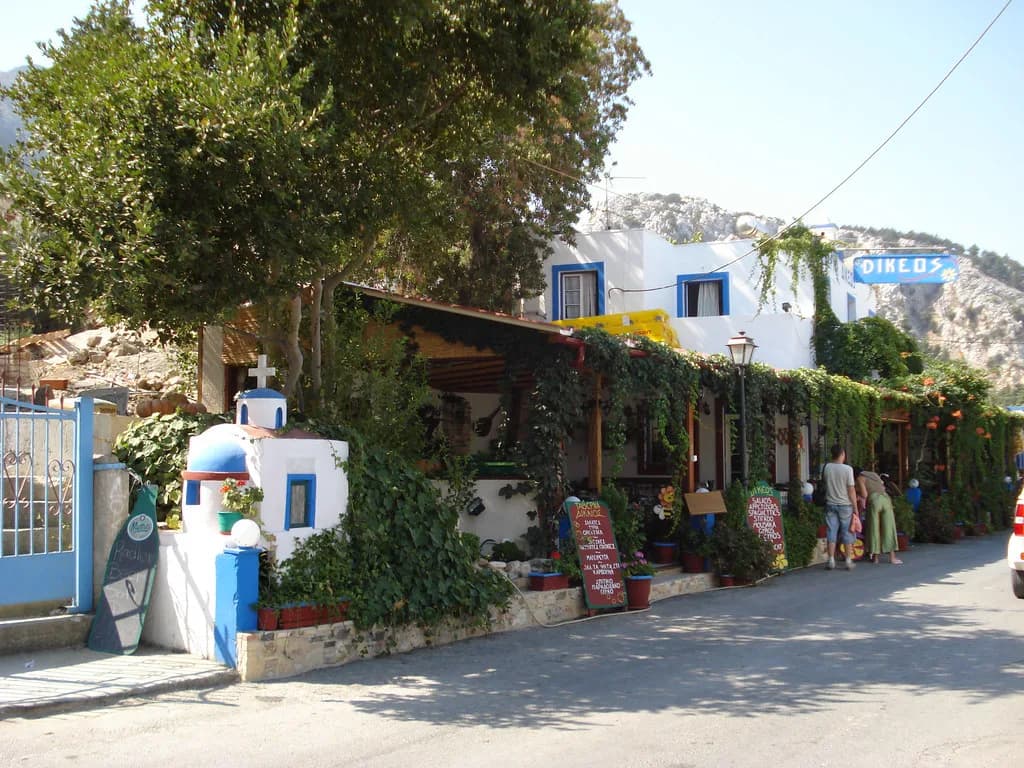
Platani is a small village of a few hundred residents sitting just west of Kos Town, on the road that climbs toward the Asclepieion and the Hippocratic International Foundation. It is not a resort strip or a beach district; it is a lived-in place with a square, narrow lanes and a handful of traditional tavernas. This guide covers what the village is, who it suits, what to eat and how to slot it into a day based in or near Kos Town.
The village's pull is food and atmosphere rather than checklist sightseeing. Come with an appetite and a willingness to walk, and treat the surrounding island districts as separate trips rather than part of the same outing.
Where Platani Is and How It Relates to Kos Town
Platani lies just 2 to 3 kilometres west of Kos Town, along the road that leads to the Asclepieion and the Hippocratic International Foundation, according to Discovering Kos. Greeka gives a slightly tighter figure of 2.5 kilometres from the town centre, so treat the distance as a short road trip of roughly two to three kilometres rather than a precise number.
That position matters for planning: Platani sits between Kos Town and the archaeological site, which makes it a natural stop on the way up or back down rather than a separate excursion. If you are staying downtown, you can reach the village by road in a matter of minutes; from other parts of the island you will pass through or near Kos Town first. Kos Activities also lists the village at about 3 kilometres from Kos Town, reinforcing the same short-hop picture.
Use Kos Town as your practical base for the area, and compare it with the town's other districts before you commit. The Kos Old Town Guide covers the historic core, while Psalidi, Kos is the beach-side alternative east of town.
Village Character: The Square, the Plane Tree and the Lanes
The village takes its name from the large plane tree, or platani, standing in the central square, which sources describe as both a landmark and a symbol of local heritage. Around it you find narrow streets and traditional houses rather than a formal sightseeing circuit. The scale is small enough that the village is best explored on foot, wandering the lanes and the square instead of driving between points.
Platani's architecture reflects a mixed heritage, with traditional Greek homes sitting alongside elements of Ottoman design; Kos Activities notes wooden carvings on some houses as an Ottoman-influenced detail. The result is a village that feels older and quieter than the resort edges of the island, and one where the buildings themselves are part of the reason to walk slowly.
A Short History: Kermetes, Keramos and Two Communities
During the Ottoman period the village was known as Kermetes, a name that reflects its Muslim inhabitants, who according to Discovering Kos originally came from Keramos in Asia Minor. Turkish-speaking residents still live in Platani today and many maintain their language and traditions, which gives the village a multicultural texture unusual for such a small place. That history is not confined to a museum label; it shows up in customs, architecture and, most of all, food.
The village is also described as a long-standing example of peaceful coexistence between Greek and Turkish communities on Kos. For a visitor, the practical takeaway is context: the dishes and sweets you meet here come from a specific Asia Minor and Ottoman-rooted repertoire, not from a generic island menu.
What to Eat: Tavernas Shaped by Asia Minor Cooking
Food is the main reason to build Platani into your day. The village's tavernas are known for home-style cooking drawn from recipes passed down through generations, with a clear Asia Minor influence that Discovering Kos describes as distinct from what you find elsewhere on Kos. Expect hearty, home-cooked plates rather than a scene; the setting is cosy and traditional, and the point is the cooking itself.
Order the way you would in any Greek taverna: a few shared plates rather than a single main each, and ask what is cooked that day rather than reading a long menu. Because the cuisine here leans on Asia Minor and Turkish traditions, the savoury dishes are the part of the meal to linger over — and they are the reason the village is worth the detour from Kos Town.
No specific taverna, address, menu or price is named in the sources used here, so treat any list of "the best" as a starting point and ask in the village itself. Walk the square and the lanes, look at what is actually cooking, and ask in Kos Town or at your accommodation which village kitchens are open the week you visit.
Sweets and Desserts to Finish the Meal
Platani is also known for its sweets and desserts, many rooted in Ottoman tradition and still a favourite with visitors and residents alike. Discovering Kos describes pastries and desserts reflecting the village's Turkish and Asia Minor connections, and singles them out as the way to round off a meal. Save room rather than ordering dessert elsewhere in town; this is the part of the meal the village is known for.
Because the sources do not list named bakeries or specific sweets by name, plan around what you see rather than a fixed shopping list: ask what was made that day and take something to eat on the square. If sweets matter to you, come before rather than after a big lunch elsewhere. For more of the island's food background beyond this village, the Kos Attractions: 10 Visitor Guides hub covers the sights that pair with a food-focused day.
Who Platani Suits, and Who It Does Not
Platani works best for travelers based in or near Kos Town who want an easy half-day of village wandering and a proper meal, and for anyone driving to or from the Asclepieion who wants lunch on the way. It also suits people interested in the island's Ottoman and Asia Minor heritage, since the village's daily life and cuisine make that history tangible.
It does not suit beach-focused visitors, anyone wanting nightlife, shopping or a resort base, or families planning a full day of activities. There is no beach in this guide and no entertainment district; the draw is the square, the lanes and the table. If your priority is sand and a pool, look at Psalidi, Kos instead and treat Platani as a lunch stop.
Fitting Platani Into a Kos Day
The natural plan is to pair Platani with the archaeological site it sits on the road to. Walk the Asclepieion earlier in the day, then come down to the village for a long lunch and a slow circuit of the square and lanes, before returning to Kos Town. The short distance means you are not committing a whole day to the village on its own.
Alternatively, treat Platani as a standalone half-day from Kos Town: arrive, walk, eat, and leave. Keep the schedule loose, since the pleasure here is unhurried. Lambi, Kos, north of the town centre, is another easy add-on if you want a second short stop on the same side of town.
Getting There and Getting Around
There is no train or metro on Kos, so you arrive by road: on foot from Kos Town, by taxi, by rental car, scooter or bicycle, or as a stop on a drive toward the Asclepieion. The village itself is compact, and the sensible approach is to park once and explore on foot; the lanes and the plane tree square are the destination, not something to view from a car window.
For anyone without a car, the roughly two-and-a-half to three-kilometre distance from town is manageable on foot or by bicycle for reasonably fit travelers, but plan for heat and bring water if you walk it in summer. If you are combining the village with the archaeological site further up the same road, a taxi or car saves your energy for the site itself.
What to Check Before You Go
The sources used here do not publish opening hours, closing days or seasonal patterns for Platani's tavernas, so confirm before you build a trip around a particular kitchen. Ask in Kos Town, call ahead if you have a number from a local listing, or simply arrive at lunchtime when village restaurants are most likely to be serving. If you are travelling outside the main summer months, check specifically whether the places you want are open that week.
The same caution applies to walking conditions and access inside the village, which the sources do not detail. No source used here comments on safety at night in Platani, so plan your timing around daylight and your own comfort rather than any general assumption about the area.
Where to Stay: Use Kos Town as Your Base
The sources consulted for this guide do not name any hotel or guesthouse inside Platani, so there is no honest way to recommend a village stay here. The practical base is Kos Town, which sits within a few kilometres and gives you the widest choice of accommodation, plus easy access to the road up to the Asclepieion. Kos Neighborhoods sets out the town's districts if you want to pick a specific part of it.
Weigh the trade-off before booking: staying in Kos Town means more choice and easier evenings, while a village stay would in principle offer quiet — but check availability directly with any property you find, since nothing in Plataní's published visitor information confirms lodging options. Ask your accommodation in Kos Town which village kitchens are open when you visit.
Plan Your Visit
Treat Platani as a food-first half-day rather than a sight in itself: a short drive or walk from Kos Town, a wander around the plane tree square, and a long lunch built around Asia Minor-influenced home cooking and Ottoman-rooted sweets. Pair it with the Asclepieion on the same road and you have a coherent day without much travel.
Before you go, check which tavernas are actually serving in the week of your visit and whether the sweets you have read about are available, because the sources used here do not publish hours or seasonal closures. Then leave the schedule loose — the village rewards a slow walk and an unhurried table more than a checklist.
Frequently Asked Questions
Where is Platani on Kos?
Platani sits just west of Kos Town, on the road that leads to the Asclepieion and the Hippocratic International Foundation. Sources give the distance as roughly 2 to 3 kilometres from Kos Town, or about 2.5 kilometres from the town centre.
How far is Platani from Kos Town?
Discovering Kos places it 2 to 3 kilometres west of Kos Town, Greeka gives 2.5 kilometres from the centre, and Kos Activities lists it at about 3 kilometres. Treat it as a short road trip of a few minutes by car or taxi, or a modest walk.
What is Platani known for?
Platani is known for its traditional tavernas serving home-style cooking shaped by Asia Minor and Turkish traditions, and for sweets and desserts rooted in the Ottoman period. It also has a plane tree square and narrow lanes that are best explored on foot.
What food should you try in Platani?
Prioritise the savoury home-cooked dishes the village tavernas are known for, then finish with the Ottoman-rooted pastries and desserts. No specific menu items or named venues are confirmed in published visitor information, so ask what is cooked that day.
Why is Platani also called Kermetes?
Kermetes was the village's name during the Ottoman period, reflecting its Muslim inhabitants, who came from Keramos in Asia Minor. Turkish-speaking residents still live there and maintain their language and traditions.
Can you walk around Platani?
Yes. The village is small, with a central square around the plane tree, narrow streets and traditional houses, so walking is the natural way to see it. Park once and explore on foot rather than driving between points.
Is Platani worth visiting on Kos?
It is worth it if you want a short, food-focused half-day from Kos Town or a lunch stop on the way to the Asclepieion. It is not a beach, shopping or nightlife destination, so skip it if those are your priorities.
Where should you stay near Platani?
Kos Town is the practical base, within a few kilometres of the village and with the widest choice of accommodation. No hotel inside Platani is named in the sources consulted, so check any village lodging directly before booking.