
Kastro Naxos: A Visitor's Guide to the Venetian Castle in Chora

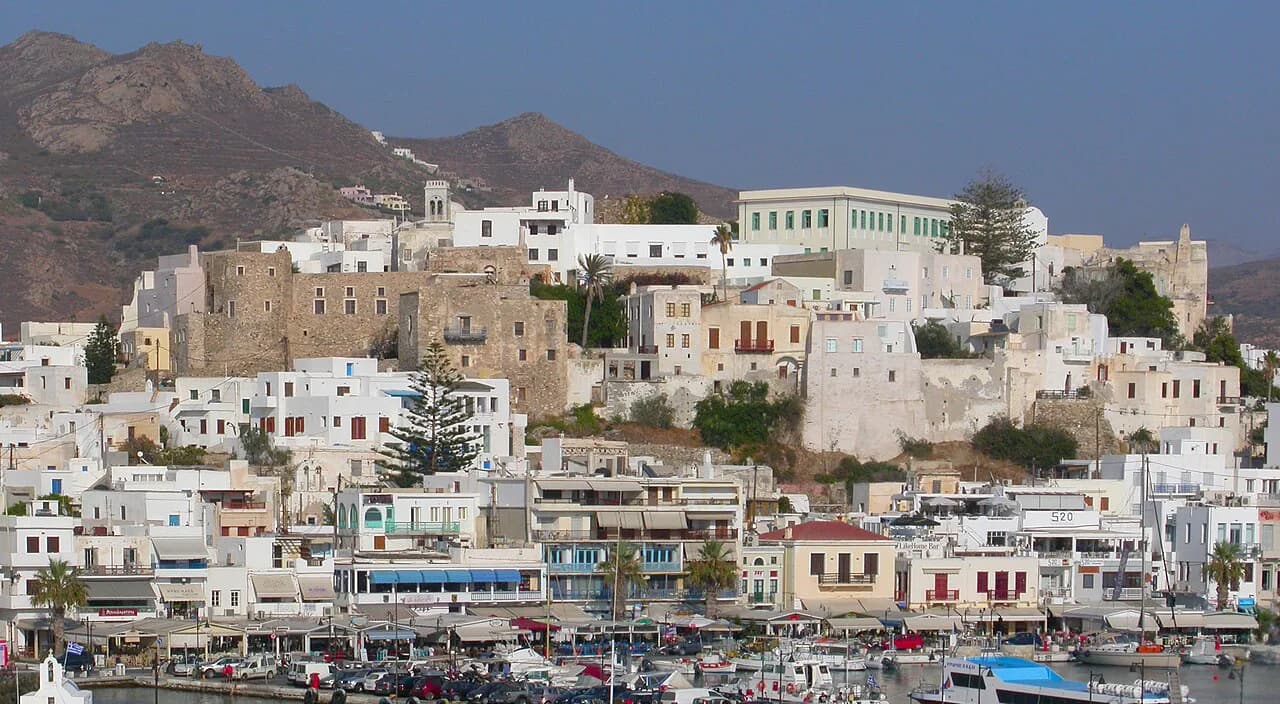
Kastro is not a single monument with a ticket booth at the door. It is the walled neighbourhood at the heart of Chora, the capital of Naxos, and you reach it by walking up through the old town lanes until you pass through one of its two gates.
That distinction shapes the visit. The lanes inside the circuit are free to wander, but the Archaeological Museum, the Venetian Museum of Rocca Barozzi and the Folklore Museum are separate stops that may keep their own hours, so plan the walk and the museums as two different things.
What Kastro Is and Why It Matters
Inside the Chora of Naxos sits a compact Venetian castle quarter that most visitors pass without realising it is there. Its Italian origins trace back to the Venetian nobleman Marco Sanudo, who took the Cyclades and established a duchy based on Naxos; the fortification was built to defend the island against pirates.
Because it was conceived as a small fortified town rather than a palace, Kastro today reads as a residential pocket: narrow lanes, family houses and a handful of churches and museums packed within an old defensive ring. You visit it on foot, slowly, and the walking itself is the attraction.
Where Kastro Sits in Chora
Kastro occupies the highest, oldest part of Chora, which rises behind the harbour front of Naxos Town. The lanes below it form the commercial old town, so the castle is the natural top of any walk uphill from the port.
Practically, you do not need transport to reach it. Arrive on the harbour front, follow the signed alleys upward through the old market streets, and the walls will appear as a change in the architecture rather than a sudden gateway in a field.
The Two Entrances: Paraporti and Trani Porta
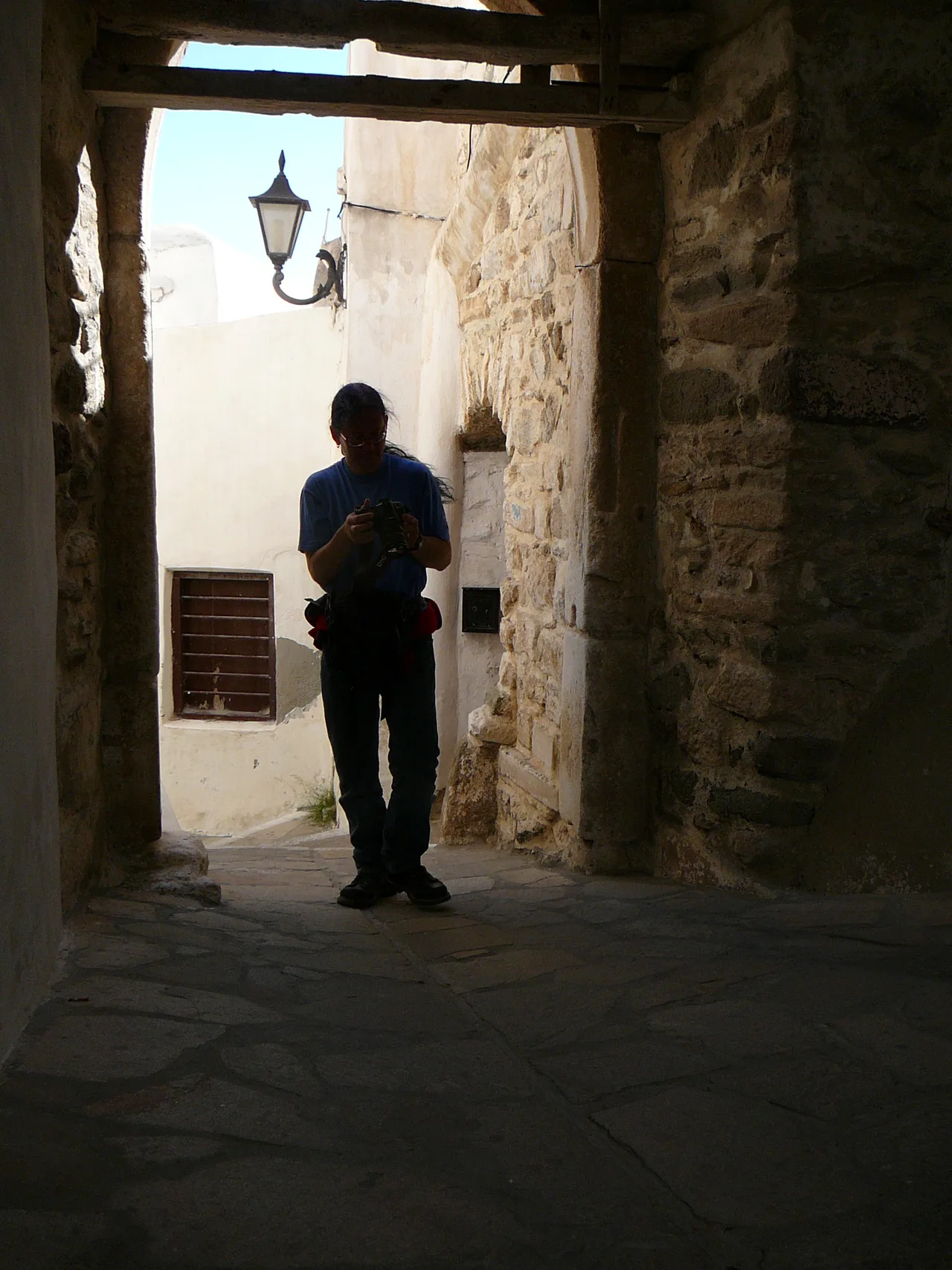
Access to the castle area runs through two gates: the Paraporti on the south side and the Trani Porta on the north side. Which one you use changes your approach, because you enter the circuit from opposite ends of the old town.
For a first visit, entering from the south through Paraporti and exiting north through Trani Porta gives you a natural traverse of the quarter without backtracking. If you are coming from the harbour, the south gate is generally the more convenient approach, and crossing the castle leaves you on the far side of Chora to continue toward other parts of town.
The Walls and the Tower of Glezos
The fortification was laid out as a pentagon of walls with twelve towers spaced at intervals around the circuit. Most of that defensive scheme has not survived, and the tower most visitors photograph today is the Tower of Glezos, also called the Krispi Tower, which belonged to the Krispi family, the last dukes of the island.
Do not come expecting a continuous rampart you can walk along. Treat the surviving fragments and the tower as markers that tell you where the old edge of the fortified town ran, and let the lanes between them do the rest of the work.
Inside the Walls: The Two Cathedrals
Two cathedrals sit within or immediately beside the castle area, and they are distinct stops rather than one church with two names. The Catholic Cathedral dates from the Middle Ages and keeps a marble floor inlaid with the coats of arms of prominent Catholic families of Naxos.
The Orthodox Cathedral, dedicated to Saints Nicodemo and Nectario, stands slightly outside the castle proper and includes the Epitopio Museum on an ancient archaeological site. The surrounding area was the old agora, once framed by four porticoes with a marble facade, which explains why the ground here feels like a former civic square rather than a churchyard.
The Archaeological Museum and Its Collections
The castle's commercial school, where Catholic monks taught boys from 1627 for some three centuries, was later converted into the Archaeological Museum. Its displays run from the late Neolithic period to the beginning of the Christian era.
Prioritise two collections if time is short. The Cycladic collection, roughly 3000 to 2000 BC, holds marble vases, marble figurines, terracotta vases and jewellery; the Mycenaean collection, roughly 2000 to 1000 BC, brings gold finds, fine stones and amphorae.
One detail is easy to miss: on the terrace, look down at the mosaic floor from a house of the fourth century BC, and step onto the museum balconies for the view over the rooftops. The museum is also how many travellers first understand how the castle's buildings were adapted over centuries rather than purpose-built as galleries.
The Venetian Museum of Rocca Barozzi
Rocca Barozzi is a noble family house turned small museum, founded in 1999 and once home to several leading families of the island. Its rooms hold textiles, furniture and household objects rather than archaeological finds, which makes it a useful counterweight to the Archaeological Museum.
Because it is a house rather than a gallery, it rewards a slower look at how the castle's wealthier residents lived within the walls. If you have to choose between the two on a tight schedule, take the Archaeological Museum for the Cycladic material and save Rocca Barozzi for a return visit.
The Folklore Museum and the Orsoline School
The small Folklore Museum, opened in 1975, displays costumes, documents, ceramics and agricultural tools that record daily life in Greece over the last two centuries. It is a modest stop but a clear one: it tells you what ordinary islanders used, wore and worked with.
The Orsoline Monastery School, built in 1739 and active until 1986, was purchased by the state and now hosts cultural events, particularly in summer. The castle also held a school for Catholic girls run by the Orsoline sisters, so these buildings together trace a long educational history inside the walls.
How Long to Allow
A walk-through of the lanes and the two gates takes far less time than a museum visit, so decide your aim before you climb. If you only want the atmosphere, the tower and the cathedral exteriors, the castle fits comfortably into a short break between other stops in Chora.
If you plan to enter the Archaeological Museum and add Rocca Barozzi or the Folklore Museum, block out a meaningful half-day and sequence the stops so the museum comes first, while your attention is fresh, then the lanes and churches afterward.
Opening Hours, Tickets and Access
Kastro's lanes are part of the town, but the individual museums keep their own schedules, and current opening hours, ticket prices and any closure days are not published in a single place. Check the museum or municipality source before you set out rather than relying on a guidebook.
Accessibility is the same story: whether there is a lift or a step-free route into the castle is not documented in the sources consulted here, and the lanes are steep and stepped in places. Ask your accommodation or the museum directly if mobility is a concern.
What Is Nearby in Chora
Once you leave the castle, the old market area around the Orthodox Cathedral is the natural continuation, with the Epitopio Museum on its ancient site and the lanes of the commercial old town below. This is also where a short break for food makes sense before you head back toward the waterfront.
Further afield, the Portara, the great marble doorway on the Palatia islet, is a short walk from the harbour front and makes an easy pairing with a morning in the castle.
If you are touring the island's antiquities, the Temple of Demeter, Naxos lies inland in the countryside, so it needs its own transport rather than a walk from Chora; the Kouros of Apollonas, Naxos sits in the north of the island and is a separate day out entirely.
A Food Stop Around the Castle Lanes
The lanes just below Kastro, between the castle gates and the old market, hold the kind of small bakeries and sit-down tavernas that suit a walker rather than a driver. A bakery stop means a handheld pie, such as a spinach or cheese pie, eaten on the move; a taverna stop means sitting down for meze, the small shared plates that precede or replace a main course.
Choose by what you want from the pause. A bakery is quicker and cheaper and lets you keep walking; a taverna costs more and takes an hour or more, but gives you a table in the shade after the climb. Menus are posted outside most places, so read them before committing.
If you have already visited the walled quarter on Mykonos and want the comparison, the Kastro, Mykonos follows a similar logic of a fortified core above a harbour town, though its lanes and monuments differ.
Plan Your Visit to Kastro
Approach Kastro as a quarter to enter on foot, and decide in advance whether you are doing the short circuit or the museum-heavy version. Pick your gate, allow time for the Archaeological Museum's Cycladic and Mycenaean rooms, and leave the lanes for the slower second half.
Confirm the current hours and any entry charges with the museums themselves before you go, since these are the details most likely to change between seasons.
Explore more Naxos sauna guides
Frequently Asked Questions
How do you get to Kastro in Naxos?
Kastro sits in the oldest, highest part of Chora, the capital of Naxos, and is reached on foot from the harbour front by walking up through the old town lanes. There are two entrances: the Paraporti on the south side and the Trani Porta on the north side.
What are the two gates into Kastro Naxos called?
They are the Paraporti, on the south side of the circuit, and the Trani Porta, on the north side. Entering from one and leaving by the other gives you a straightforward traverse of the quarter.
What is inside the Venetian Castle of Naxos?
Within the walls and immediately around them you find the Archaeological Museum, the Catholic Cathedral, the Orthodox Cathedral of Saints Nicodemo and Nectario with the Epitopio Museum, the Venetian Museum of Rocca Barozzi, the Folklore Museum and the old Orsoline school building, plus the surviving Tower of Glezos.
Is the Archaeological Museum inside the castle in Naxos?
Yes. The museum occupies the building of the former commercial school inside the castle area, where Catholic monks taught from 1627. Its collections run from the late Neolithic period to the early Christian era, with the Cycladic and Mycenaean material the highlights.
How long does it take to visit Kastro in Naxos?
A simple walk through the lanes and past the gates and tower is quick and can be fitted between other stops in Chora. Add the Archaeological Museum and one or two smaller museums and you should set aside a half-day.
Is there an elevator to Naxos Castle?
Whether a lift or step-free route exists is not documented in the available sources, and the lanes are steep and stepped in places. Ask your accommodation or the museum directly if accessibility matters for your visit.
Do you need tickets for Kastro?
Walking the lanes and passing the gates does not work like a single ticketed monument. The individual museums are separate stops that may charge their own admission and keep their own hours.
What else is near Kastro in Chora?
The old market area around the Orthodox Cathedral is directly below the castle and makes a natural continuation. Down on the waterfront, the Portara on the Palatia islet is a short walk away and pairs easily with a morning in the castle.