
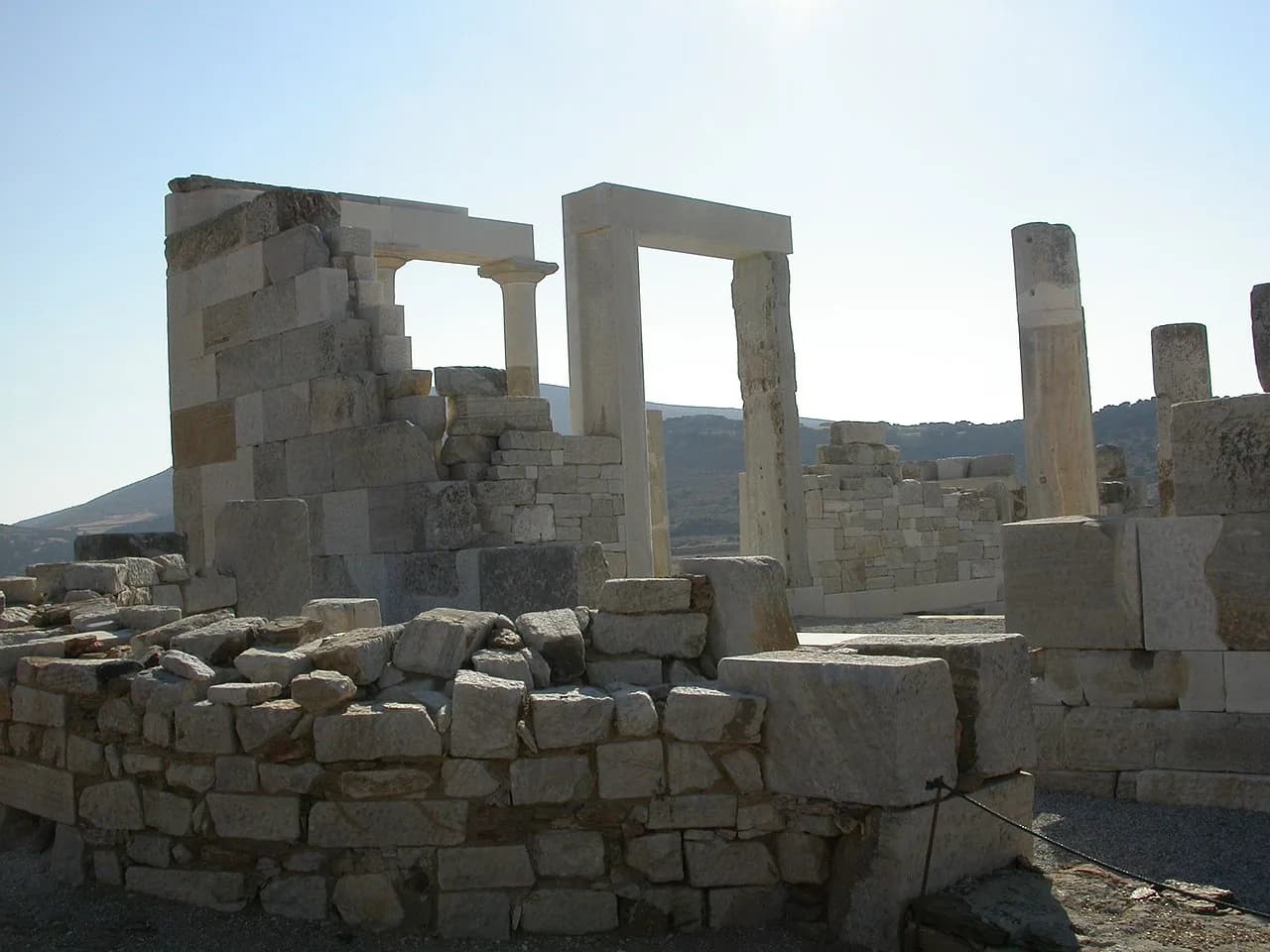
Temple of Demeter, Naxos: A Guide to the Gyroulas Site Near Sangri

The Temple of Demeter is one of Naxos's quieter archaeological stops, and its location catches people out. It stands at Gyroulas in the island's interior, about 1.5 km south of Ano Sangri, rather than anywhere near the harbourfront of Chora. Plan it as a short inland-drive stop woven into a mountain-village day, not as a standalone outing.
What you get is a Late Archaic temple, built around 530 BC in the Ionic order and counted among the earliest of that style, presented under a protective roof structure. The visit is short and the setting agricultural, so the reward comes from pairing it with Sangri and Halki rather than rushing out for the temple alone. This guide covers where the site sits, how to reach it, what to look at and what to do when official visitor information proves thin.
What the Temple of Demeter Actually Is
The site is a Late Archaic Greek temple on Naxos, standing in the locality of Gyroulas in the area of Sangri. Its current form is dated to roughly 530 to 520 BC, and it is described as one of the earliest temples built in the Ionic order. That makes it a useful counterpoint to the better-known marble monuments closer to the coast.
One thing worth settling before you go: the Temple of Demeter at Gyroulas is sometimes labelled the Temple of Sangri, and some older write-ups and map labels blur the two names. When you search for directions, use the Gyroulas location south of Ano Sangri rather than a bare village name so you are aiming for the right site. Knowing which site you are aiming for avoids a wasted detour on narrow inland lanes.
The temple is dedicated to Demeter, the goddess of the harvest and grain, which fits the wheat-and-olive landscape around it. If you want the wider context of Naxos's ancient sites and how they string together, the island's archaeology coverage is spread across several entries rather than one page.
Where It Sits: Gyroulas, Sangri and Chora
The temple lies about 1.5 km south of Ano Sangri, in the inland hills that separate the south-coast beaches from the central plateau. Ano Sangri and the smaller Sangri settlement are your reference points, and the site is reached by rural road rather than a coastal promenade. Chora, the island capital and ferry port, is the usual base, and the drive from it is best measured in time on the day rather than a quoted distance.
For orientation, think of the temple as part of a loop that runs from Chora up through the valleys toward Sangri and Halki, with the site appearing as a signed stop rather than a final destination. The inland roads are slow and winding, so squeezing in the temple between two coastal swims works less well than building a half-day of driving around it. This guide to the island's sights shows how the temple slots into Naxos's archaeological landscape.
How to Get to the Temple of Demeter
The practical way to reach the site is to drive, either via Sangri from the south or by approaching from the Halki road and turning south through the olive groves. A rental car or scooter gives you the flexibility to find the turn-off and to continue on to the next village; buses are better for the main coastal beaches and larger settlements. If you plan to cover several inland sites in a day, having your own wheels makes a real difference.
Bus service to Sangri and the surrounding villages changes with the season, so check the current routes and timetables rather than assuming a stop near the temple exists. The safest approach is to ask in Chora or to look up the schedule of the KTEL Naxos bus company before setting out. If the bus drops you in Sangri village, expect to walk or arrange a lift for the final stretch to Gyroulas.
Parking is informal, on the shoulder of the access road, and the site is not served by a visitor centre with on-documentation. Drive slowly on the final lanes, respect farm gates and stay on the marked approach. If you are also heading toward the north of the island, the Kouros of Apollonas, Naxos sits on a separate route and is not a natural add-on to a Sangri day.
Opening Hours, Tickets and Closures
The site's current opening days, hours and any admission charge are not consistently published, so check before you commit to the drive. Look up the Greek Ministry of Culture's archaeological sites listings, the local municipality's pages, or ask at the ticket office of a major site in Chora for the current status. Do not assume the temple is open daily, or free, without checking.
Guardianship of minor sites can vary, with some keeping regular hours in high season and limited access out of season. If the gate is shut when you arrive, the surrounding landscape still explains the agricultural setting, but the roofed remains will be what you came for. A quick phone call the day before is worth the effort.
What You See on Site
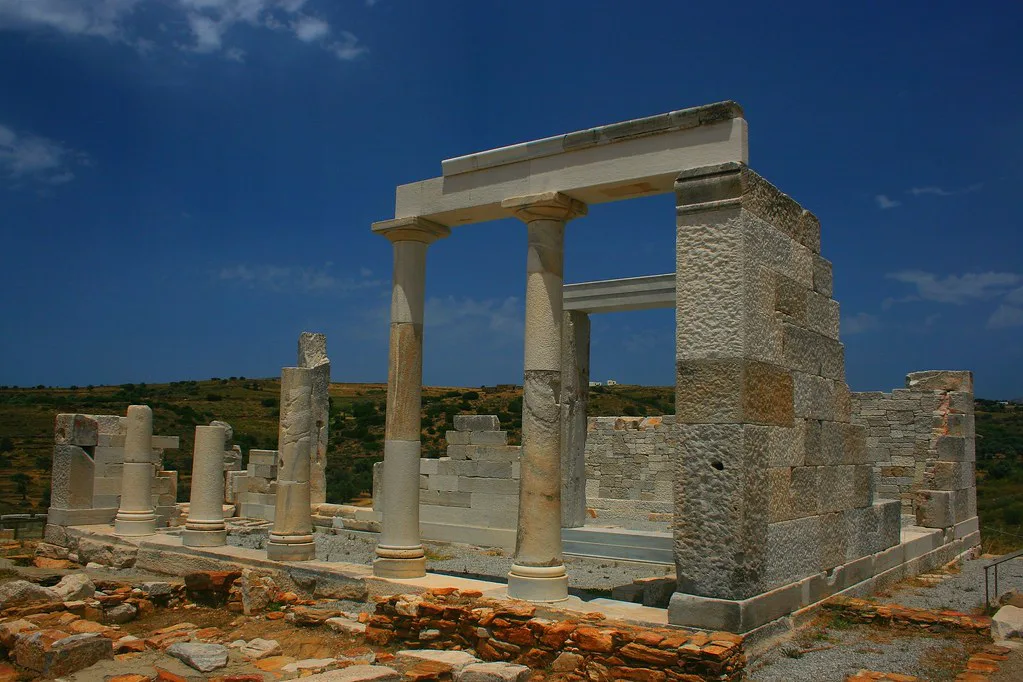
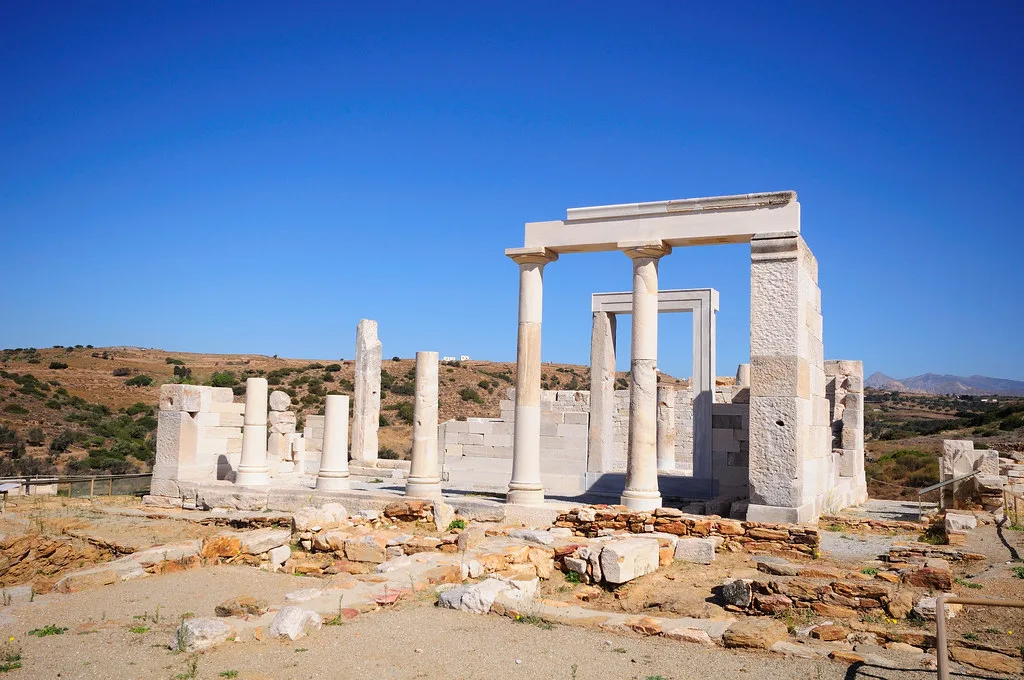
The core of the visit is the temple platform and the surviving architectural elements, presented under a modern protective structure that shields the stonework from the weather. The remains are fragmentary, so the interest is in the plan and the masonry rather than in standing columns or reconstructed facades. Read the on-site panels, if they are in place, for the dating to the late sixth century BC and the Ionic details.
Allow time to walk the perimeter and to look out over the surrounding fields, which give a sense of why a harvest goddess had a sanctuary here. Because the site is small, the stop rewards a reader who is already curious about Greek temple architecture and how the Ionic order developed. If you have already seen the marble ruins on Delos or Athens, this adds a quieter, earlier chapter.
For context, the temple's sixth-century dates sit well before the better-known Temple of Apollo on the Palatia islet at Chora. Visiting both in one trip lets you compare a modest rural sanctuary with the grand unfinished gateway that now frames the harbour. The Palatia islet is walkable from Chora's waterfront and a natural evening stop.
How Long to Allow
Budget around 20 to 30 minutes on site if you are reading the panels and walking the ruins; the temple is a compact stop rather than a half-day. Pair it with Sangri or Halki and you have a comfortable morning out, with time left for a swim later. Travellers who try to tack it onto a beach day usually end up rushing the back roads.
If you are travelling with children or with someone who finds ruins repetitive, the temple alone may not justify the detour. Build the day around the drive itself, with the temple as one of several stops, and keep the schedule loose enough for an unplanned taverna lunch in a village square.
Timing Your Visit Around Heat and Light
The inland hills get hot and exposed in summer, and the temple has limited shade beyond the protective roof. Go early in the morning or later in the afternoon to avoid the worst of the midday sun, and carry water; there are no facilities at the site. The light on the stonework is also better then, and the surrounding fields look their best in the softer hours.
Spring and autumn are the most comfortable seasons for driving these lanes, with wildflowers in the fields and less heat on the exposed sections. If you visit in high summer, plan the temple for the first or last stop of the day and use the middle hours for a shaded village lunch or a swim. Afternoon light also makes the site easier to photograph than the harsh overhead sun.
Nearby: Sangri, Halki and the Kitron Distillery
Sangri village is the closest settlement, with a handful of tavernas and a quiet square, and the temple sits just south of Ano Sangri, in the Gyroulas area. The site is often referred to elsewhere as the Temple of Sangri, so check which name your map or guide is using and confirm it points to the Gyroulas location south of Ano Sangri. Confusion over the labels sends some drivers down the wrong lane.
A short drive north brings you to Halki, a former island capital with neo-classical houses and a shaded main square that makes a good lunch stop. The Vallindras kitron distillery in Halki is the best-known producer of kitron, a sweet citrus liqueur made from the leaves of the citron tree, and its visitor rooms explain the process. Pairing the temple with Halki gives the day a shape beyond ruins.
For a different kind of antiquity, the Kastro in Chora preserves a medieval townscape built over the ancient acropolis, and the walk up through its lanes is worth an hour on a cooler evening. The Trani Porta gate and the old Catholic cathedral are part of that circuit, which pairs neatly with a harbourfront dinner back down in Chora.
Who Should Skip It
If your Naxos time is limited to a beach-and-Chora day, the temple is the kind of stop that eats time in the car without delivering the coastal experience you came for. Travellers without a vehicle will find the logistics awkward, since bus service to Sangri is not guaranteed and the final stretch is a walk. If you'd rather base yourself near the coast, compare Naxos Neighborhoods: 3 Area Guides before committing to inland days. Be honest about what you want from the day before adding it to the itinerary.
Likewise, if ancient ruins are not a priority when you have the Aegean on your doorstep, spend the day at Agios Georgios or Plaka instead and save the inland archaeology for a longer stay. The site works best for travellers who already have a car and a taste for minor sites, and who enjoy a slow drive through working farmland.
Where to Eat Before or After
The mountain villages on the same drive are the natural places to eat, with Halki's square and Sangri's small tavernas offering straightforward Greek food. Expect the usual range of grilled meats, salads and local cheese, and in Halki look for kitron served as a digestif. Village kitchens often close in the mid-afternoon, so aim for lunch rather than a late meal.
If you return to Chora for the evening, the harbourfront and the old-town lanes have plenty of choices, from quick souvlaki to seated tavernas. Book ahead for tables with a view in high season, and keep expectations realistic: the best food is often a few streets back from the water. For a wider list of where to eat in the island capital, this guide to the town's neighborhoods helps you choose an area before you pick a table; the same logic applies when you pick where to stay, so compare Naxos Neighborhoods: 3 Area Guides before booking a base.
Plan Your Visit
Treat the Temple of Demeter as a short, rewarding stop on an inland drive rather than a destination in itself, and pair it with Sangri and Halki for a full morning. Confirm opening hours and any ticket arrangements before you set out, since visitor information for the site is patchy, and check bus service to Sangri if you are travelling without a car.
The wider island merits more than one day, so slot the temple into a loose loop that leaves room for a village lunch and a late-afternoon swim. If you are also planning to see the harbour monuments in Chora, the Portara Naxos guide covers that waterfront walk.
Frequently Asked Questions
Is the Temple of Demeter worth visiting?
It is worth it if you already have a car and enjoy minor archaeological sites. The temple is small and fragmentary, presented under a protective roof, but its early Ionic dating and rural setting make for a thoughtful 20 to 30 minute stop. Travellers with only a beach or Chora day should not force it into the schedule.
What is the Naxos Temple of Demeter?
It is a Late Archaic Greek temple at Gyroulas, in the Sangri area of inland Naxos, built around 530 to 520 BC. It is considered one of the earliest temples in the Ionic order and was dedicated to Demeter, the goddess of the harvest.
How do you get to the Temple of Demeter on Naxos?
The easiest way is by car, following the inland road to Sangri and then the short lanes to Gyroulas, about 1.5 km south of Ano Sangri. Arriving from the Halki side is also possible. Without a car, bus service to Sangri runs and you may need to walk the final stretch.
How long do you need at the Temple of Demeter?
Allow around 20 to 30 minutes on site to see the remains and read the panels. The visit works best as one stop on a half-day drive through Sangri and Halki rather than as a standalone outing.
Is there a bus to the Temple of Demeter from Naxos Chora?
Bus service to Sangri and nearby villages changes with the season, and no dependable direct service to the temple itself is published. Check the local bus operator's current timetable or ask in Chora before relying on public transport, and expect a walk from the village if you go by bus.
What else is near the Temple of Demeter on Naxos?
Sangri village is the nearest settlement, and Halki, with its shaded square and the Vallindras kitron distillery, is a short drive north. The Temple of Sangri at Gyroulas is in the same area, so check which site you are heading for if you plan to see both.