
Kouros of Apollonas: Visiting Naxos's Unfinished Marble Colossus

The Kouros of Apollonas is one of the strangest sights on Naxos: a colossal marble figure of a young man, carved in antiquity and then left unfinished in the open, close to the village that gives it its name. It sits on the island's northern coast, well away from the beaches and busy town that most visitors concentrate on. This guide covers where the statue lies, how to approach it, what you see when you arrive and how much time the stop really needs.
What the Kouros of Apollonas Actually Is
A kouros is a large freestanding marble statue of a young male, a form that dominated Greek sculpture in the Archaic period. The Apollonas figure is one of these, but it was never completed and never stood upright in a sanctuary. Instead it remains in the rough, still tied to the quarry landscape where it was cut, which is exactly what makes it worth the detour.
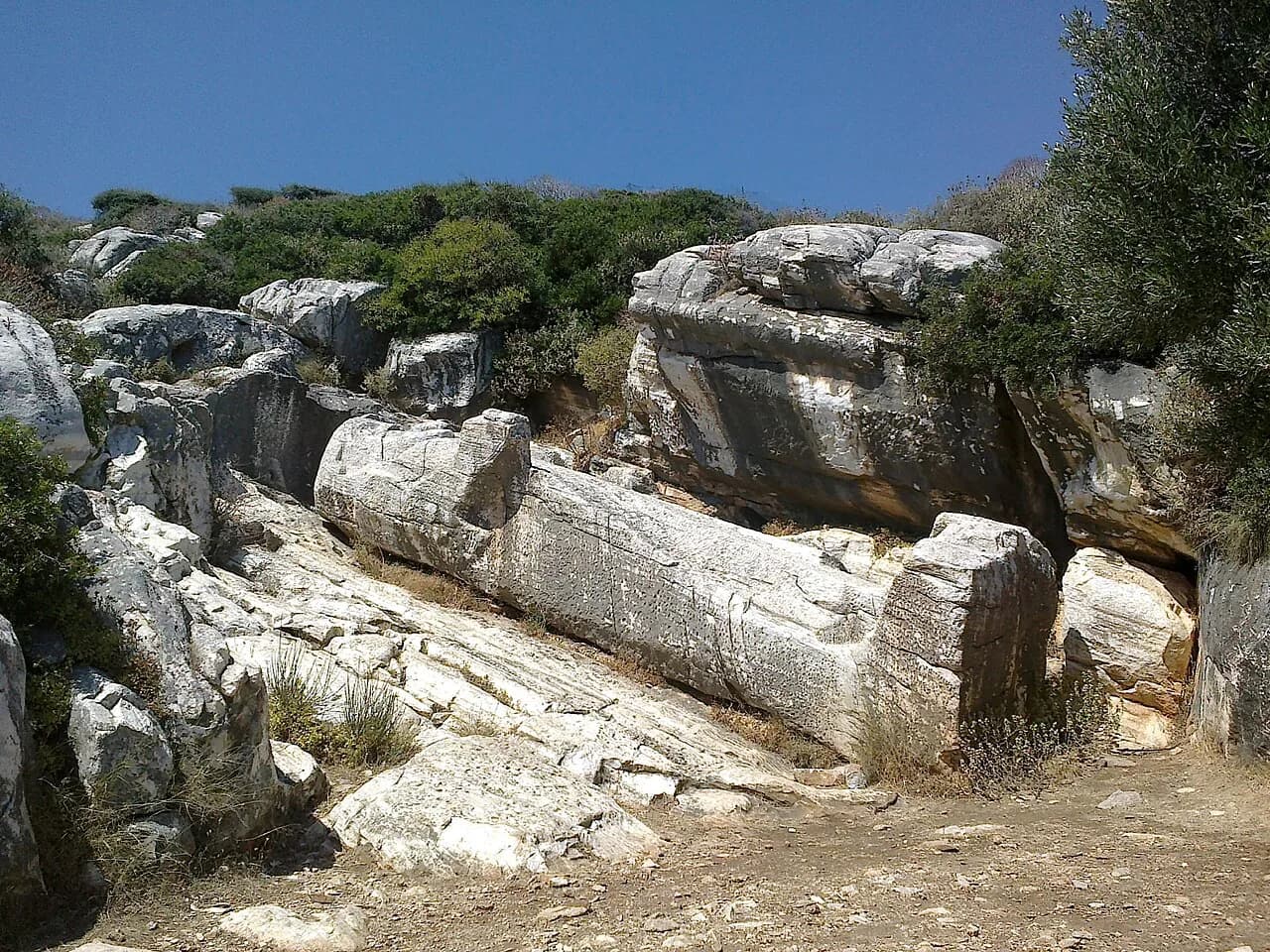
Sources put the statue at more than 10 metres in length, with the Wikipedia entry on the Kouros of Apollonas giving roughly 10.7 metres and noting it was carved from light grey Naxian marble. It is sometimes called the Colossus of Dionysus, a name that points to the figure's likely identity rather than to any surviving temple. Treat the exact weight and dimensions as approximate when you read around the subject, since published figures vary.
The unfinished state is the whole point. You are not looking at a polished museum piece on a plinth but at a half-carved body still embedded in the ground, with the marks of ancient tooling visible on the stone. That contrast between the ambition of the scale and the abrupt halt in the work is what a visit is really about.
Where It Is
The statue lies in and around Apollonas, a small fishing village on the northern coast of Naxos in the Cyclades, not in a museum in the main town. Travel accounts describe the unfinished kouroi of the island as lying in the open among olive groves and quarry ground rather than behind glass. If you are building a picture of the island's sights, it helps to think of the statue as a landscape feature of the north rather than an indoor attraction. For a wider sense of how this coast connects to the rest of the island, see our guide to Naxos Neighborhoods.
Apollonas itself is a compact coastal settlement with a harbour and a handful of places to eat, so the statue and the village are visited as a single stop. That matters for planning: you are not choosing between seeing the kouros and seeing the village, because one sits next to the other. The trade-off is that the northern coast is quiet, and the range of facilities is far narrower than in Naxos Town.
How to Get There from Naxos Town
The approach to Apollonas is by road, heading north from Naxos Town (Chora) and climbing into the island's mountainous interior before dropping to the northern coast. Driving yourself is the most flexible option, because the northern villages and the statue are awkward to combine with fixed bus timetables. Naxos is large by Cycladic standards, and travel advice for the island consistently recommends hiring a car for a few days if you want to reach the quieter beaches, mountain villages and interior.
Bus services do connect Naxos Town with villages around the island, but frequencies on remote northern routes are the part you need to confirm rather than assume. Check the current timetable with the local bus operator or at the information point in Chora before committing to a car-free day trip, and build in slack for the return. If the timetable does not fit, the drive is the practical answer.
Fuel up and buy water in or near Naxos Town before heading north, since the interior is sparsely served. The mountain road is winding in places, so allow more time than a simple distance check suggests and avoid treating the journey as a quick hop. The northern loop works best as a half-day or full-day outing rather than an hour squeezed between beach time.
What You Actually See
At the site you see a monumental figure lying in the position the ancient quarrymen left it, with the upper body and limbs defined but the whole never freed from the stone. The scale is the immediate surprise: this is not a fragment but a near-complete colossus that simply stopped short of being finished. Walk around it slowly, because the form reads differently from each side and the tool marks reward a closer look.
There is no artificial lighting or staged presentation to guide you, so the visit depends on your own reading of the stone. Bring the background with you: knowing that a kouros represents a young male and that Naxian marble was a celebrated export makes the abandoned figure far more legible. A short stop without that context can feel like looking at a large rock.
How Long to Allow
Budget roughly 20 to 40 minutes at the statue itself, which is enough to circle it, look at the carving and read whatever signage is in place. The stop is short by nature, so the day's shape is set by the drive north rather than by time spent on site. Pair it with the village, a harbour walk and a meal so the journey earns its keep.
The realistic calculation is a long northern drive for a brief, unusual sight. If your trip is a short beach-focused stay, the journey may not be worth the hours in the car. If you want to understand how Naxos's marble was quarried and moved in antiquity, the unfinished colossus is one of the clearest places to see the problem left in situ.
Why It Was Never Finished
The kouros was carved at the quarry and then had to be moved, which is the crux of the story. A figure of this size in marble is enormously heavy, and moving it overland or to a harbour without cracking it was a serious engineering problem with no easy solution. The project appears to have been abandoned before the statue was detached and transported, leaving it where it lies today.
Naxos has more than one of these stranded figures. The Melanes and Flerio kouroi, inland from the main town, are also unfinished and left in the quarries, and travel accounts note the ancient kouros statues of the island lying unfinished in olive groves. If this subject interests you, those inland sites are a shorter detour from Chora and make a useful comparison with Apollonas.
Apollonas as a Village Stop
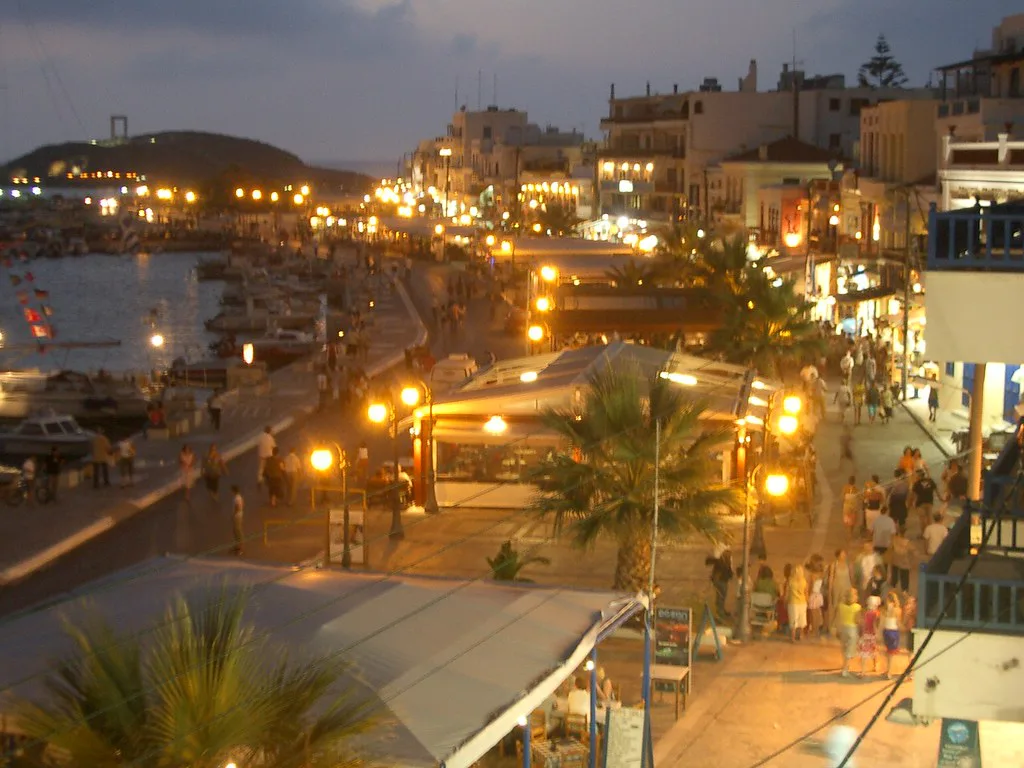
Apollonas is small and harbour-based, with a low-key waterfront where fishing and summer visitors share the same few streets. It works as a swim stop in warm weather, when the northern coast is quieter than the beaches south of Chora. The village's appeal is its pace: a short wander, a coffee at the water and a look at the boats covers it comfortably.
Eating options are limited compared with Naxos Town, so plan lunch rather than assume you can choose freely late in the day. Check locally what is open during your visit, since the northern villages keep their own rhythms outside high summer. On the way back, the inland route through villages such as Koronas or Apeiranthos lets you turn the trip into a loop rather than a there-and-back drive.
For a broader sense of how the north fits with the rest of the island, including the town's old quarter and castle, it helps to see the island's areas side by side before you commit a day to the drive. Kastro Naxos, the old Venetian quarter above Chora's harbour, is a natural counterpart to the quarry story, since it shows the later history layered onto the same island.
Tickets, Hours and What to Check
There are no posted opening hours or ticket desk for the statue, which lies in the open at Apollonas, so confirm access on the ground or with the local municipality before you travel. Do not plan the day around a fixed closing time. The statue is an outdoor, open-air sight, which usually means access is governed by daylight rather than a ticket desk.
Check the current state of the access path and any temporary fencing when you arrive, as outdoor archaeological sites can be cordoned off for works. If you are combining the visit with other ancient sites, remember that a stop at an open-air monument carries none of the usual museum infrastructure. Treat the visit as self-guided and come prepared.
Nearby on the Same Northern Drive
The northern route can be extended with inland villages, mountain scenery and viewpoints over the Aegean, which is what makes the drive worthwhile beyond the statue. A car gives you the freedom to stop where the road opens out, and a full day covers the coast and the interior without rushing. Keep the plan loose so a long lunch does not wreck the return leg.
Back in Chora, the harbour sights are the natural evening counterpart: the Portara Naxos, the great marble gate on the Palatia islet, is reached on foot from the waterfront. Travel accounts note the walk across the causeway takes about five minutes from the harbour. If you want one of the island's best-known marble monuments paired with the unfinished colossus, they make a tidy contrast.
Another marble sight within easy reach of Chora is the Temple of Demeter, Naxos, at Gyroulas near Sagri, an ancient sanctuary that shows what finished Naxian architecture looked like. Set against the unfinished giant in the north, it rounds out the picture of how the island worked its stone.
Is the Kouros of Apollonas Worth It?
Go if you are curious about how ancient marble sculpture was actually made and are happy to spend hours in a car for a short, unusual stop. Skip it if your priorities are beaches and town life, or if you have only a day or two on Naxos and cannot spare a northern loop. The inland Melanes and Flerio kouroi are the alternative when time is short. Weighing this stop against the rest of the island? Our guide to Naxos Neighborhoods sets out the other areas worth your time.
Either way, check bus times, opening access and fuel before you set out, and pair the visit with Apollonas village and at least one other stop on the northern road. The statue rewards preparation more than it rewards a hurried arrival.
Frequently Asked Questions
How do you get to the Kouros of Apollonas from Naxos Town?
Drive north from Chora through the island's mountainous interior and down to the northern coast at Apollonas, where the statue lies in and around the village. A rental car gives you the most flexibility because northern bus frequencies are thin and worth confirming with the local operator before you rely on them.
Is the Kouros of Apollonas free to visit?
No official page publishes an entry charge or a ticket desk for the statue, which lies in the open at Apollonas. Confirm access locally or with the municipality before you build the day around it, and treat it as a self-guided outdoor stop rather than a staffed museum.
How tall is the Kouros of Apollonas?
Published figures describe the figure as more than 10 metres long, with roughly 10.7 metres given for the unfinished statue in light grey Naxian marble. Because it was never raised upright, length rather than standing height is the useful measure, and exact numbers vary between sources.
Why was the Kouros of Apollonas never finished?
It was carved at the quarry and then had to be moved, and a marble figure of that size was extremely heavy and risky to transport without cracking. The project appears to have been abandoned before the statue was detached, which is why it still lies where it was cut.
How long do you need at the Kouros of Apollonas?
Allow roughly 20 to 40 minutes at the statue itself to walk around it and study the carving. The rest of the day is shaped by the drive north, so pair the stop with Apollonas village and a harbour walk to make the journey worthwhile.
Is Apollonas worth visiting on Naxos?
It suits travellers who want the island's quarry history and a quiet northern village rather than beach clubs and a busy waterfront. The trade-off is a long drive for a short sight, so skip it on a brief beach-focused trip and choose the inland kouroi near Chora instead.