
Portara Naxos: How to Visit the Marble Gate on Palatia Islet

The Portara is the first thing many ferry passengers see of Naxos: a single marble doorway, far larger than it needs to be, standing on a low islet at the mouth of the harbour. It is the surviving remnant of a temple to Apollo that was commissioned in the sixth century BC and abandoned before completion, which is why one monumental gate stands where a full building was meant to be. This guide covers what the site is, how to walk to it from Naxos Town, how much time to give it, and when to go.
What the Portara Actually Is
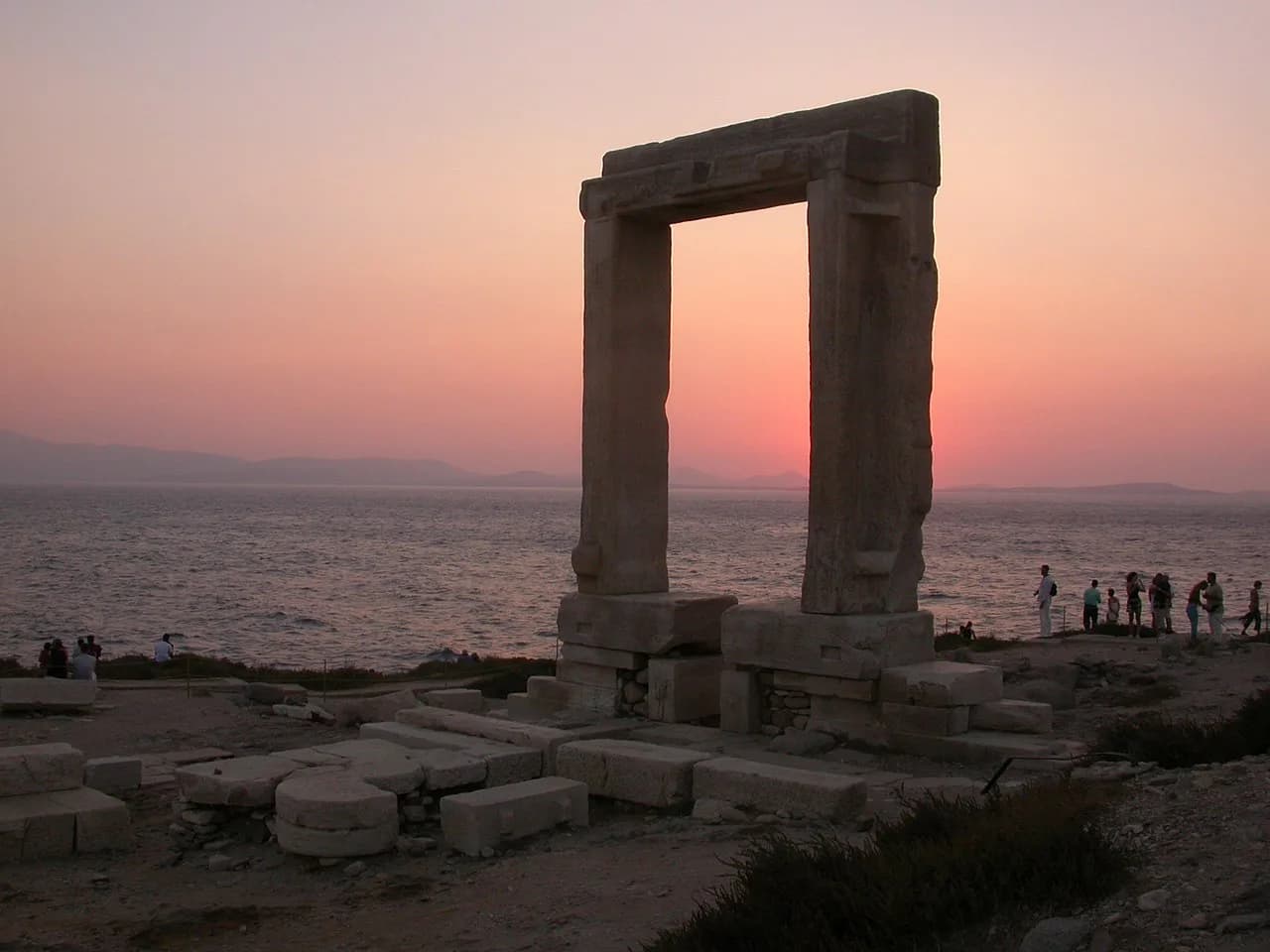
The Portara, sometimes called the Great Door, is a massive marble doorway and the only substantial element left of an ancient temple dedicated to Apollo. It stands on the islet of Palatia, separated from Naxos Town by a narrow channel. Because only the framing of the doorway survives, it reads as a free-standing gate rather than a ruin of walls and columns, which is exactly what makes it so photographed.
The temple was commissioned in the sixth century BC under the island ruler Lygdamis and was left unfinished when building stopped, so what remains should be read as a fragment of a planned temple rather than a completed one. The blocks around the gate are the visible traces of that abandoned project. If you want the historical detail before you arrive, the site's entry on the temple is a short, factual primer.
The gate has become the emblem of Naxos Town and appears on posters, ferry brochures and every second souvenir. That familiarity can make it feel like a photo stop, but the scale of the marble lintel and the exposed position on the islet give it a presence that photographs rarely capture. Give it more than the two minutes a snapshot requires. It is the natural anchor for a day spent exploring the town, which you can plan around the Naxos Neighborhoods guide.
Where the Portara Is
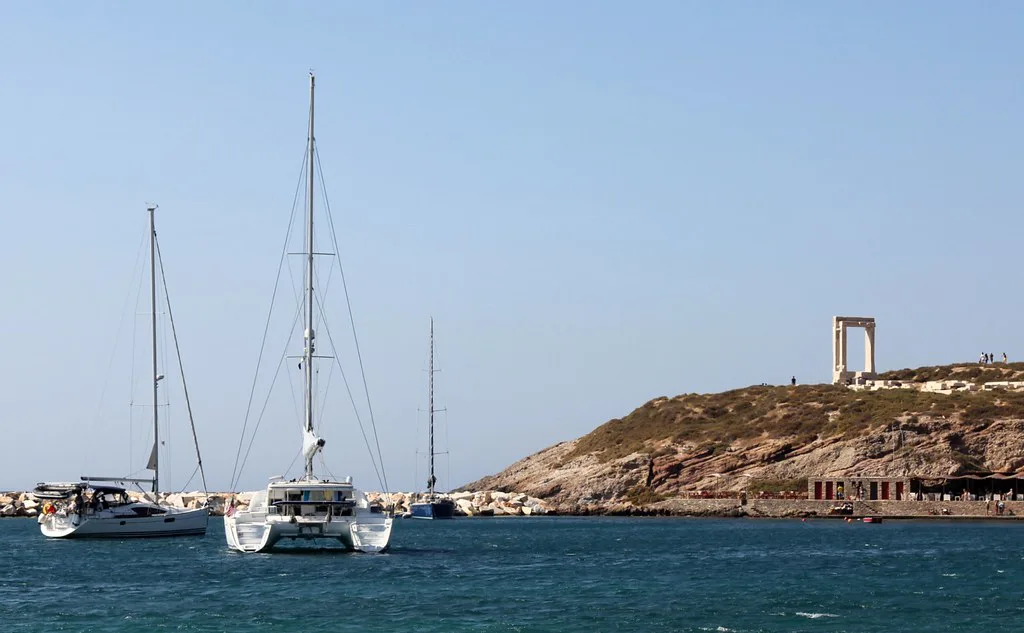
Palatia sits just offshore from Naxos Town, known locally as Chora, on the northern side of the harbour. The town's waterfront curves around the bay, and the islet closes off one end of it, so you can use the gate as a compass point while wandering the port. The Kastro, the old Venetian castle district on the hill above the town, faces the islet across the water, and the Naxos Neighborhoods: 3 Area Guides pages map how the harbour, old town and Kastro relate.
If you are planning a wider look at the island's antiquities, this gate is the easiest to reach of the major sites, since it needs no transport at all from the town centre. For the others, start with the Naxos Attractions: 4 Visitor Guides overview.
The Mycenaean-era remains excavated near the harbour, below Mitropoleos Square, belong to a much older settlement layer than the temple and are a separate site with its own access arrangements. They are worth knowing about if you are interested in how long the harbour area has been inhabited, but they are not part of the Portara visit.
How to Get There: The Causeway Walk
Access is on foot across a short causeway that links the harbour front to Palatia; there is no ferry and no road. The walk from the harbour takes roughly five minutes on a paved path, which makes the site genuinely part of a town stroll rather than an excursion. Wear shoes with some grip, because the causeway and the islet's surface are uneven, worn marble and stone in places.
From the main ferry quay, walk along the waterfront with the water on your left until the causeway appears; from the old town lanes it is a matter of following the harbour downhill. The path is exposed, with very little shade, so a hat and water matter more than you might expect for a five-minute walk. Wind funnels through the channel, and the islet's edges drop away toward the sea, so keep an eye on children near the outer rocks.
What You'll See on Palatia
Up close, the gate is a frame of massive marble blocks with a broad lintel across the top, standing on a low, rocky islet. The ground around it is a mix of bedrock, scattered blocks and uneven paving, and much of the islet is bare and open to the sky. The reward is the view back: the whitewashed town, the Kastro hill above it and the harbour full of boats.
The Kastro above the town is the natural companion sight, reached by lanes climbing from the waterfront; our kastro naxos guide covers its churches, lanes and viewpoints, and the Naxos Neighborhoods guide shows how the two districts connect. Look for the Trani Porta, the great gate of the castle, as a point of orientation between the harbour and the high town.
If unfinished ancient statuary interests you, the Kouros of Apollonas in the island's north is a far larger and stranger counterpart: a colossal figure left in the quarry. It requires a drive, unlike the Portara, so treat it as a half-day trip rather than an add-on.
Inland toward Sagri, the Temple of Demeter, Naxos is the other ancient sanctuary most worth adding to an antiquity-focused day, and it sits in open country rather than on the coast. It is a drive from Chora, so plan it as a separate outing from the harbour walk.
How Long to Allow
Plan on twenty to thirty minutes on the islet itself: enough time to walk the causeway, circle the gate, take in the view back over Chora and sit for a few minutes. Photographers who want to work the light will want longer, especially at sunset. The walk and the site combine naturally with an hour or two of wandering the harbour front and old town lanes.
Sunset Versus Sunrise: The Trade-off
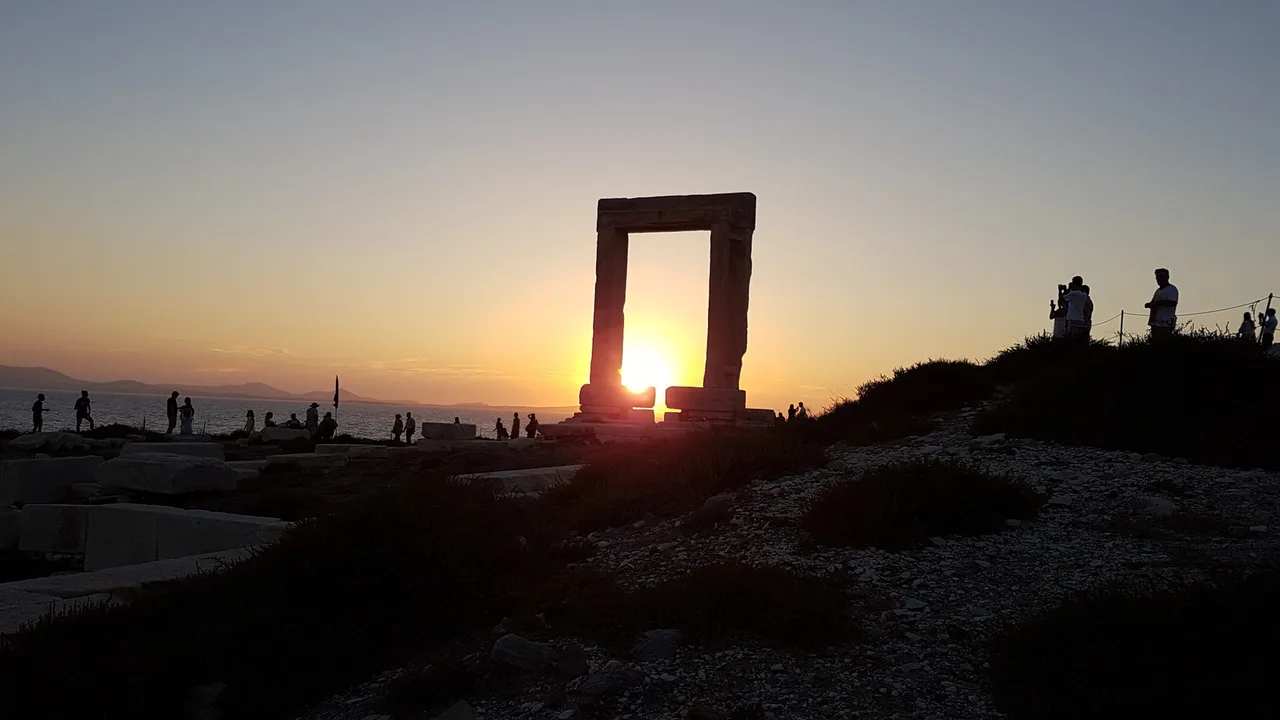
The famous visit is at sunset, when crowds cross the causeway and the sun drops behind the gate; in peak season this means drones, photoshoots and plenty of jostling for position. The alternative is sunrise, when you give up the classic sun-through-the-doorway shot in exchange for near-empty space and softer light. Both are legitimate choices, but decide which you want before you set an alarm.
For the sunset version, arrive well before the light turns and position yourself on the town side of the causeway if you want the gate against the sky, or on the islet if you want the town glowing behind you. Bring a layer, because the channel wind picks up as the temperature drops. If you are staying in the old town, the walk back after dark is short but the lanes are poorly lit in places.
Tickets, Hours and What to Check
The municipality's page describes the harbour-area archaeological site as developed and open to visitors, but it does not publish opening hours, ticket arrangements or closure days for the Portara and Palatia. Check current details with the Municipality of Naxos cultural pages or at the site itself before building a tight schedule around it, particularly outside the summer season. That is also the simplest way to find out whether any access restriction is in force on the day you plan to cross.
Access can also change for reasons unconnected to the monument, such as works on the causeway or weather that makes the islet's edge unsafe. If the walk is closed on the day you visit, the view from the harbour front still gives you the gate against the sky.
Pairing the Portara With a Chora Wander
The old town behind the harbour is a maze of narrow lanes and arches built to confuse pirates, and it still does a good job of confusing visitors, so leave the map in your pocket and follow your nose uphill. Much of the old town closes down during the midday heat in summer, so early morning or after about five in the afternoon is the better window for wandering, with the Portara either before or after. Finish with a look at the Naxos Neighborhoods: 3 Area Guides pages if you want to understand how the harbour, old town and Kastro fit together.
Nearby Places to Eat After the Walk
The harbour front and the lanes behind it are dense with tavernas, and the practical choice is between tables facing the water and better-value rooms a street or two inland. In Chora, Scirocco sits on Plateia Protodikiou, a square in the town centre, while Boulamatsis is a plain, family-run taverna known for dishes such as fava, the yellow split-pea purée served with chopped onion, and slow-cooked veal with aubergine and feta. Neither depends on a view, which is usually a good sign for the cooking.
For something quick near the port, Yasouvlaki serves gyros, the wrapped pita with meat, salad and chips, and souvlaki, grilled skewers, in generous portions; Souvlaki of Makis is another small, informal spot in town for the same. If you want a proper sit-down dinner after sunset, book ahead in high season, because the tables closest to the water go first.
Beach days are a short bus or taxi ride from Chora; Agios Georgios, the sandy beach just south of town, is the closest stretch of sand and a handy option for a late-afternoon swim before walking out to the gate.
Dessert or a coffee on the way back is easy on the harbour; the lanes also hold the older market shops, where local cheeses such as graviera and xinomizithra, a tart whey cheese, are sold alongside honey and olive oil.
Plan Your Visit
The Portara rewards a little planning more than its size suggests: go early or late, wear shoes that grip, and treat the causeway walk as part of the visit rather than a formality. Confirm opening and access arrangements before a dedicated trip, then let the rest of the day unfold in the lanes and tavernas of Naxos Town.
Frequently Asked Questions
Can you walk to the Portara from Naxos Town?
Yes. The gate stands on Palatia islet, connected to the harbour front by a short paved causeway, with no ferry or road involved. The crossing takes only a few minutes, and the site is close enough to be part of an ordinary walk through Chora. Wear shoes with grip, since the causeway and the islet's surface are uneven in places.
Is the Portara better at sunset or sunrise?
Sunset is the classic choice and the busiest, with crowds, drones and competition for the best angle in peak season. Sunrise offers much emptier space and softer light, but you lose the shot of the sun dropping through the doorway. Decide which you value more before setting an alarm, and bring a layer either way because the channel wind picks up.
What is left of the Temple of Apollo on Naxos?
What survives is essentially the monumental marble doorway, the Portara itself, standing on Palatia with scattered blocks around it. The temple was commissioned in the sixth century BC under Lygdamis and abandoned before completion, so there are no standing columns or cella walls to see. Read the gate as a fragment of a planned building rather than a finished ruin.
Is there an admission charge for the Portara?
The Municipality of Naxos page on the harbour-area archaeological site does not publish ticket arrangements, opening hours or closure days for the Portara and Palatia, so confirm the current position on the municipality's cultural pages or at the site before building a tight schedule around it, especially outside the summer season. Even if the causeway is closed, the gate is visible from the harbour front.
How long do you need at the Portara?
Allow twenty to thirty minutes on the islet: enough to cross, walk around the gate, look back over Chora and the Kastro hill, and sit for a few minutes. Photographers working the light will want longer. Most visitors combine it with an hour or two in the harbour front and old town lanes, which start immediately behind the waterfront.
Sources
- Archaeological Site of Grotta | Naxos and the Small Cyclades
- Things to Do in Naxos (2026): Insider Tips From a Month on the Island | The Common Wanderer
- The 21 best spots for gyro in Naxos
- Agios Georgios Beach | Hora (Naxos), Greece | Attractions - Lonely Planet
- Temple of Apollo (Naxos)
- Portara (or Temple Of Apollo) in Naxos, Greece