
Kastro, Mykonos: What to See, Where to Eat and Who It Suits
Kastro is the historic heart of Chora, as Mykonos Town is known locally, and it sits on the low hill just above Little Venice and the windmills. Travelers often search for it as if it were a village of its own, but it is a district inside the town, reached on foot from the harbour front and the bus stops. This guide treats it as one neighborhood: its lanes, its edge, its tables, and the kind of trip it rewards.
What and Where Kastro Is
Kastro occupies the raised, whitewashed core of Mykonos Town, a knot of narrow lanes and small squares set above Little Venice and within sight of the famous windmills on the town's southern edge. It is not a detached settlement, so there is no separate trip to plan: you arrive in Chora and walk up into it. Alefkandra, the waterfront strip usually called Little Venice, forms its lower edge, which is why so many of the district's best-known tables sit at the water line.
The distinction matters for planning because Kastro belongs to the walking town rather than to the beaches. Buses and taxis bring you to the edge of Chora, and from there the lanes take over. If you are comparing bases, the Ornos, Mykonos and Platis Gialos, Mykonos pages cover the beach-side alternatives, while Kastro is the choice for someone who wants to step out of a doorway into old-town atmosphere. The same hilltop, lane-threaded feel on another island is covered in the kastro naxos guide.
Character of the Quarter
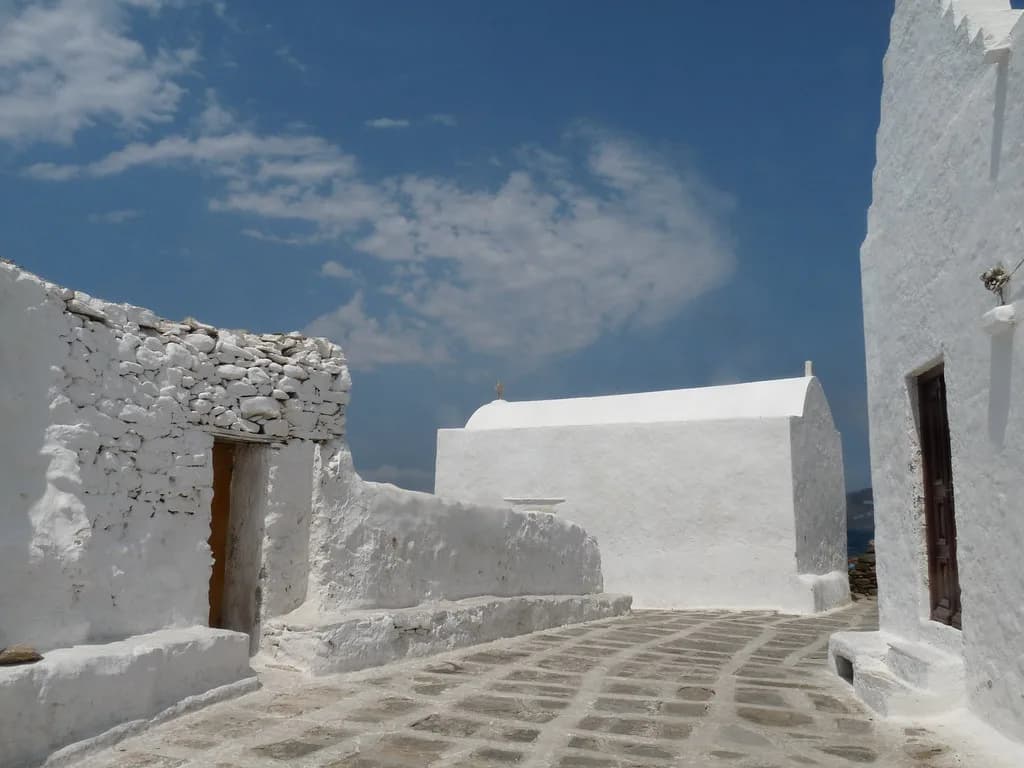
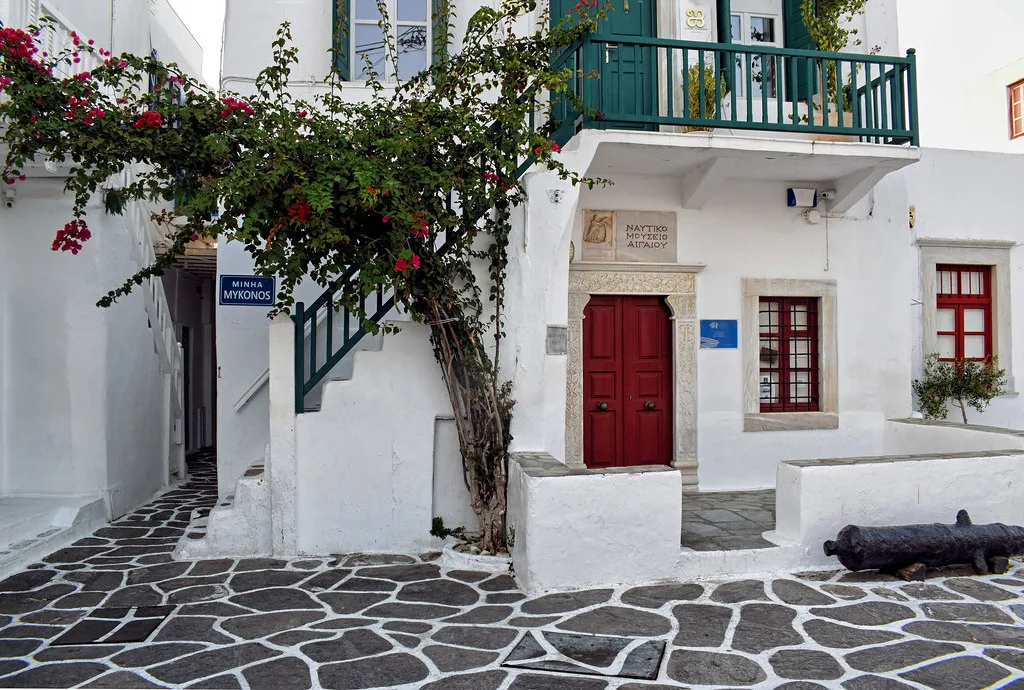
Expect tight, mostly pedestrian lanes, whitewashed walls, painted balconies and glimpses of the sea where the slope opens toward Alefkandra. The quarter is compact and best experienced slowly, which is why it draws evening strollers rather than beach crowds. In high season the lanes fill around dusk as people drift down toward the water for the sunset, then thin again after dinner.
Because the district is small and residential in stretches, it rewards travelers who like to wander without a fixed itinerary. The trade-off is that the same lanes that make it atmospheric can be confusing after dark, and a phone map helps more than street signs. It also means the area is quieter in the morning, when the light on the white walls is at its best and the waterfront is still calm.
Who It Suits and Who It Does Not
Kastro suits walkers who value atmosphere and old-town texture over sea views from a balcony, and who are happy to cover short distances on foot over uneven paving and steps. It rewards travelers who plan dinner around the sunset and are willing to book ahead for the tables that face the water. It also works for anyone who wants the town's sights and restaurants within a few minutes of each other.
It does not suit travelers who need flat ground, lifts or easy parking, because the lanes are stepped and cars cannot reach most addresses. Anyone looking for a resort-style stay with a pool and a beach on the doorstep should look at the beach districts instead. If your priority is a caldera-style view table every night without planning, Kastro will feel like work.
What to See Within the District and on Its Edge
The windmills of Mykonos stand on the ridge at the southern edge of town, a short walk from the Kastro lanes, and they are the classic sunset viewpoint. Little Venice, the row of balconies and tables over the water along Alefkandra, is directly below the district and takes a few minutes to reach on foot. Both are free to visit and best seen outside the busiest hour around dusk.
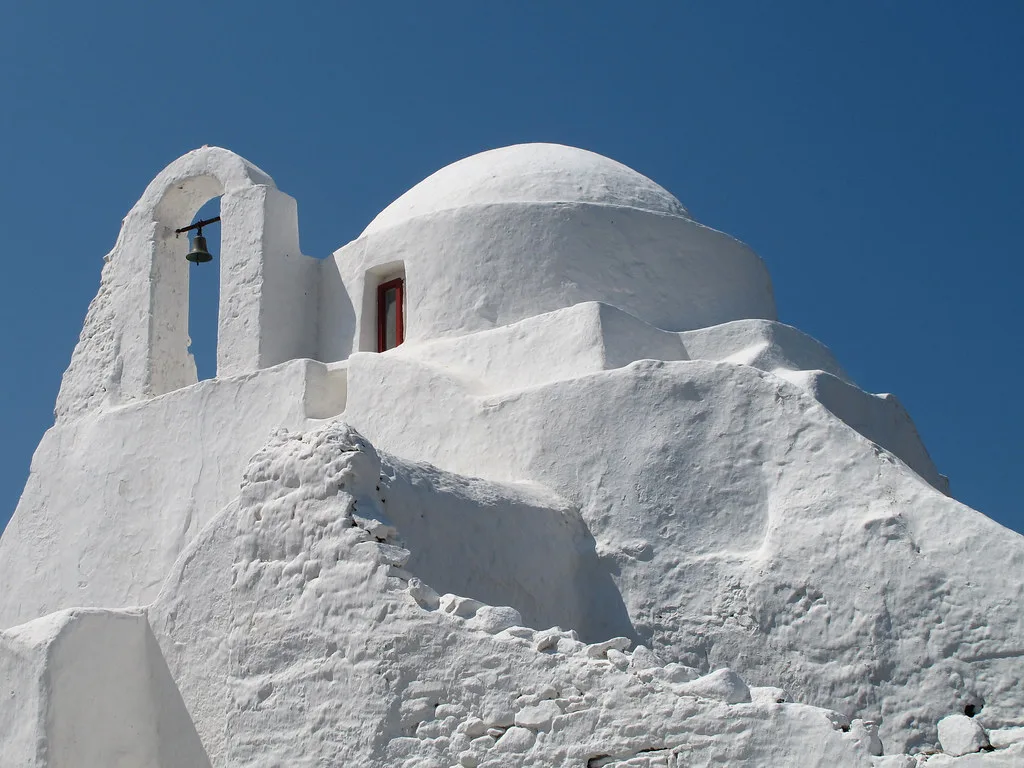
The lanes themselves are the main sight: small churches, painted doors, bougainvillea and shopfronts tucked into the white walls. Distances inside the district are tiny, usually a few minutes between any two points, so the practical plan is a slow loop from the windmills down through the lanes to Little Venice and back up. For a wider list of town sights, the Mykonos Attractions: 8 Visitor Guides page covers the options beyond this quarter.
Where to Eat: Kastro's in Little Venice
Kastro's occupies a spot on Agion Anargyron in Little Venice, at the water's edge in Mykonos Town, and has held that position since 1976. Tables sit over the sea wall itself, so on a calm evening the water moves audibly beneath the flagstones. The restaurant takes reservations through its website and by phone on +30 22890 23072, and the front balcony over the water is the seat to ask for by name.
Budget roughly €90 to €150 per person with wine, according to the restaurant guide that documents the booking rhythm, with larger whole fish sold by weight at the counter pushing the bill higher. That price tracks the position over the Aegean as much as the plate, so a spread of meze with one shared fish lands nearer the lower end.
The menu is deliberately traditional Greek seafood, not inventive modern cooking, and the room has a candlelit feel with the windmill silhouette in view. The trade-off is clear: you pay for the view, and the front tables sit exposed over open water on a breezy night. If you want shelter or a quieter corner, request a set-back table and accept a lesser view.
Dish Primer: What to Order
Greek seafood mezze are small plates to share, and at Kastro's they open the meal before the main fish arrives. The order the source recommends is the grilled catch of the day, served whole and dressed simply with olive oil and lemon, alongside a spread of those meze to start. The kitchen's restraint means the fish arrives clean rather than fussed over.
Sold by weight means the whole fish is weighed at the counter and priced accordingly, so a larger fish raises the final bill beyond the usual per-person band. If you are ordering for a group, ask for the weight and the price per kilo before it goes on the grill, and let the shared-fish approach keep the table toward the lower end. The restaurant's own wine list page is the place to see what is poured alongside.
Trade-offs: View Versus Value, Early Versus Late
The central trade-off at Kastro's is view versus value. The front balcony over the water at dusk is what people book weeks ahead for, while a set-back table is an ordinary good dinner at the same price. If the view is the point of the trip, pay for it and book early; if the fish is the point, a later seating delivers the same kitchen for less effort.
Timing shapes the bill and the experience more than the menu does. Early seatings cluster around the sunset rush, while a table after nine is far easier to secure and still gives you the candlelit room and the windmill silhouette. The compromise that works for many travelers is a drink at the bar over the sunset, then a later table for dinner.
Booking Strategy for the Sunset Balcony
For a sunset balcony table in July or August, the guidance is to book about a month ahead, because the two hours around dusk are the hardest seats on the island. Say both sunset and balcony explicitly when you call, since the difference between a front-row table over the water and one set back is the whole experience. Later seatings are often bookable a few days out.
If the balcony shows nothing for your dates, two moves help: take a later seating and watch the sunset from the bar over a drink, or arrive around 6:15pm and ask about any cancellation before dinner service settles. Being flexible by a day in either direction sharply improves the odds. Neither route needs a month of notice.
Alternatives When Kastro's Is Full
Mykonos keeps other strong sunset and seafood rooms. Kenshō in Psarou runs a more contemporary Greek kitchen, Bill & Coo's terrace above Megali Ammos is the polished alternative for dusk, and M-eating in Mykonos Town is the reliable late option in the lanes. Each sits in a different part of the island, so the choice is as much about transport as about the menu.
For a slower, village-based evening away from the town, Ano Mera, Mykonos is the inland alternative, while the beach districts suit anyone who wants dinner near the sand. The trade-off is that none of these puts you over the water at dusk in Little Venice; if that specific setting is the goal, book Kastro's early rather than plan a substitute.
Where to Stay in or Next to Kastro
Staying in or beside Kastro buys you the old town on foot: lanes, balconies, the windmills and Little Venice within a few minutes, and dinner a short walk from your door. The cost is space and access, because rooms in the old lanes are small and vehicles cannot reach most doors. Travelers with heavy bags should ask the property how luggage gets from the drop-off point to the room.
Staying out at the beaches buys space and parking at the price of a bus or taxi ride into town each evening. If your trip mixes a few town nights with beach days, split the stay rather than commuting from one base. The Mykonos Neighborhoods: 4 Area Guides page sets the options side by side.
Getting There and Getting Around on Foot
The town is a walking district, and Kastro is reached on foot from the harbour front, the main bus stops and the taxi drop-off at the edge of Chora. Within the district, distances are a few minutes between any two points, and the only real obstacles are steps, uneven paving and crowds at dusk. Wear shoes that handle both.
From the beaches, local buses and taxis run into Mykonos Town, and the walk from the drop-off into the lanes is short but not step-free. Travelers staying at Ornos or Platis Gialos should plan the return trip before a late dinner, since the last buses fill quickly in high season. For the wider picture of what to do in town, the things to do in Mykonos page covers Matogianni Street and the rest.
Practical Tips Before You Go
Two details are worth confirming before you travel: the restaurant's current booking arrangements through its own site, and the bus times for your return from town if you are staying at the beaches. Neither of those is fixed from season to season, so check the restaurant's site and the local bus operator shortly before you go. Everything else in Kastro can be handled on foot once you arrive.
Plan Your Visit
Kastro is the old-town quarter where Mykonos Town began, and it works best as a walking base for travelers who want lanes, windmills and Little Venice within minutes of each other. Book the sunset balcony at Kastro's about a month ahead in high summer, or take a later table and watch the light from the bar. If you need flat ground, lifts or parking at the door, choose a beach district instead.
Frequently Asked Questions
Is Kastro Mykonos a separate village or part of Mykonos Town?
Kastro is a district inside Mykonos Town, also called Chora. It is the oldest core of the town, set on the low hill above Little Venice and near the windmills. You reach it on foot from the harbour front and the town's bus and taxi drop-off points, not by a separate trip.
How far in advance should you book Kastro's in Mykonos?
For a sunset balcony table in July or August, the guidance is about a month ahead, because the hours around dusk are the hardest seats on the island. A later seating after nine is often bookable a few days out. Say both sunset and balcony when you reserve, through the restaurant's website or by phone.
How much does dinner at Kastro's Mykonos cost?
The restaurant guide that documents the booking rhythm puts dinner at roughly the mid-to-high band per person with wine, with larger whole fish sold by weight pushing the bill higher. A spread of meze with one shared grilled fish keeps the table toward the lower end. Check current pricing when you book.
What is the best table at Kastro's?
The front balcony seat over the water at dusk is the table people book weeks ahead for. Ask for it by name when you reserve, because a table set back from the edge is a different evening. If the balcony is unavailable, watch the sunset from the bar with a drink and take a later seating.
What should you order at Kastro's?
Start with a spread of Greek seafood mezze to share, then the grilled catch of the day served whole with olive oil and lemon. The kitchen keeps the fish simple rather than elaborate. Whole fish is sold by weight at the counter, so ask for the weight and price before it is grilled.
Where can you eat if Kastro's is fully booked?
Kenshō in Psarou runs a more contemporary Greek kitchen, Bill & Coo's terrace above Megali Ammos is the polished alternative for dusk, and M-eating in Mykonos Town is the reliable late option in the lanes. Each is in a different part of the island, so factor in transport.
Is Kastro a good area to stay in Mykonos?
It suits travelers who want the old town on foot, with the windmills and Little Venice minutes away. It does not suit anyone who needs flat ground, lifts or parking at the door, because the lanes are stepped and cars cannot reach most addresses. Ask your property how luggage is carried in.
How do you get to Kastro without a car?
Buses and taxis bring you to the edge of Mykonos Town, and the district is reached on foot from there. Within Kastro, everything is a few minutes apart on foot over uneven paving and steps. If you are staying at the beaches, check the return bus times before a late dinner.