Santorini Photo Spots: Where to Go for Blue Domes
Plan Santorini photo spots by village and time of day, from Oia's blue domes and castle to Firostefani's Three Bells, plus how to reach Ammoudi Bay.
On this page
Almost every Santorini photo you have seen was taken in one of four caldera-rim villages or in two inland ones, and the difference between a good shot and a wasted morning is usually timing rather than equipment. Oia, Imerovigli, Firostefani and Fira line the cliff edge above the lagoon, while Pyrgos and Megalochori sit higher and quieter in the middle of the island. Choosing your village first, then your hour, saves more time than any camera upgrade.
The light flips through the day: Oia's domes and the steps around them are best before roughly 10am and turn backlit by late afternoon, while Firostefani's Three Bells and the inland villages reward an afternoon visit. Crowds follow the same clock, so the early window is also the queue-free window. If your main goal is the evening itself rather than the buildings, start with a broader plan for the Santorini Sunset Guide and work backwards from there.
Quick Orientation: Which Village, Which Light
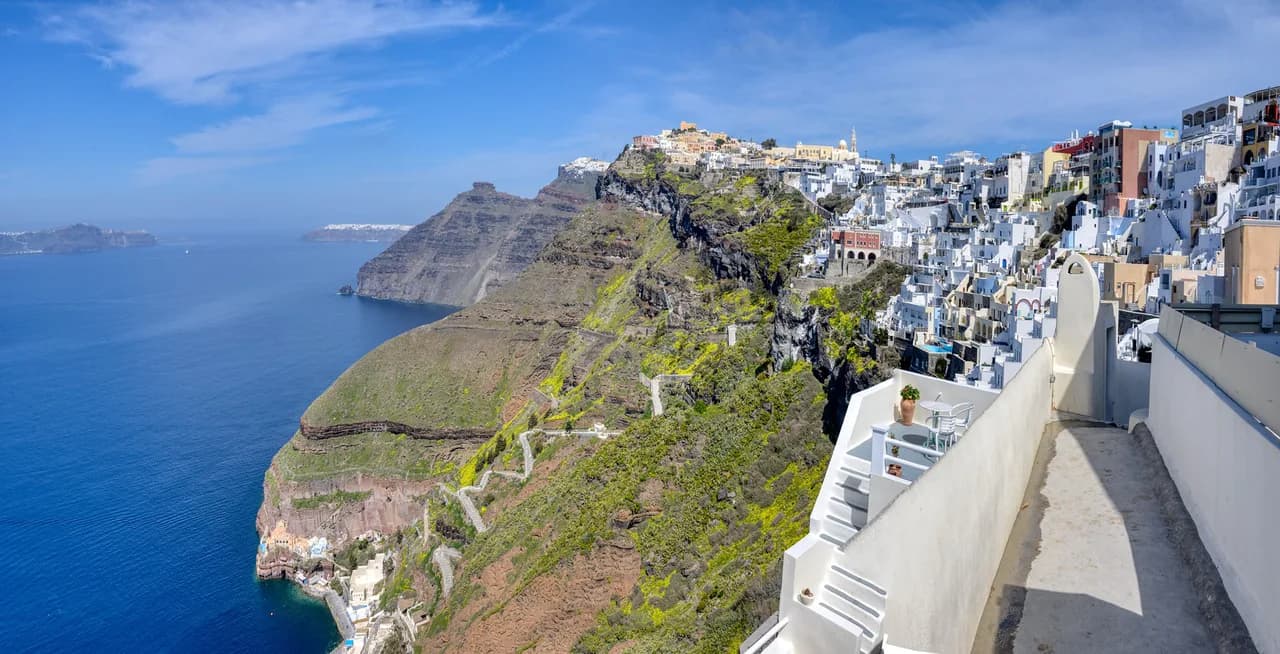
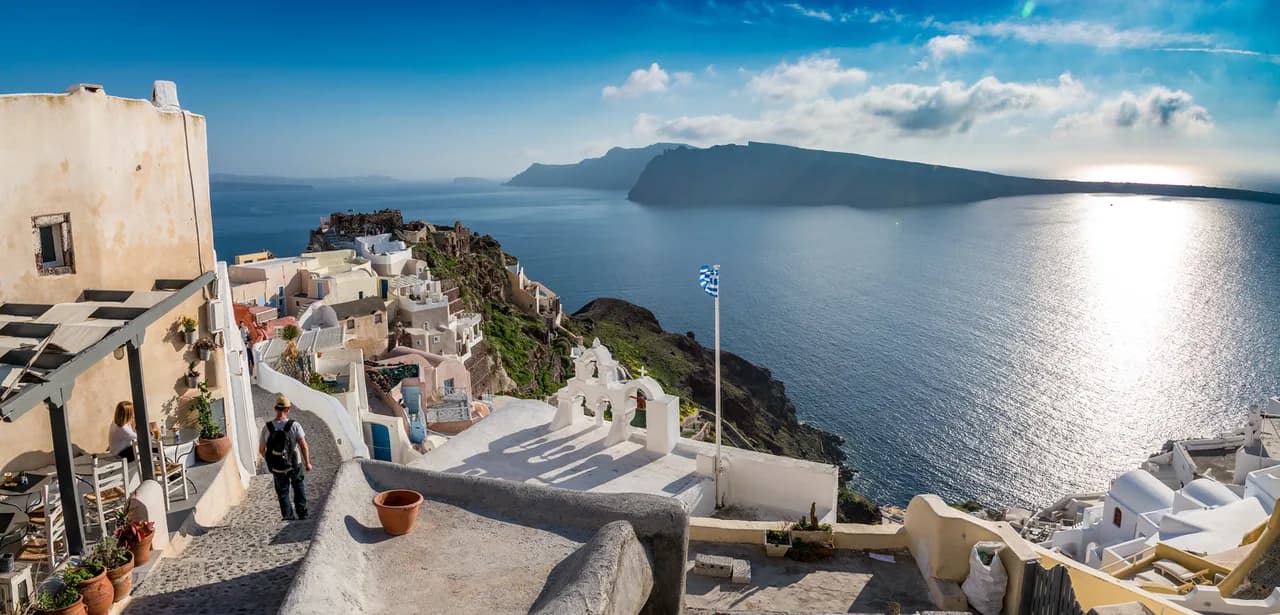
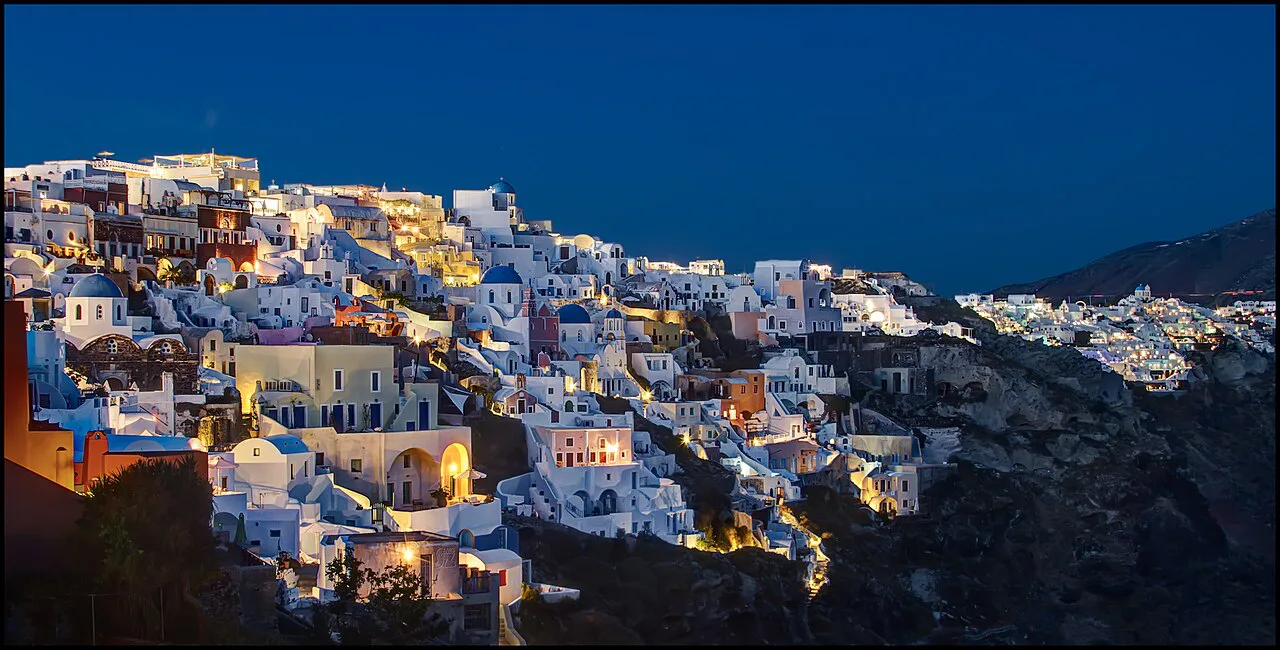
Oia occupies the northern tip of the caldera and holds the densest concentration of photo subjects: the three blue domes, a pink-fronted church, two windmills, the castle ruins and the harbour of Ammoudi Bay about 290 steps below. Imerovigli, the next village south along the rim path, is calmer and holds the Anastasis Church. Firostefani sits between Imerovigli and Fira, and Fira itself is the capital, the busiest town and the cruise-ship landing point. If you are still weighing which villages to base yourself in, our Santorini Neighborhoods guide compares them area by area.
Inland, Pyrgos is described as the island's former capital and highest village, roughly a 10-minute drive from Fira, with panoramic views and castle ruins. Megalochori, surrounded by vineyards, has a three-tiered bell tower and traditional cave houses near its main square. Both are far quieter than the caldera villages, which makes them a sensible afternoon counterweight to a crowded Oia morning. If you are deciding where to base yourself for these quieter stops, Santorini Neighborhoods compares the island's areas side by side.
If you want to match these stops to the rest of your itinerary, the Santorini Attractions: 7 Visitor Guides hub covers the island's main sights in the same place-by-place format, and the Santorini Neighborhoods: 4 Area Guides pages explain how the villages relate to each other on the ground.
Oia's Three Blue Domes: The Two Churches and the Jewellery-Shop Path
The postcard domes belong to two churches, Agios Spiridonas (Saint Spyridon) and Anastaseos (the Church of the Holy Resurrection). The approach is a small treasure hunt: start at the main square with the large Ekklisia Panagia Platsani church behind you, walk down the pedestrian street Nik. Nomikou, turn left down the pathway beside the Alexandros jewellery shop, and at the fork by the brown 'floating' door keep right.
Expect a queue. One account reached Oia at 7am and joined the line at 7.15, waiting about 35 minutes, with the queue four times longer by the time they left; another reports the area becoming very crowded after 10am and backlit by late afternoon. Arriving around 7am is the practical compromise between usable light and a short wait.
This is private property. You cannot walk up to the churches, crossing the rope counts as trespassing, and standing on church roofs is forbidden. Photographers line up at the gate anyway, so treat the shot as something you take from the designated path and move on rather than a place to linger.
The Pink Church Steps Near the Minerali Shop
On the opposite side of the churches, a stairway with a small bell tower in the foreground and the Aegean behind gives the second classic Oia frame; the church front is painted pink, which is how the spot got its name. From the main street, turn left onto Nik. Nomikou and take the narrow path opposite the Poniros jewellery shop, next to the Minerali shop, down to the steps.
In May, one pair waited only about 10 minutes at 8am here, though summer queues run longer and working local photographers are reportedly allowed to skip ahead. The same source places the best light in the morning. Combine this stop with the blue domes in a single early walk, since the two are only minutes apart.
Oia Castle at Sunset: How Early, and What to Expect
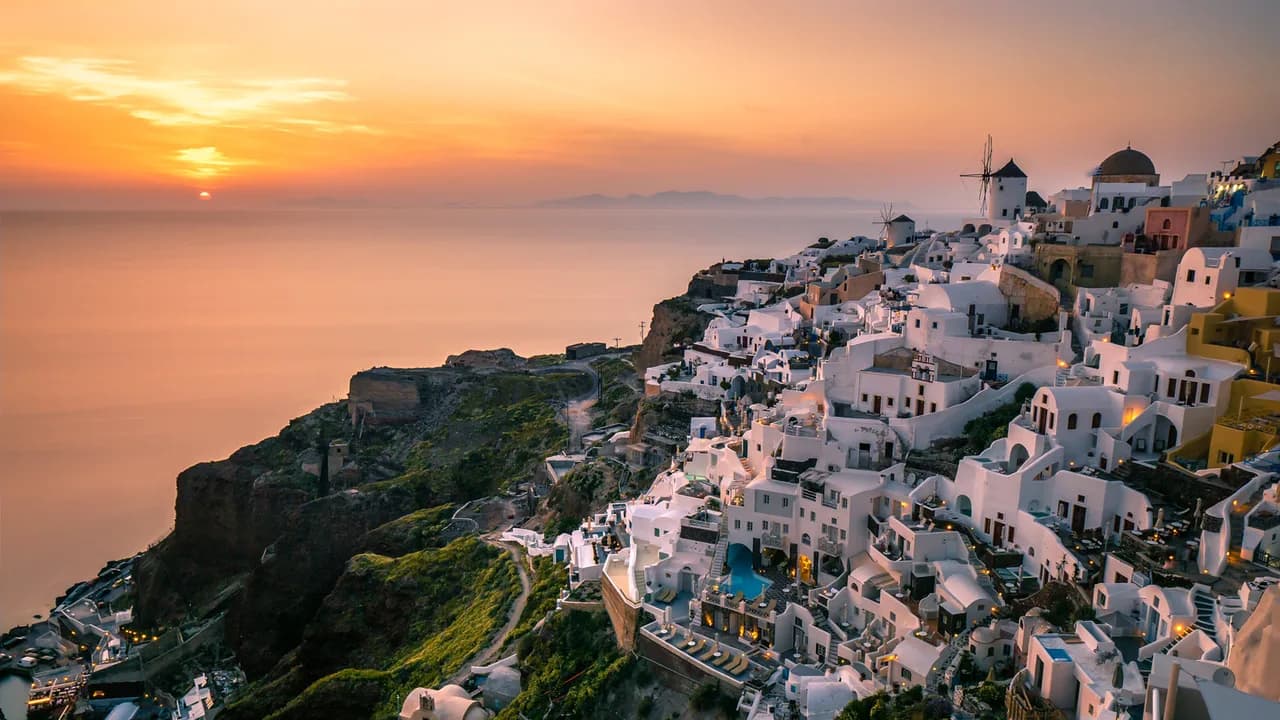
The castle ruins are the island's best-known sunset viewpoint, and they are genuinely crowded: reports describe a scrum in summer and a spot where you will struggle to find a clear view unless you arrive well ahead. One photographer suggests roughly 30 minutes before sunset is enough, while noting that others turn up three hours early.
The castle is also worth visiting in daylight, before about 1pm, when the light falls on the ruins rather than behind them. The steps below the castle that lead toward Ammoudi Bay offer a similar caldera view with more room to frame a person in the shot, which is a reasonable trade if you want the view without the shoulder-to-shoulder experience.
For a full comparison of viewpoints and timing across the island, see the guide to Watching the Sunset in Oia, Santorini, which covers the evening options in more detail.
Oia Windmills and the Sunspirit Bar Terrace
Santorini has around 70 windmills, two of them in Oia, and they once ground flour. The Oia pair are private property belonging to Charisma Suites, so you photograph them from outside rather than walking up to the sails.
The practical viewpoint is the terrace of the Sunspirit bar, where you can order a drink and shoot the windmill over the caldera; a local beer such as Yellow Donkey is the obvious order. This spot reportedly looks best from around noon and holds up at sunset, which makes it a useful filler between the morning dome queue and the evening castle crowd.
Ammoudi Bay: 290 Steps Down, Seafood at the Bottom
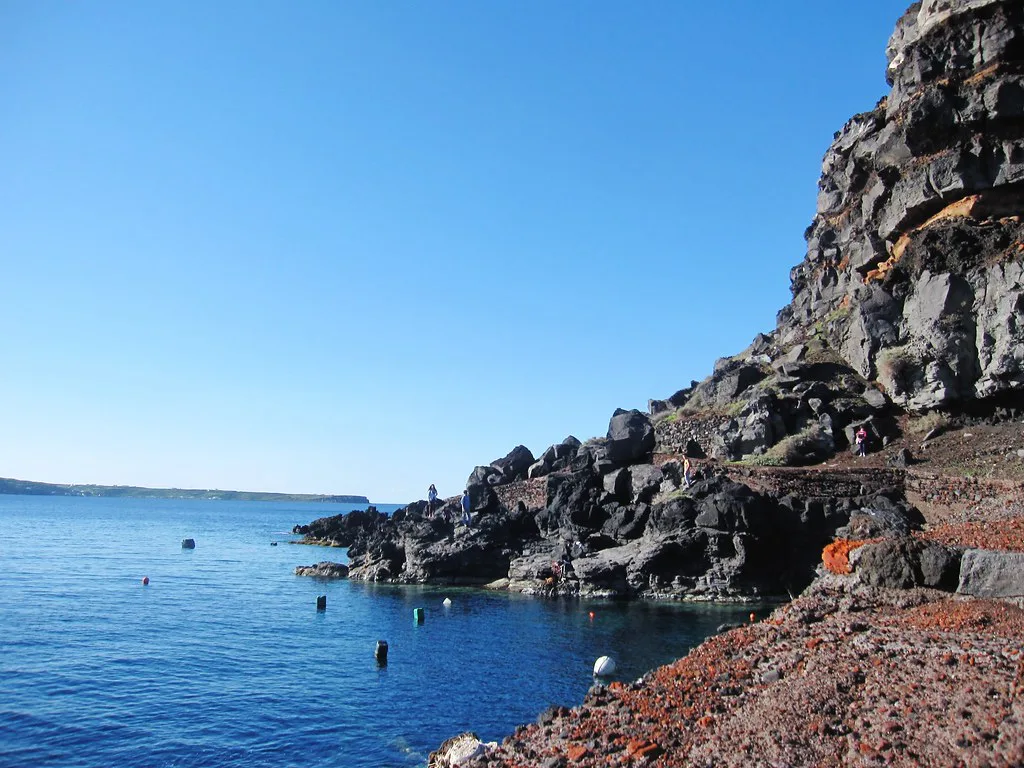
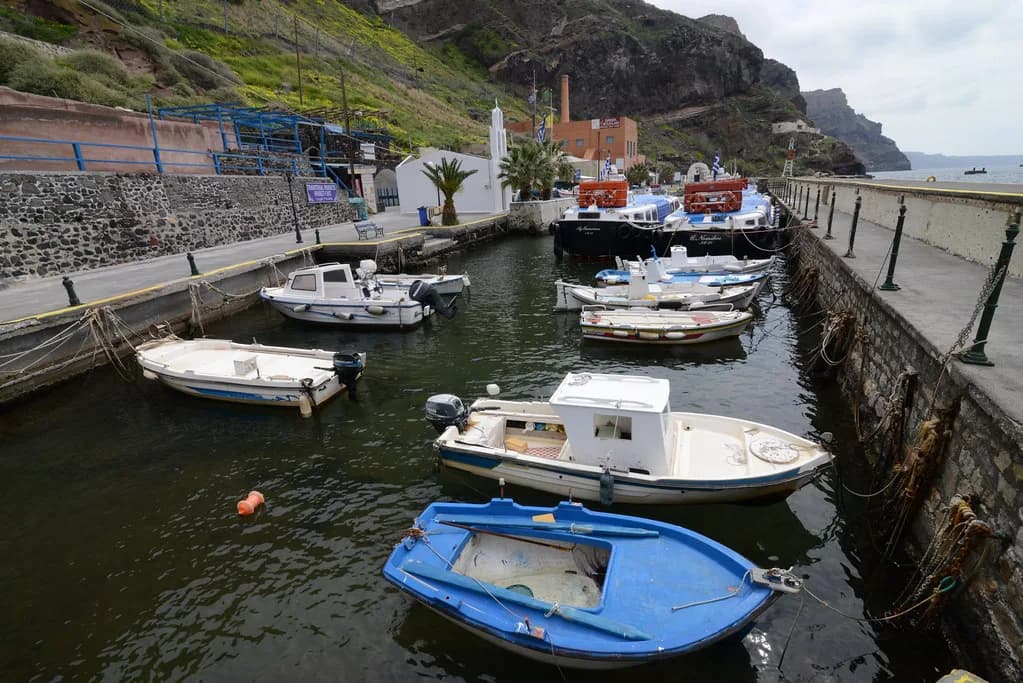
Ammoudi Bay is the fishing harbour directly below Oia. You can walk down the Oia Steps in about 20 minutes, descend roughly 290 steps, take a donkey, or drive the steep narrow road to the harbour, where parking is very limited. The walk back up is the part people underestimate.
The best harbour frame is found by walking through the tavernas to the widest part of the path and looking back at the wooden boats against the red cliffs. Early morning and late afternoon have the fewest people, while the 12pm to 2pm window is when the waterfront restaurants are open and a grilled octopus and a spritz before the climb back up is a sensible plan.
For a sit-down meal by the water, Ammoudi Fish Tavern serves seafood and Greek dishes at the harbour edge and is open daily from 11am to 11pm according to one report, though hours are worth confirming directly with the taverna before planning around it. Seafood linguine and fried fish of the day are the dishes named there.
Imerovigli's Anastasis Church and the Bougainvillea Frame
Imerovigli is the quieter caldera village between Fira and Oia, and its photo subject is the Anastasis Church of the Resurrection of the Lord, a whitewashed Orthodox church with a studded blue dome and a separate bell tower. The shot most people want is taken from a ledge on the pathway above the church, near Cilon Suites Hotel, with pink bougainvillea in the frame.
Wait your turn: local photographers use the ledge too, though one pair waited only a couple of minutes. Morning to early afternoon is the calmer window, since the spot fills up at sunset, and the church sits close to the Fira end of the Fira to Oia walking trail if you are hiking the rim.
Firostefani's Three Bells of Fira
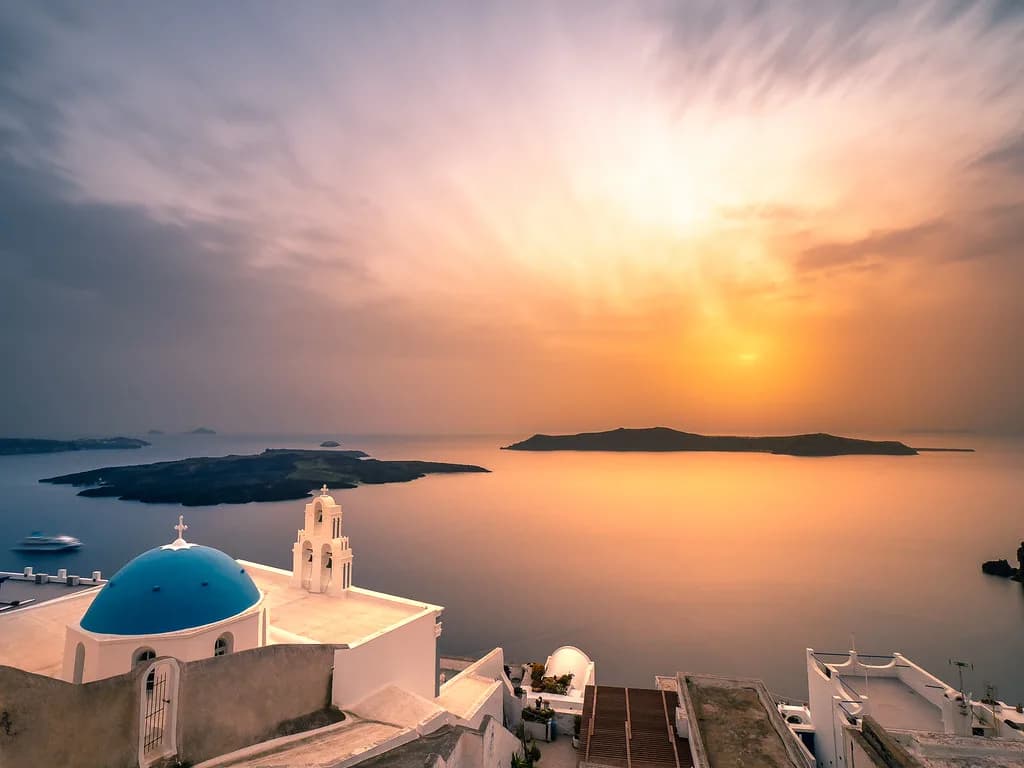
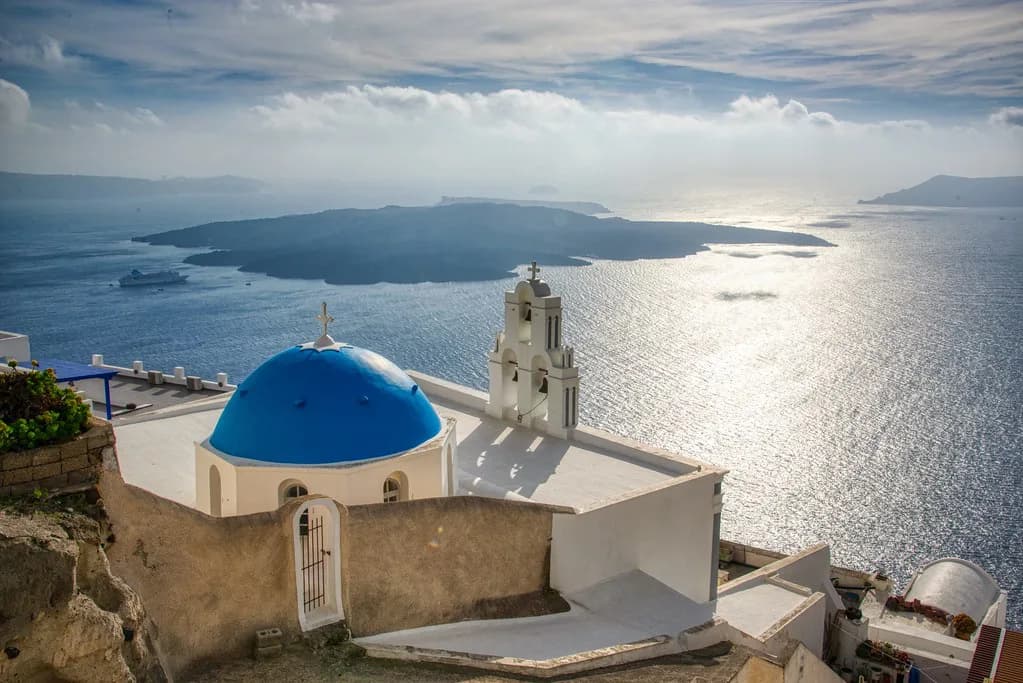
The Three Bells of Fira is officially the Catholic Church of Koimisi Tis Theotokou, built in 1757 and sitting in Firostefani just outside the capital. Walking up from the centre of Fira takes around 15 minutes, and the road above the church has a small car park with a ledge overlooking the bells and the sea.
The light is best after 4pm, and one pair shot it at 5pm when the site was quiet; daytime is busier with cruise groups making quick stops. Because you face out to sea, other visitors rarely end up in your frame, which makes this the most forgiving of the caldera viewpoints.
Fira as a Base and a Photo Stop
Fira, officially Thira, is the capital, the busiest town and the point where cruise ships land, with shops, hotels and restaurants packed along the caldera edge. It is the practical base for bus connections and the start of the rim walk, but it is not the place for empty whitewashed streets.
Treat Fira as a transport hub and an evening stroll rather than a primary photo stop, and spend your camera time in the villages either side. For a wider list of things to fill the rest of the day, the things To do in Santorini guide covers the island beyond the viewpoints.
Inland Alternatives: Pyrgos and Megalochori
Pyrgos, about a 10-minute drive from Fira, is the island's former capital and highest village, with 56 churches, medieval houses and castle ruins. The photo stop is behind the Church of Agia Theodosia, reached by walking up from the main road toward the castle; further up, steps beside Franco's Cafe lead to the Pyrgos Kasteli ruins and panoramic island views.
For food, Kantouni Restaurant at the base of Pyrgos serves traditional Greek dishes under pine trees, while Penelope's Ouzeri offers a more spectacular setting higher in the village. Ouzeri means a taverna built around ouzo, the anise-flavoured spirit usually served with small plates.
Megalochori's three-tiered bell tower, adorned with dove motifs and six bells, forms an archway over a narrow street leading to the main square, and it belongs to the church of Panagia ton Eisodion. Traditional cave houses from the 1700s can be visited free near the main square, and Mr. Scoop is named for homemade ice cream.
A One-Day Photo Route by Village
Start in Oia around 7am for the blue domes and the pink church steps, which puts both queues behind you before the heat builds. Move to the windmill terrace at Sunspirit around noon, then descend to Ammoudi Bay for a harbour walk and lunch at a waterfront taverna before climbing back up.
Finish at Oia Castle or the steps below it for sunset, arriving at least 30 minutes early, or skip the scrum entirely and watch from the quieter stretch of the rim path toward Imerovigli. A second day covers Imerovigli's Anastasis Church in the morning, Firostefani's Three Bells after 4pm, and Pyrgos or Megalochori in between.
Season matters too: one source recommends the shoulder seasons of April to mid May and September to October for lighter crowds. Many island restaurants close outside the summer season, but confirm a specific taverna's dates directly before building a day around it.
The Main Trade-Offs
Every choice here is a trade between the iconic frame and your patience. Oia's domes and castle are the images you came for and also the most crowded places on the island; Pyrgos and Megalochori are calmer but lack the caldera backdrop. Pair one crowded icon with one quiet village each day and the balance sorts itself out, and our Santorini Neighborhoods guide can help you decide which village suits that quieter half.
Footwear is not a trivial detail. The caldera steps, especially those below Oia Castle and on the descent to Ammoudi, are slippery and shared with donkeys, so trainers beat flip-flops. Driving down to Ammoudi solves the climb but not the parking, which is very limited.
Where a viewpoint or restaurant is on private land, respect the boundary even when others push past it, and check current access details before relying on any single viewpoint or taverna for a fixed plan.
Plan Your Visit
Build your Santorini photo days around villages and light windows rather than a list of coordinates: Oia before 10am, Firostefani after 4pm, and the inland villages whenever the caldera crowds peak. Book any sunset table or caldera-view room well ahead, since the best-positioned places fill first in the shoulder seasons.
Take one crowded icon and one quiet village per day, carry shoes that grip the steps, and treat private property lines as final. The photographs will be better for it, and the days will be calmer.
Explore more Santorini sauna guides
Frequently Asked Questions
Where is the famous photo spot in Santorini?
The single most reproduced image is the three blue domes in Oia, belonging to the churches of Agios Spiridonas and Anastaseos. Reach them from the main square by walking down Nik. Nomikou and turning left beside the Alexandros jewellery shop, then right at the fork by the brown door. The area itself is private property, so you photograph from the path.
What time should I go to the Oia blue domes to avoid crowds?
Arrive around 7am. Reports describe a wait of about 35 minutes at 7.15am in one season, with the queue several times longer shortly after, and heavy crowding after 10am. Early morning also gives the best front-lit view before the domes turn backlit in the late afternoon.
How many steps are there down to Ammoudi Bay?
Roughly 290 steps on the Oia path, taking about 20 minutes to walk down. You can also drive the steep narrow road to the harbour, but parking there is very limited, and the climb back up is the part most people underestimate.
Can you take photos at the Oia blue domes if they are private property?
You can photograph them from the public path, but you cannot cross the rope or enter the church grounds, and standing on the roofs is forbidden. Visitors do queue at the gate, so keep the shot brief and stay on the walkway.
Is it worth going to Oia Castle for sunset?
Yes for the view, with expectations set: it is the island's most crowded sunset spot and you will likely share the frame. Arriving about 30 minutes early is usually enough, and the steps below the castle toward Ammoudi offer a similar caldera view with more space.
Which is the prettiest part of Santorini for photos?
Oia holds the most subjects in one walk, but Imerovigli and Firostefani are calmer and reward a morning or late-afternoon visit. Pyrgos and Megalochori are the choice if you want whitewashed streets and bell towers without the caldera crowds.
Do I need a car for the inland villages?
Pyrgos is about a 10-minute drive from Fira, which makes a car or taxi practical for combining it with Megalochori. Buses and the caldera rim walk cover the cliff villages, but the inland pair is easier with your own transport.
When is the best season for Santorini photography?
The shoulder seasons of April to mid May and September to October are recommended for lighter crowds and workable light. Summer brings the longest queues at the domes and the castle, so plan earlier starts if you travel then.
Sources
Notes for eating well in Greece
Optional updates to our guides.
You might also like
Continue reading
More guides you'll find useful