
Nea Alikarnassos, Heraklion: What the District Is and Who It Suits
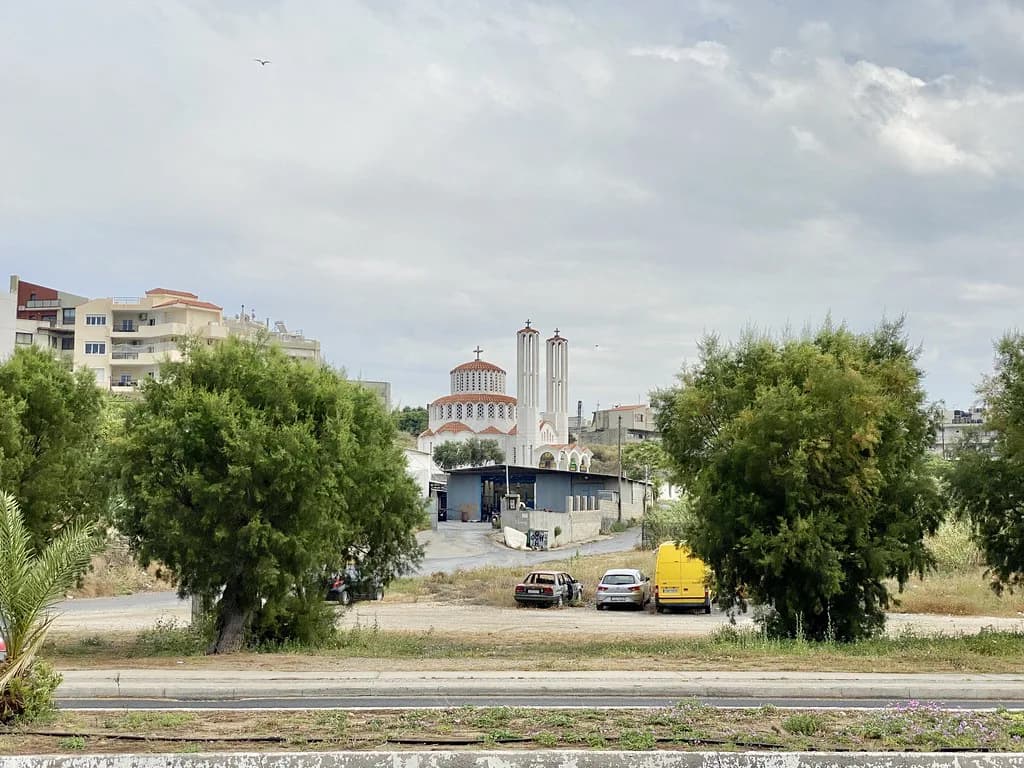
Nea Alikarnassos sits within Heraklion municipality on Crete, but it is not the postcard Heraklion of Venetian walls and crowded museum queues. It is a working residential district whose main practical draw is proximity to the broader Heraklion area rather than a checklist of monuments. This guide treats it honestly: what is confirmed, what you should check yourself, and who should choose a different base.
The single most useful thing to understand before booking is that the district's identity is modern. It is a refugee settlement of the twentieth century, laid out and named by people who arrived from Asia Minor, not a quarter of Venetian or Ottoman Heraklion. That shapes what you will find on the ground: ordinary streets, everyday shops and a local rather than touristic rhythm.
What and Where Nea Alikarnassos Is
Nea Alikarnassos is a populated place inside Heraklion municipality, in the Heraklion regional unit of Crete. Gazetteer data puts it at roughly 25 metres above sea level, with coordinates of about 35.34 degrees north and 25.16 degrees east, which places it in the eastern part of the Heraklion conurbation rather than in the historic core.
The same gazetteer records a population of 14,624, which is large enough that this is a town-sized district in its own right, not a handful of streets on the edge of the city. For a visitor, that matters: expect a full set of everyday services rather than a village atmosphere, but also expect to travel into central Heraklion for the headline sights. Treat the figures as gazetteer estimates updated over time rather than a census you should quote precisely.
If your trip is organised around the old town, the Venetian harbour and the archaeological museum, this is a base you commute from, not a quarter you wander. To see how the central districts compare, work through the Heraklion Neighborhoods: 4 Area Guides before you commit to accommodation, because the difference in daily walking is the whole decision.
Why It Is Called Nea Alikarnassos
The name means "New Alikarnassos", and it is a direct reference to Alikarnassos (Halicarnassus) in Asia Minor, the coastal town known today as Bodrum in Turkey. Mapping notes describe the suburb as having been founded in 1925 by refugees from Asia Minor who gave the settlement the name of their home town. That origin story is the most distinctive thing about the district and the reason its name appears on Greek maps in a form that looks classical rather than modern.
The 1925 date belongs to that mapping description rather than to an official municipal history, so treat it as the commonly recorded founding period rather than a certified anniversary. If the precise chronology matters to you, look for the municipality's own published history or a local historical society before repeating a date. What is not in doubt is the refugee origin of the name, which the same source states plainly.
Character and Who It Suits
This is an everyday residential district rather than a sightseeing quarter. Its appeal for travellers is functional: you get ordinary Cretan street life, likely easier parking and a calmer evening than in the centre, in exchange for giving up walkable monuments. If you want to eat where local families eat rather than where tour groups eat, that trade can be worth it.
It suits people with a car or a willingness to use buses and taxis, travellers who have already seen the old town and want a quieter base, and anyone whose schedule is built around the airport side of the city. It also suits longer stays, where a residential setting and everyday shops matter more than a view.
It does not suit a first visit of two or three nights, when every hour counts and you want the Heraklion Old Town Guide within a five-minute walk. Nor does it suit travellers who prefer to step out of the hotel into taverna-lined lanes, or anyone hoping to do the city's museums and harbour on foot. Be honest with yourself about which trip you are taking.
Where to Stay in Nea Alikarnassos
No specific hotel in the district is named here, because none of the available sources identifies one by name with details worth relying on. Review platforms do carry listings under the Nea Alikarnassos name, so start there and then check the property on its own website before paying a deposit. What matters is simple: the exact street address, whether it actually falls inside the district boundary, and how you would reach the centre from the door.
The main decision is suburban calm and likely better value against central convenience. A cheaper room here can be wiped out by daily taxi fares if you plan to be in the centre morning and evening, so compare the total cost of your stay plus transport, not just the room rate. Ask the property directly about parking and about the nearest bus stop, since these two answers determine how independent you will be.
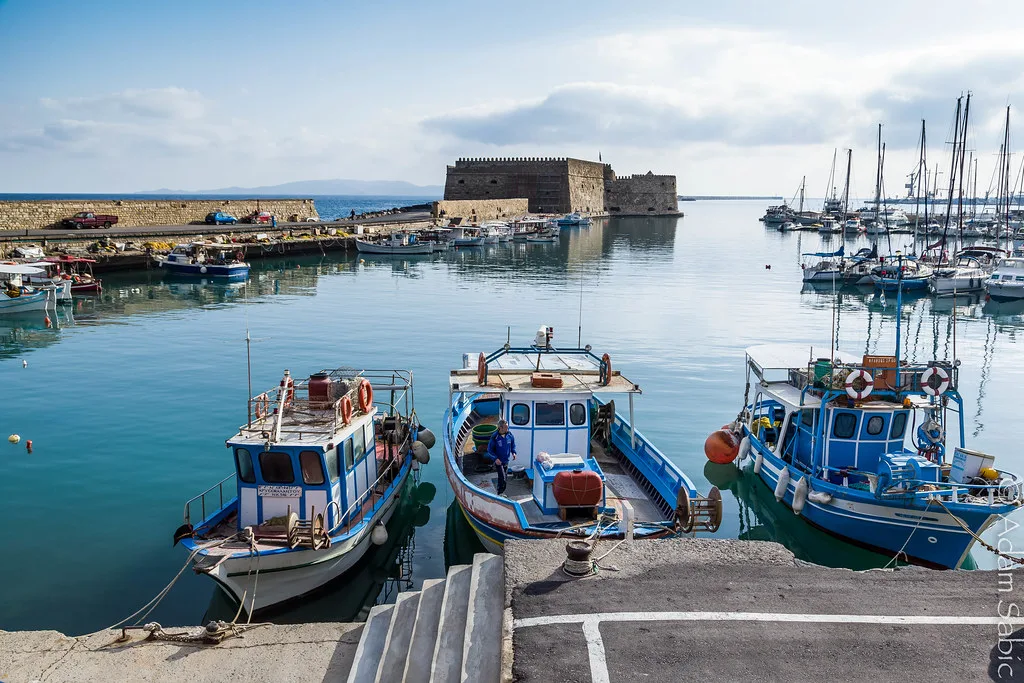
Book with an eye on your arrival and departure, too. A district on the eastern side of the conurbation makes more sense for a late flight in or an early flight out than for a trip built around daytime sightseeing in the centre. If you are weighing a different atmosphere entirely, the Heraklion Harbour District is the opposite choice: more central, more waterfront, and priced accordingly.
Where to Eat in Nea Alikarnassos
No restaurant, taverna, bakery or market in Nea Alikarnassos can be named here on the strength of the available sources, so this section gives you a method rather than a list. Use map listings centred on the district's coordinates and check each candidate's address against the boundary, because listings in this part of Crete frequently drift between the suburb, the airport area and the city edge.
When you shortlist, read recent reviews for the things that actually matter: whether the place is open on the day you plan to go, whether it takes bookings, and whether it serves the dishes you came for. Greek menus reward a little vocabulary. Look for mezedes (small plates to share), horiatiki (the village salad of tomato, cucumber, onion and feta), and grilled fish sold by weight, which is priced per kilo rather than per portion.
Prices, opening hours and closing days change and are not published consistently for small neighbourhood places, so confirm directly by phone or message the day before. Outside the city's tourist core, many family-run places also keep shorter hours or take a seasonal break; the general pattern on Crete is that some seasonal venues close for the winter months, but that varies by venue and should never be assumed for a specific place.
Getting There and Around
Nea Alikarnassos lies east of the centre on the same side of Heraklion as the airport, which is the practical fact that should drive your transport planning. The available sources do not give distances or journey times to the centre, the airport or Knossos, so do not rely on a figure you read in a listing. Check a live map on the day, and ask your accommodation which bus line stops nearest the door and how late it runs.
In practice this means deciding between a car, taxis and the city bus network. A car gives you the most flexibility across the Heraklion area, including day trips, but you then need to solve parking at both ends of each journey. Buses and taxis work well if your days are mostly in the centre, provided you accept that evenings out mean planning your return rather than strolling home.
If your sightseeing is concentrated in the city, read up on things to do in heraklion first and then choose transport around that list, rather than choosing a base and hoping the logistics work out. That order of decisions saves more money than any single booking trick.

What Is Within Walking Distance
There is no reliable published evidence here for specific walking times from Nea Alikarnassos to particular sights, so this guide will not invent them. What can be said with confidence is that the district is a substantial settlement in its own right, so daily necessities are likely to be walkable from most addresses. Anything in central Heraklion should be treated as a trip rather than a stroll until you have checked a map from your actual accommodation.
The practical exercise is to open a map, drop a pin on your exact booking address, and measure walking routes to the places you care about before you commit. Do this for the nearest bus stop and for the centre, and check whether the walk involves a busy road. Ten minutes of this beats arriving and discovering that the "central" listing means central to the suburb.
Practical Checks Before You Book
Two reminders cover most of the risk. First, check the exact address and district of any accommodation or restaurant you find online, since listings in this corner of Heraklion are inconsistently labelled. Second, confirm opening days and current prices directly with the venue, because neighbourhood places do not maintain reliable public pages.
It also helps to know what the wider city offers so you can judge what you are giving up. Browse the Heraklion Attractions: 10 Visitor Guides to see how much of the classic itinerary sits in the centre, and how often you would need to travel there. If that list is the core of your trip, the suburb is the wrong base and you should say so before booking.
For orientation inside the city itself, it helps to know where the main squares sit relative to the old town and the harbour. Eleftherias Square, Heraklion is a useful landmark for that mental map, sitting between the modern city and the historic core for most visitors arriving by bus or on foot.
Bottom Line
Nea Alikarnassos is a real, populated Heraklion district with a clear twentieth-century refugee origin and a residential character, not a sightseeing base. Choose it if you want everyday streets, a quieter base or a location on the airport side of the city, and if you have transport or are comfortable with buses and taxis.
Skip it if your trip is short and built around the old town, the Venetian harbour and the museums on foot. The trade-off is straightforward: suburban calm and likely better value on one side, central convenience and walkability on the other. Decide which one your itinerary actually needs, then book.
Frequently Asked Questions
What is Nea Alikarnassos in Heraklion?
Nea Alikarnassos is a residential district within Heraklion municipality on Crete, east of the historic centre. It is a town-sized settlement in its own right, with ordinary streets and everyday services rather than a sightseeing quarter. Travellers use it mainly as a quieter, less central base from which to reach the city and the airport side of the conurbation.
Why is it called Nea Alikarnassos?
The name means "New Alikarnassos", after Alikarnassos (Halicarnassus) in Asia Minor, the coastal town known today as Bodrum in Turkey. Mapping notes describe the suburb as founded in 1925 by refugees from Asia Minor who named the settlement after their home town. Because that date comes from a mapping description rather than an official municipal history, treat it as the commonly recorded founding period.
Is Nea Alikarnassos a good area to stay in Heraklion?
It depends on your trip. The district suits travellers with a car or a willingness to use buses and taxis, longer stays, and anyone whose schedule revolves around the airport side of the city. It does not suit a short first visit built around walking to the old town, the Venetian harbour and the museums, because those are a trip away rather than a stroll.
How far is Nea Alikarnassos from Heraklion city centre?
The available sources do not give distances or journey times to the centre, the airport or Knossos, so no figure is quoted here. Check a live map from your exact accommodation address before booking, and ask the property which bus line stops nearest the door and how late it runs. That answers the question far better than a listing description.
Are there restaurants and hotels in Nea Alikarnassos?
Review platforms carry listings under the Nea Alikarnassos name, but this guide names no specific hotel, restaurant, taverna, bakery or market in the district because the available sources do not identify one with reliable details. Use map and review listings and match each candidate's exact address to the district boundary. Check opening days with the venue before relying on them.