
Heraklion Harbour District: What to See, Eat and Expect
Heraklion's harbour district is a compact, walkable strip of waterfront at the north edge of Crete's capital, anchored by the Venetian sea fortress of Koules and the old port it guards. From the quay, a short pedestrian street climbs into the commercial old town, which makes the harbour a natural first stop for anyone arriving by sea or staying near the centre. The municipality describes how the city has cleared much of its centre of through traffic, so the waterfront and the lanes behind it are pleasant on foot rather than a car-dominated zone. This guide stays within the district: the port, Koules, the quay, 25 August Street and the market edge above it.
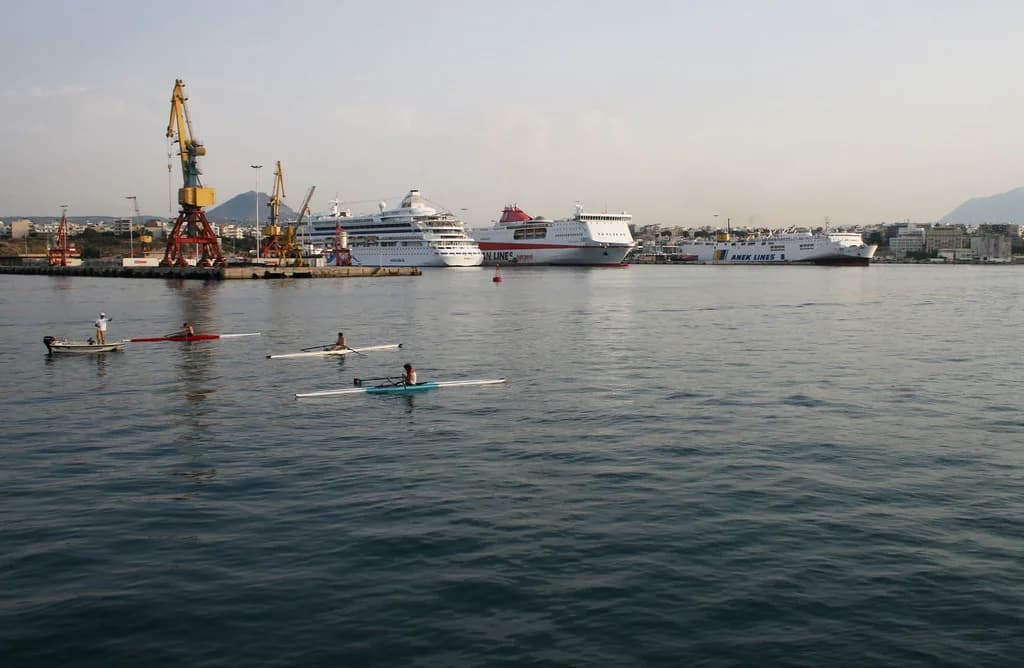
The first thing to sort out is which harbour you mean. Heraklion has a modern port used by ferries and cruise traffic, and beside it the small Venetian old port, now filled with brightly coloured fishing boats and busy tavernas, according to the municipality's city tour. They sit close together, and you walk between them, but they are not the same experience. Below, everything refers to the Venetian old port and the lanes that run inland from it.
What the Harbour District Is
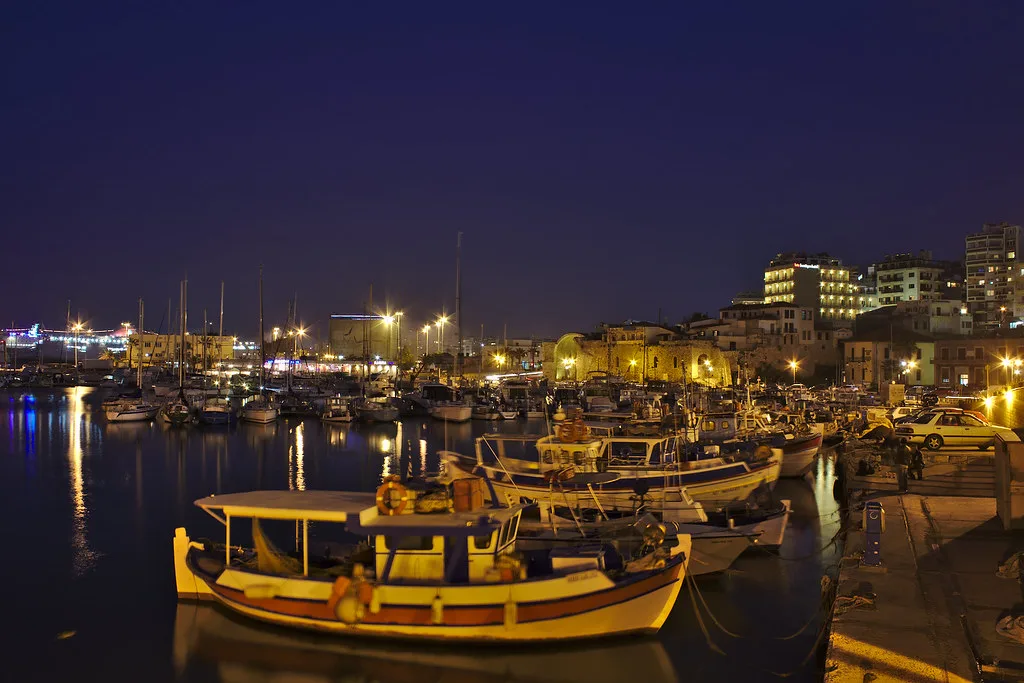
The district is a short crescent of stone quay, fortress walls and low waterfront buildings, with the old town rising immediately behind. The Koules fortress, originally built by the Venetians as Rocca al Mare and later known by its Turkish name, stands at the harbour gate; the municipality notes it is built on two tiers and offers a commanding view of Heraklion from the battlements. Beside it, the old port holds fishing boats and waterside tavernas. Behind the boats you can still see the strong arches the Venetians used to shelter boats under repair and to store guns and gunpowder.
Look outward and you see the uninhabited island of Dia, where the municipality records that evidence of Minoan settlement was found. The municipality also positions Knossos about 5 km south of the city, which makes it a separate trip rather than a harbour stroll. The upshot: the harbour is a starting point and a viewpoint, not a full day on its own. Its value comes from what it lets you do next, up the hill or along the quay.
Who the Harbour Suits, and Who It Does Not
The harbour suits first-time visitors who want an orientation walk, photographers chasing the fortress at dusk, and anyone arriving or leaving by boat who wants a meal before or after. It also suits travelers who prefer city streets and a working waterfront to a resort strip. A traveller reviewing the old Venetian harbour on Tripadvisor described the waterfront, fortress and port area as good for photos, views and general walking about, giving interesting views back toward town.
It suits you less if you want a beach base with a long swim in front of your room, or quiet, residential evenings. The harbour is an active port, not a resort, and the beaches near the city, such as Ammoudara to the west and Amnissos and Karteros to the east, are outside this district. It is also not the place for a car-first stay: traffic restrictions in the centre make walking the sensible approach, and a taxi from the modern port to the old port is easy enough if you have luggage.
Getting There and Around
Treat the district as a pedestrian zone with one main path. The municipality notes that cars once made walking in the centre difficult, and that large spaces have since been cleared of traffic, so arriving by taxi or bus and then walking is the easiest plan. The old port, the quay, 25 August Street and Lion Square connect in sequence; the modern port is close by. Confirm exact meeting points for any boat trip with your operator, since the harbour is a working port, not a tourist terminal.
Koules Fortress (Rocca al Mare)
Koules is the district's landmark and its best viewpoint. The municipality describes it as built on two tiers with battlements that give a commanding view of Heraklion, looking back over the city and out to Dia. It was also a prison for Cretan rebels and for those who broke the rules of successive occupiers, so its interior is as much a history lesson as a viewpoint. The municipality has not published current opening hours or admission details, so check those directly before planning your visit.
The Waterfront Itself
The pleasure of the waterfront is in walking it slowly. The old port is filled with brightly coloured fishing boats, and the tavernas around it sell fresh fish; the Venetian arches that once sheltered boats and stored gunpowder still line the back of the quay. The waterfront, fortress and port area is a natural loop for photos, with the city and Dia framing the view in opposite directions. Bring a jacket for the evening breeze; the harbour is exposed.
Eating in the District
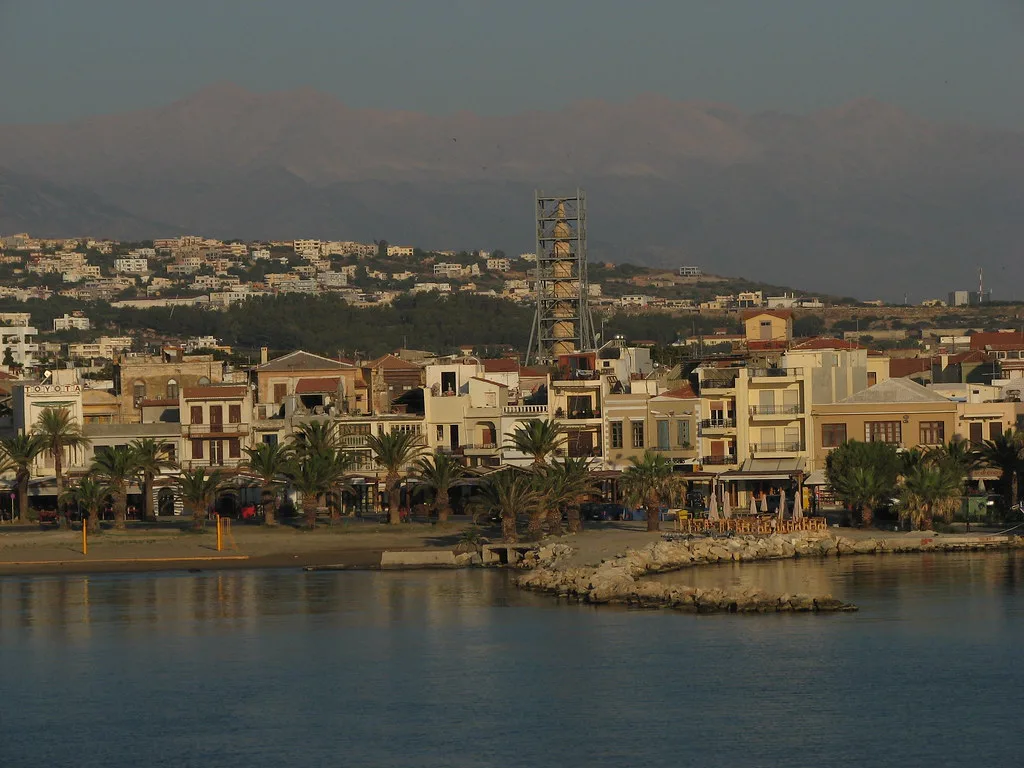
Breakfast in the square starts with bougatsa, a vanilla-cream pie sold at Lion Square and nearby streets, according to the municipality, alongside omelette, crepe and souvlaki places. For lunch, seek out dakos, a Cretan rusk topped with tomato and soft cheese, and graviera and mizithra, local cheeses, which one island guide lists among the flavours to look for; the market lanes off Lion Square are the obvious place to find them. Finish as many Cretans do, with a small glass of raki, the clear spirit distilled from grape pomace. Names on menus vary, so ask what a dish contains if it is unfamiliar.
At the top of the market, the municipality points to the fish market and a run of fish ouzeries, which are smaller and less formal than a taverna and fill up at night with simple seafood. Ouzeri menus tend to be short, so this is where the harbour district rewards those who eat by what is freshest rather than by what is printed. Vegetarians should not assume a full menu; ask for vegetable dishes and cheese, which most places keep.
Harbour-Front Tables or Back-Street Eating Houses
The central trade-off is view versus value. Harbour-front tables buy you the fortress and the boats; the municipality notes that the inexpensive eating houses around the market serve good food to all who enter, and that cafés make little distinction between Greeks and foreigners. Those back-street places are generally plainer, with less of the harbour spectacle but more of the everyday city. If your priority is a sunset table, book ahead or arrive early in high season; if it is an honest lunch, walk up the market lanes.
The market area also holds tourist traps, in the municipality's own phrasing, though it calls them friendly and of good quality. That is a reasonable description of the range: standards vary and prices are higher nearest the water. Check a menu before you sit, and compare a dish's size and contents rather than its headline price. The best-value meals in this district tend to be one street back from the quay.
The 25 August Street Walk
From the old harbour, 25 August Street climbs to Lion Square, and the municipality recommends the walk as the natural route into the city. It takes its name from the 1898 killings of Cretans and British residents here, and the street now mixes old and modern buildings, shops and tourist offices. Along the way you pass St Titus Cathedral, which the municipality says is worth entering if it is open, and the Venetian Loggia, now part of the town hall, with its semi-circular arches. St Mark's Basilica, almost next door, is now the Municipal Art Gallery and is described as almost always open.
At the top, Lion Square, also called Liondaria or Plateia Eleftheriou Venizelou, is the city's centre, organized around the Morosini Fountain with its four seated lions. The square is where tourists and locals share the space, and it is the place to meet before or after the harbour. Handakos Street nearby is now closed to traffic and makes a good detour for shops and cafés. Beyond the square, you are in the old town rather than the harbour district, which is a good reason to continue.
Where to Stay
The district has no hotels named in the available sources, so treat accommodation choice as a matter of area rather than a specific recommendation. Staying near the harbour buys you an easy walk to Koules and the quay, evening views and quick access to the ferry and cruise piers; the trade-off is that the port is a working one, with early traffic and less of the residential quiet. Staying further into the old town, around Lion Square and the market streets, puts more restaurants within a few minutes' walk.
Check whether your room faces the harbour or the street; the former is the reason to be here, but it can also be noisier, and many small hotels do not have views at all. Confirm the walk from your door to the old port on a map before booking, since some addresses near the modern port are farther from Koules than they look. If you want a calmer base with fewer port-related distractions, look at Nea Alikarnassos instead.
Practical Constraints
The most important practical point is to check current details for Koules, for any specific restaurant and for cruise or ferry departures, since these change by season and are not published in the sources above. On islands and in coastal districts, some restaurants close roughly November to April, so you may find a narrower choice in the harbour's tavernas outside the warmer months; call the restaurant directly before you count on a table. In July and August, book sunset or waterfront tables ahead.
Walking Distances and Nearby Sights
The old port to Lion Square is a short, uphill walk; the municipality treats them as parts of a single city walk, so allow half an hour with stops. The Archaeological Museum sits on Freedom Square at the edge of the old town, close enough to add to the same walk; it is the reason many travellers come to Heraklion at all, and its collections tell the story of the island. For that square and the museum, see the Eleftherias Square guide for a closer look at the same part of town.
Knossos is about 5 km south of the city, according to the municipality, so it belongs to a separate outing, not a walk from the harbour. The package is reasonable: harbour and fortress in the morning, museum or market in the afternoon, Knossos on its own day. Use the Heraklion Neighborhoods: 4 Area Guides to plan how the rest of the city fits around the harbour.
Plan Your Harbour Visit
Build the harbour into a half day, not a whole one. Start at Koules and the quay, walk up 25 August Street to Lion Square, and eat one street back from the water, where the ouzeries and market lanes offer the simpler food that the neighbourhood is known for. In high season, call ahead for waterfront tables and check the fortress before you go.
Explore more Heraklion sauna guides
Frequently Asked Questions
Can you walk from Heraklion's port to the old town?
Yes. The Venetian old port and the modern port sit close together at the north edge of the centre, and the municipality describes the city centre as cleared of much through-traffic and easy to walk. From the quay, 25 August Street climbs directly to Lion Square in roughly half an hour of easy walking, and Koules stands beside the old harbour.
Where are the Venetian harbour and Koules fortress in Heraklion?
They are at the northern waterfront of the city, where the old port meets the modern port. Koules, also called Rocca al Mare, is at the harbour gate and has two tiers of battlements with a wide view back over Heraklion and out to the island of Dia. The fishing boats and waterfront tavernas it once protected are still there.
What should I eat around Heraklion harbour?
Start with bougatsa, a vanilla-cream pie served at Lion Square and nearby streets, then look for dakos, a Cretan rusk with tomato and soft cheese, local cheeses such as graviera and mizithra, and fresh fish at the ouzeries near the top of the market. Raki, the clear spirit, is the usual way to finish a meal.
Is the harbour district the best area to stay in Heraklion?
It is a good choice if you want to be close to the fortress, the boats and the ferry piers, and you value an evening view over easy access to the wider old town. It suits those who want the port atmosphere less if you want quiet surroundings or a beach base; travellers in that camp should look elsewhere in the city or toward the beaches at Ammoudara, Amnissos or Karteros.
How far is Knossos from Heraklion harbour?
The municipality places Knossos about 5 km south of the city, so it is a short trip by road rather than a walk from the harbour. Pair the palace with the Heraklion Archaeological Museum, which holds the finds from the site, and treat Knossos as a separate half-day rather than part of the waterfront walk.