
Hydra Harbour (Hydra Town Port): What to See and How to Plan a Visit
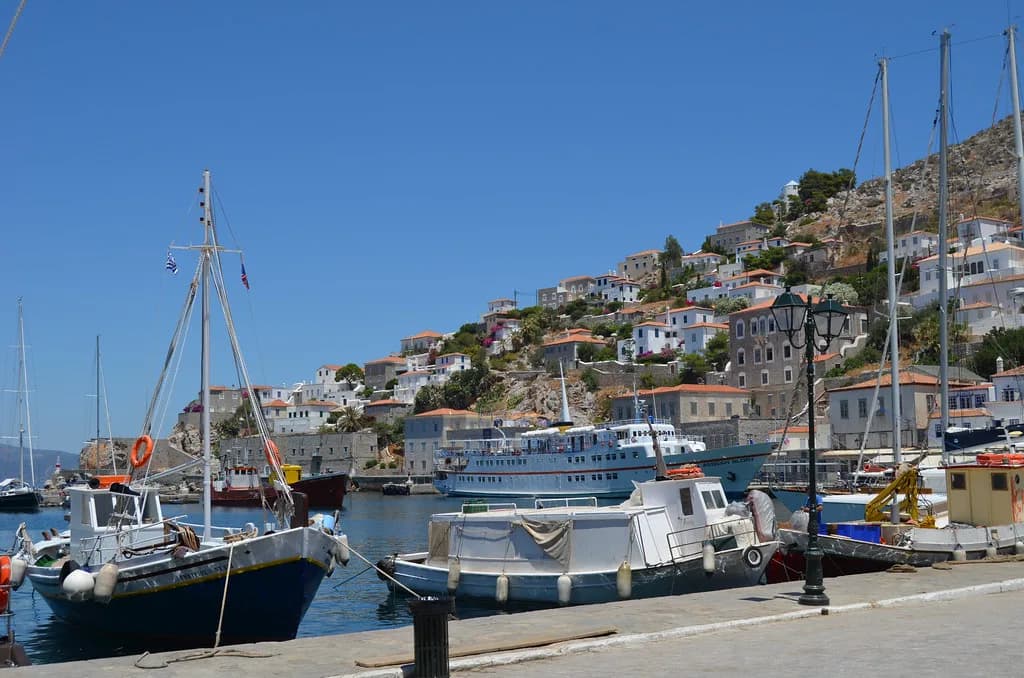
Hydra Harbour, the port of Hydra Town, sits on the north side of a small Saronic island at the foot of the town's stone houses. Almost every visit to the island begins and ends on this single working quay, because boats arrive here and nowhere else on the island handles foot passengers in the same way.
The harbour works as a tidy half-day rather than a checklist sight. Allow about an hour to walk the waterfront, watch the boat traffic and pick a table, then decide whether to climb into the lanes, take a water taxi to a cove or simply wait for the next departure.
What Hydra Harbour Is
The harbour is the island's ferry and hydrofoil port, set on the island's north shore facing the Peloponnese across the water. Hydra is one of the Saronic Islands, lying between the Saronic Gulf and the Argolic Gulf and separated from the mainland by a narrow channel.
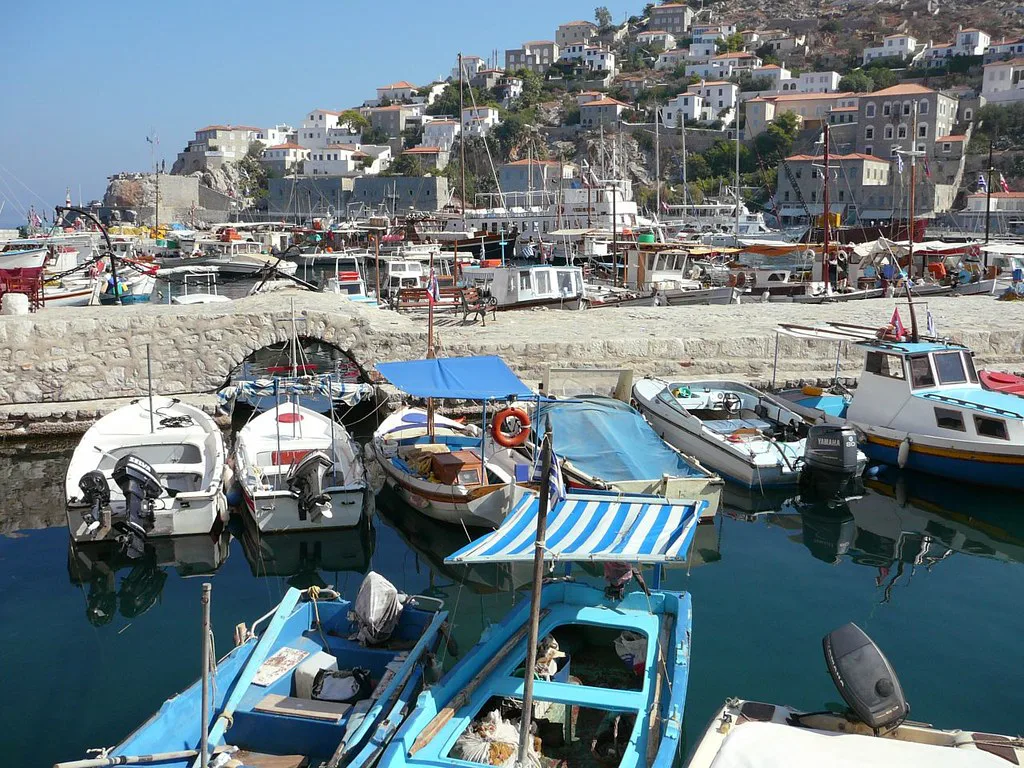
It is also a real working port, not a stage set. Boats, water taxis and excursion craft share the same compact basin, and the quay doubles as the town's main street, so your first impression of the island is the harbour itself.
Crucially, Hydra is a car-free island, which shapes how you move from the port onward: on foot, by donkey on steeper deliveries or with luggage, or by water taxi to coves and beaches. Plan your bags accordingly before you arrive, because the steps behind the quay do the work a taxi would do elsewhere.
Where It Sits in Hydra Town
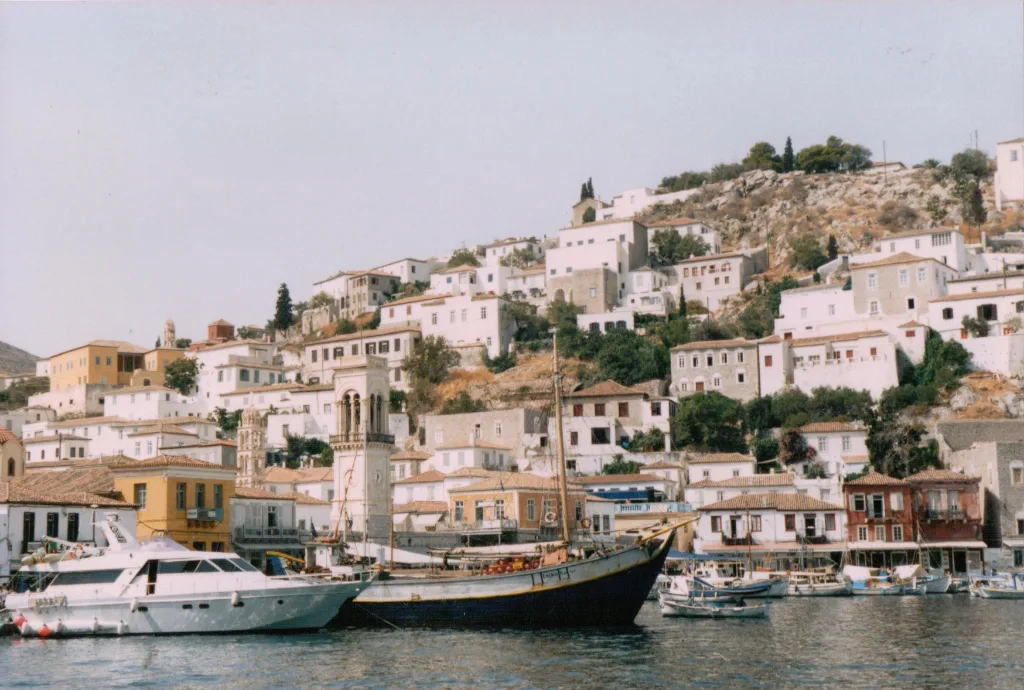
The harbour is the centre of Hydra Town, with the town's lanes and stone houses rising directly behind the quay. There is no separate seafront district to find: the waterfront is the lower edge of the town, and a short stair climb puts you among shops, churches and quiet alleys.
Because of that, the harbour is the natural orientation point for everything else. Use the curve of the quay and the larger waterfront buildings to fix your bearings, then explore uphill; the same short climb is what you will reverse at the end of the day with a ferry to catch.
How to Get There
Ferries and hydrofoils from the mainland arrive at this port, and it is the entry point for nearly all visitors to Hydra Town. Schedules vary by season and operator, and there is no published fixed pattern to rely on, so confirm timetables and last-return times with the ferry or hydrofoil company you book before you commit to a day trip.
On the island side, onward movement is on foot, by donkey or by water taxi from the same harbour. If you are staying inland, arrange with your accommodation in advance how your bags will reach the door, since the final stretch is usually steps.
Arriving and Reading the Quay
Coming off the boat, you step straight into the busiest stretch of the town. The basin has a recognisable layout: boat tie-up along the main quay, a line of cafes and tavernas facing the water, and a curved arm where the waterfront wraps around the port and larger vessels come alongside.
Read the waterfront before walking inland. Note which tables sit right on the quay and which line the side lanes a few steps back; the difference in view, noise and price is the main eating decision on this island, and it is easier to judge before you are hungry.
What to See at the Harbour Itself
The harbour is the sight: the curve of the quay, the stone town rising behind it, the cannon and shipping references along the waterfront, and the constant churn of boats. Photography of Hydra harbour typically focuses on exactly this layering of port, water and stacked houses, so a walk along the quay at either end of the day gives you the cleanest light.
Museums and historic houses sit just above and behind the port rather than on the water, which makes them an easy add-on after a lap of the harbour. Hydra's maritime and archival collections explain why this small basin mattered so much; the shipping history is the context for the grand houses you see from the water.
One of the closest substantial stops is the Hydra Historical Archives Museum, reached by walking up from the quay into the town's lanes. Check its opening days and any entry conditions directly before you go, since small island museums adjust to season and staffing.
Waterfront Eating: View Versus Value
The harbour front is the view-and-people-watching choice: tables face the water, boats come and go, and you pay in both money and a little noise for the position. The lanes a few minutes uphill are the value choice, quieter and usually plainer, with fewer tables angled at the sunset.
On a Greek taverna menu, a meze is a small sharing plate, often served before or alongside the main dish, and it is the cheapest way to eat well at a waterfront table without ordering a full fish. Look for vegetable-based plates, dips and cheeses rather than whole fish priced by weight, which can climb quickly.
Menus on the quay commonly show fish sold by weight; ask for the price per kilo and the approximate weight before ordering, so the bill holds no surprises. Many waterfront venues publish their menus outside, which lets you compare before sitting down.
Getting Out on the Water
Water taxis and excursion boats leave from the harbour for nearby coves and beaches, and they are the practical way to reach swimming spots that walking cannot. Ask at the quay for departure times and return arrangements, and agree the price and the pick-up point before you board.
In high summer, boats fill quickly, so book the first crossing of the day rather than the most convenient one, and keep your return leg flexible in case of wind. Outside peak season, some services thin out, so confirm that a boat is actually running on your date instead of assuming a daily pattern.
How Long to Allow
Give the harbour and its immediate waterfront about an hour if you are passing through: enough for a walk along the quay, a coffee and a look at the boats. Add an hour or two for one museum or a climb into the lanes, and half a day or more if you are also taking a water taxi to a beach.
The trade-off is between breadth and depth. Cramming the harbour, a museum and a swim into one short stop means spending much of it moving; picking two of those three leaves room to sit at the water's edge, which is what most people come to the port for.
Practical Points
Bring cash for small purchases, boat fares and taverna bills, since card acceptance at tiny seasonal businesses is not something to count on. Summer brings heavy crowds and sudden surges when a hydrofoil or excursion boat empties onto the quay, so keep bags close and step aside rather than trying to move against the flow.
The steps behind the port are steep and polished by use, so pack light and wear shoes with grip rather than smooth soles. If you have heavy luggage, arrange help through your accommodation rather than hauling it up the lanes yourself in the heat.
Nearby Options
Just along the coast from Hydra Town, Kamini is a small waterfront settlement with its own little harbour, reached by a walk around the headland or a short water-taxi hop. It is the obvious quieter alternative to the main port for a second swim or a low-key evening.
Inland from the harbour, Hydra Cathedral (Dormition of the Virgin) is one of the town's principal churches and a short climb from the quay, while the Koundouriotis Mansion on Hydra gives a look at the grand shipping-era houses whose facades you see from the port. Both are town stops rather than harbour stops, so treat them as an add-on.
For everything else within walking distance of the port, the broader set of Hydra Attractions: 5 Visitor Guides is a better way to choose than guessing from the quay.
Where to Check Current Details
Ferry and hydrofoil timetables, ticket conditions and last-return times change with the season, so check them on Hydra's official website before booking. Harbour-front venue hours are best confirmed by stopping at the door or checking the menu board rather than relying on directory listings.
Marina information pages can help with the port's position and general layout, but treat third-party operational details such as services and prices cautiously and confirm anything that matters with the harbour office or the boat operator.
Quick Decision: Harbour or Inland
Stay close to the harbour if convenience matters most: the boats, cafes and water taxis are all at hand, and a short stroll gets you back for a departure. Walk inland into the lanes if you want quieter streets, lower-key eating and the stone-town atmosphere that the quay only hints at.
Either way, budget more time than you think for the port itself, check the return boat before you sit down to eat, and let the waterfront be the first and last stop of the day rather than a rushed through-point.
Explore more Hydra sauna guides
Frequently Asked Questions
Where is Hydra Harbour?
It is the port of Hydra Town, on the north side of the island, with the town's lanes and stone houses rising directly behind the quay. It faces the Peloponnese across the water and is the point where ferries, hydrofoils and water taxis arrive.
How do I get to Hydra Harbour?
By ferry or hydrofoil from the mainland, arriving directly at the port. Schedules vary by season and operator, so check timetables and last-return times before you book rather than relying on an old schedule.
Is Hydra Town car-free?
Yes, the island is car-free, so onward movement from the harbour is on foot, by donkey for luggage on the steps, or by water taxi to coves and beaches. Pack light and wear shoes with grip for the steep, polished steps behind the port.
How long should I allow at the harbour?
About an hour covers the quay, a coffee and the boats. Add an hour or two for a museum or the lanes, or half a day if you also take a water taxi to a beach; choosing two of those three keeps the visit unhurried.
Should I eat on the waterfront or in the lanes?
The waterfront is the view and people-watching choice, while the lanes a few minutes uphill are quieter and usually better value. On the quay, watch for fish sold by weight and ask the per-kilo price before ordering.
Can I reach beaches from Hydra Harbour?
Yes, water taxis and excursion boats leave from the harbour for nearby coves and beaches. Agree the fare and pick-up point before boarding, and in high summer take the earliest crossing to avoid full boats.
What is there to see near the port?
The Hydra Historical Archives Museum, the cathedral and the Koundouriotis Mansion are all a short climb from the quay, and Kamini is a brief walk around the headland. Check each site's opening days directly before visiting.