
Naxos Town (Chora): A Neighborhood Guide to the Old Town and Harbour
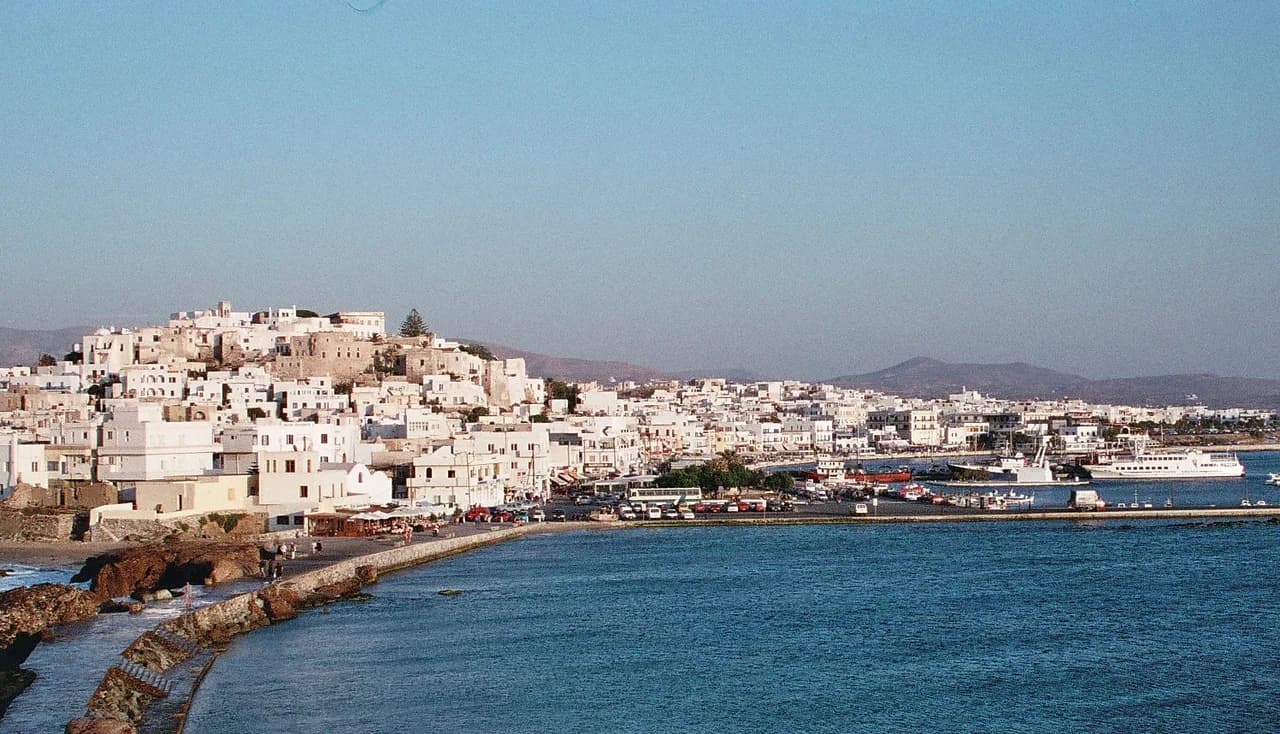
Naxos Town, called Chora locally, is the island's capital and main port, and it is unusual among Cycladic ports in that the ferry quay, the old-town lanes and the Kastro hill sit within a short walk of one another. You can step off a boat, drop a bag and be eating within minutes. That compactness shapes everything about how you plan a stay here.
The town also sits on top of its own history. According to the island's official tourism site, excavation has revealed part of Naxos's Mycenaean-era capital, dated to around 1300 BC, on the northern side of the harbour below Mitropoleos Square, with some ancient constructions now submerged offshore. Knowing that changes how you read the waterfront. Practical differences between this area and the beach settlements around it are set out in the Naxos Neighborhoods: 3 Area Guides overview.
Who Naxos Town Suits, and Who Should Base Elsewhere
Chora is the right base if you arrive or leave by ferry, if you want to walk to dinner rather than drive, and if you like the idea of a town with a working port rather than a resort strip. It also works well for a first trip, when you are still working out how the island is arranged. The trade-off is that you are not on a beach, and the harbour road keeps moving early and late.
It suits people less well if a beach at the door is the point of the holiday, or if you want silence after dark. Beach bases sit a short bus ride away: Agios Georgios is the closest stretch of sand to the town, and Agios Prokopios is described as roughly five kilometres southwest of Naxos Town. If sand matters more than ferries, see the Agios Georgios, Naxos page to weigh up the two.
The Three Parts of the Town and How They Connect
Think of Chora in three layers. The harbour waterfront is the flat, open layer where ferries dock and where the promenade fills as the light drops. Above and behind it, the old town is a deliberately confusing grid of narrow lanes and arches, built that way to deter pirates and still capable of confusing a visitor with a map. On top sits the Kastro, the Venetian castle hill, built in 1207 and lived in ever since, with covered lanes, churches and museums inside.
The connection between the layers is on foot, and that is the point. From the quay you can walk up into the lanes and on to the castle without a vehicle, so the sensible plan is to leave the car at your accommodation and treat the whole town as a single walkable district. Everything in this guide sits inside that walk, which is why a day spent entirely here does not feel like a wasted day.
Portara, Palatia Islet and the Grotta Layer Below the Town
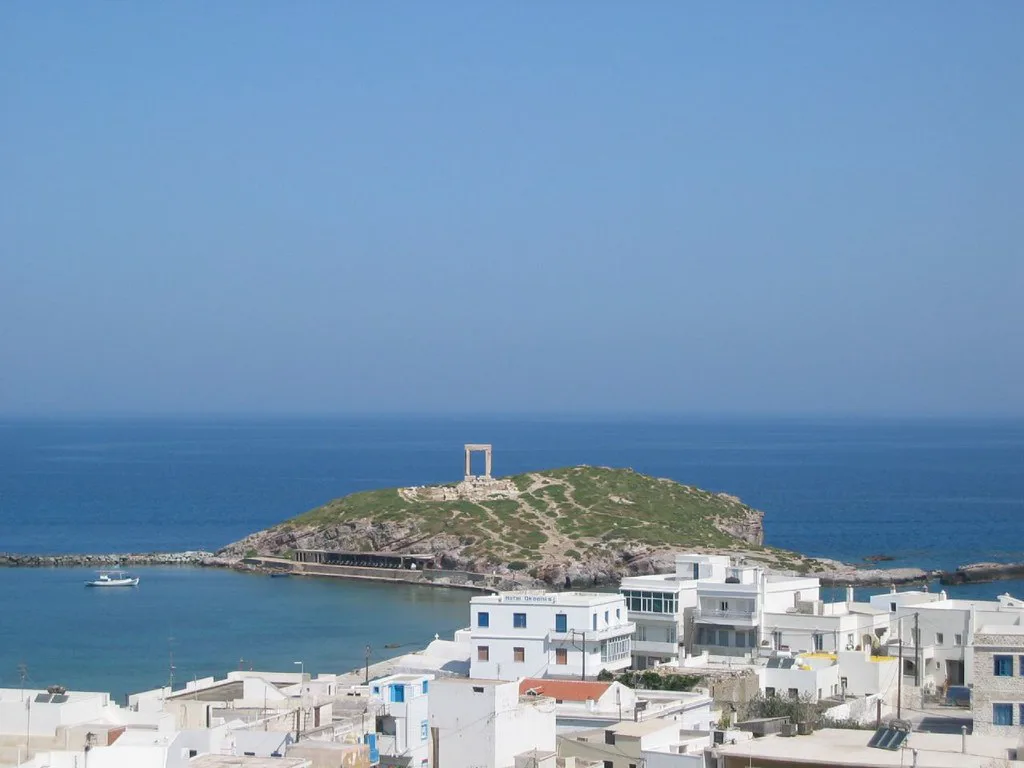
The marble Portara is all that remains of an unfinished temple to Apollo, commissioned in the sixth century BC by the ruler Lygdamis and abandoned mid-build; only the great lintel still stands on the islet of Palatia just offshore. The causeway walk across from the harbour takes about five minutes. The government site also notes that the period's large cemeteries lay further east at Aplomata and Kamini, and that the Mycenaean acropolis may have stood on today's Kastro hill.
Set expectations for the evening crossing: in peak season the causeway gets crowded, with drones and photoshoots competing for the same angle as the sun goes down. Sunrise is the calmer option, and the walk across is short enough to make that realistic. The archaeology beneath the waterfront is covered in more detail on the Grotta, Naxos page, which is the right companion read if the underwater remains interest you.
Eating in Naxos Town, Area by Area
Protodikiou Square is the town's obvious dining room, and Scirocco Restaurant there is a family-owned taverna that has traded in Naxos for almost twenty years, with a bright room and outdoor tables that draw both locals and visitors. The square is the easy choice when you want to sit outside with a view of other people rather than of the sea. Ask to see the menu and the day's fish weight before ordering.
In the town centre, Boulamatsis is a family-run taverna that is deliberately plain, with no outside space, and is known locally for traditional cooking. That lack of a terrace is the trade-off you make for a straightforward meal. Meltemi Restaurant, on Aristidi Protopapadaki, is another long-standing family tavern serving local meat, fish and vegetable dishes in a friendly room, and both are the sort of place to arrive early for dinner in high season.
For a fast meal near the port, Yasouvlaki! Naxos sits close to where the ferries come in and serves gyros, kebabs, grilled halloumi and meat platters in generous portions. Souvlaki of Makis, further into town, uses local meat and Naxos potatoes in an informal setting. Both are the value end of the Chora spectrum and useful on an arrival night when you do not want a full sit-down dinner; check the board outside for the day's prices.
At the top of the Kastro, Avaton 1739 occupies a rooftop in the castle area with a wide view over the whitewashed town and the water. It is a coffee-and-wine address that also serves food, so it works for a drink with a view rather than as a bargain dinner. Because the terrace is the draw, come early for sunset and stay for the food.
Dishes to Order and What They Actually Are
Two names worth knowing before you sit down: fava is a purée of yellow split peas, often served with raw chopped onion, and papoutsakia are aubergines halved and stuffed, usually with a meat sauce and a cheese topping, the name meaning little shoes. Both appear on Naxos menus and both are useful when you want a vegetable-led plate alongside grilled meat or fish. Ask whether the fava is warm or cold, since it varies by kitchen.
Naxos is a cheese island, and two names recur: graviera, a firm, slightly sweet cheese that is often sliced or fried, and xinomizithra, a sharp, crumbly whey cheese used in pies and as a table cheese. The old market in Chora, including Kiriakos Tziblakis Local Products, the island's oldest market store, stocks cheeses, nuts, dried fruit, honey, olive oil and marmalades, so it is the place to taste before buying. Loukoumades are small doughnuts fried crisp, drenched in honey, and best eaten immediately.
Kitron is Naxos's own citrus liqueur, made from the leaves of the citron tree, and it appears in cocktails and desserts as well as on its own. The Vallindras Kitron Distillery in Halki is the classic place to see how it is made, but that is a village day trip rather than a town stop, so keep it for a separate outing. Around town, order it chilled after dinner as a small glass, and treat the strength with respect.
Shopping the Old Town Lanes
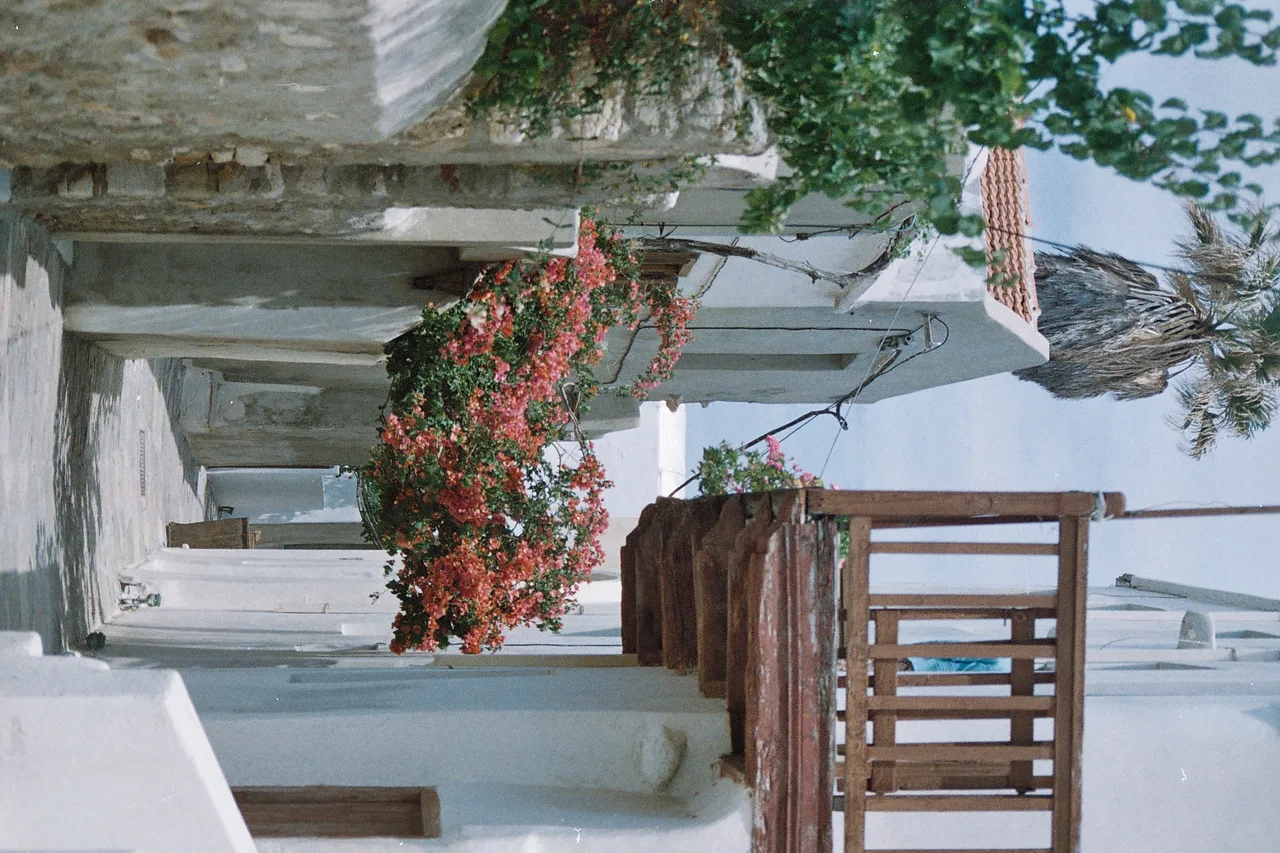
The old market street is the most useful shopping in Chora for edible souvenirs, and it is also where you will find ceramics, contemporary art and small galleries rather than the same imported souvenirs repeated every few metres. Prices are generally described as reasonable by comparison with better-known Cycladic islands. Bring cash for small producers, and expect the lanes to be at their quietest when the restaurants close for the afternoon.
The market is also a good first stop on arrival, when you are still learning the town's geography: follow the stalls uphill and you will pass through the lanes toward the castle without needing to navigate deliberately. That is the easiest way to get a sense of Chora before you commit to a route. If you want the same information for the other parts of the island, the Naxos Attractions: 4 Visitor Guides hub covers the major sites inland.
Where to Stay in Naxos Town
Staying inside Chora means choosing between the lanes and the port road. Ampelos Suites in central Chora is one source-named option for being in the heart of the action, which is the right call if you want to walk to dinner and leave the car parked. Rooms in the old town lanes are quieter in character but involve stairs and narrow access, so ask Ampelos Suites about luggage help before you book if you are arriving by ferry with cases.
Properties near the harbour are the most convenient for early ferries and for coming back late, but they are also where you hear the port. Rooms set back in the lanes trade that convenience for silence and give you the pleasure of opening a door onto a footpath instead of a road. Either way, check the address against a map before booking, because two hotels a hundred metres apart can feel very different depending on which side of the lanes they sit.
Getting There and Getting Around
Chora is the island's main port, so most visitors arrive by ferry from Piraeus or from neighbouring islands, with daily services in summer. Arriving by sea brings the Portara into view as you come in, which is a better introduction than the airport road. For routes, timings and connections, use the ferry operators' own timetables rather than third-party summaries.
Inside the town, walking is the default and the correct one: the lanes are too narrow for cars and short enough to cross on foot. Buses serve the west-coast beaches and larger villages, and they are the sensible way out if you are staying in Chora without a car. If you plan to combine the town with beaches and village days, the things to do in naxos guide lays out a week's structure you can adapt.
Naxos Town Through the Day
Mornings belong to the market and the coffee shops, and to the lanes before the heat builds. Midday is when much of the old town closes for siesta in the summer, so wandering then can feel flat; come back after five in the afternoon when the shutters lift and the lanes refill. The harbour promenade is the place to be as the sun drops, whether or not you walk out to the Portara.
Dinner in Chora is a choice between three kinds of table: harbour-front seats where you pay for the view, rooftop tables on the Kastro where you pay for the panorama, and ground-level tavernas in the lanes where the money goes on the plate. There is no rule that any of them is better, but decide which one you want before you start walking, because the lanes make it easy to end up somewhere you did not intend. The same harbour-versus-lanes decision applies if you are weighing where to eat in Santorini on another island. For a closer look at the shore closest to town, see the agios georgios naxos guide.
Practical Trade-offs Before You Book
The main trade-off is view versus value. A table with the harbour or the castle in front of it costs more than a plain room two lanes back, and the food does not automatically improve with the outlook. The second is lanes versus port road: the lanes are atmospheric and quiet at night but involve stairs and a short walk with bags, while the port road is flat and convenient but noisier. Neither is wrong; they suit different trips.
One reminder that saves frustration: opening days, seasonal closures and table policies change, so confirm directly with the venue for the dates you are travelling. For the wider context on how this town relates to the rest of the island, the Naxos overview sets out the alternatives.
Plan Your Visit to Chora
Treat Naxos Town as a district to walk rather than a list of stops: harbour first, then the lanes, then the Kastro, with a meal chosen according to whether you want the view, the room or the value. Book a bed in the lanes if quiet matters, near the port if early boats matter, and set aside one evening for the Portara crossing and one morning for the market before the heat arrives.
Frequently Asked Questions
What is Naxos Town best known for?
It is the island's capital and main port, and its unusual feature is that the ferry harbour, the old-town lanes and the Venetian-era Kastro hill all sit within a short walk of each other. The Portara, the marble gate of an unfinished temple to Apollo on the islet of Palatia, is a five-minute walk across a causeway from the harbour. Beneath the town lies part of the Mycenaean-era capital, described by the island's official tourism site as dating to around 1300 BC.
Can you walk around Naxos Town?
Yes. Inside Chora, walking is the practical option because the old-town lanes are narrow and everything of interest is close together. The Portara causeway walk takes about five minutes from the harbour, and the climb to the Kastro is on foot. Buses are the way to reach the west-coast beaches if you are based in town without a car.
Where should you eat in Naxos Town?
Protodikiou Square has Scirocco Restaurant, a long-running family taverna with outdoor tables. In the town centre, Boulamatsis and Meltemi serve traditional cooking in plain rooms, with Boulamatsis having no outside space. Near the port, Yasouvlaki! Naxos and Souvlaki of Makis cover gyros and souvlaki for a quick meal, and Avaton 1739 on the Kastro is a rooftop coffee-and-wine address with a wide view. Ask to see menus on the day, since prices and hours are not published consistently.
Is it better to stay in Naxos Town or on the beaches?
Stay in town if you arrive by ferry, want to walk to dinner and like a working port; the source-named central option is Ampelos Suites. Choose a beach base if sand at the door matters more, in which case Agios Georgios is the closest beach settlement and Agios Prokopios lies roughly five kilometres southwest of the town. Rooms in the old-town lanes are quieter but involve stairs and a walk with luggage.
What is there to see in Naxos old town?
The lanes themselves, the old market with its local produce and cheese shops, the Kastro with its covered lanes and churches, and the Portara on Palatia islet. The archaeology beneath the waterfront, including ancient constructions now submerged offshore, is explained on the Grotta page. Many old-town businesses close for siesta in midsummer, so early morning and after five in the afternoon are the better windows for wandering.
Is Naxos Town expensive?
The town spans a wide range: harbour-front and rooftop tables cost more than plain tavernas in the lanes, and gyros shops near the port are the cheapest sit-down option. Menu prices are not published consistently for small venues, so check the board or ask for the menu before sitting down. For local products, the old market is generally described as reasonable compared with better-known Cycladic islands.