
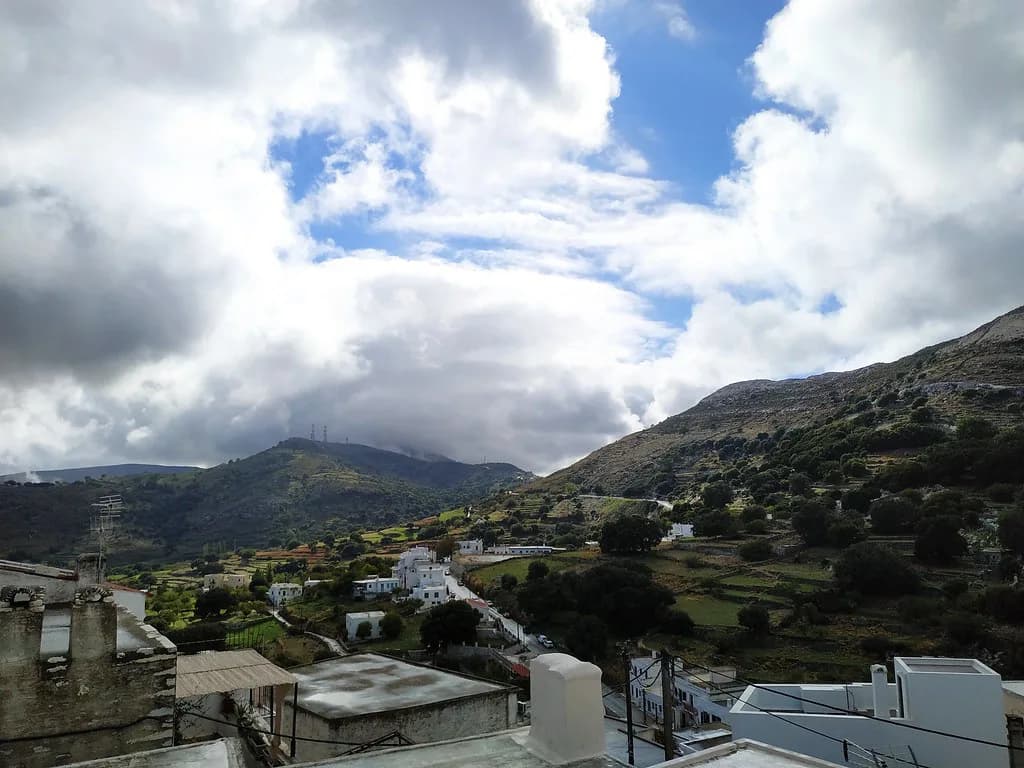
Apiranthos, Naxos: A Guide to the Marble Village, Its Museums and Tavernas
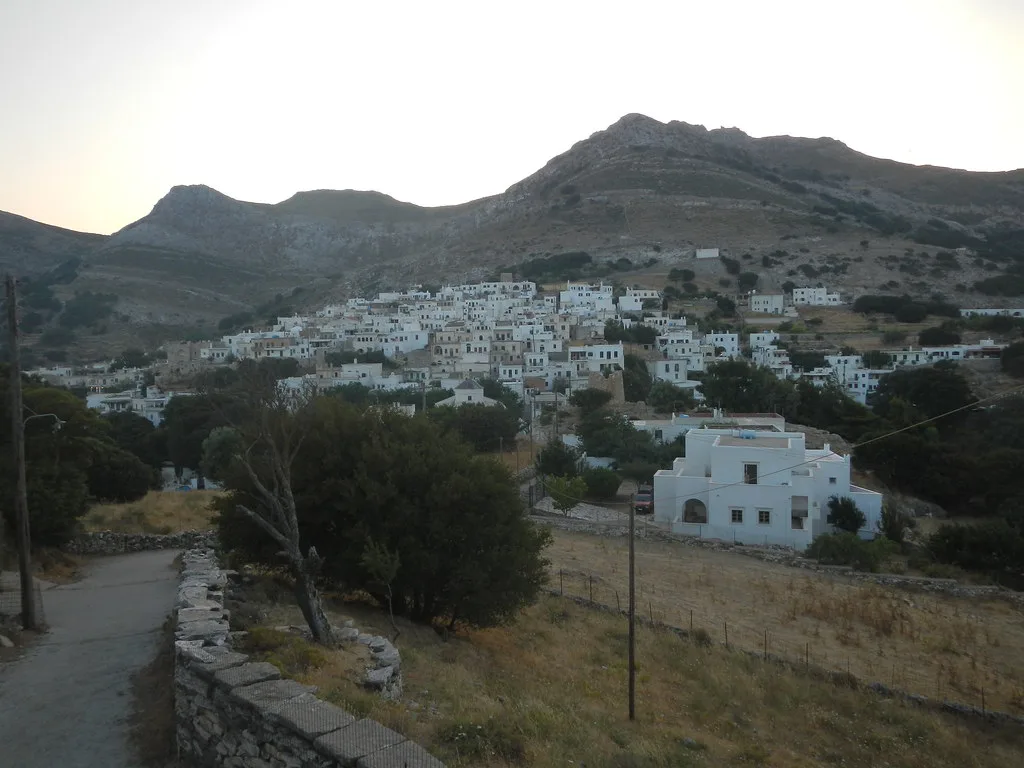
Apiranthos sits around 600 metres up on the slopes of Mount Fanari in central Naxos, a village of marble-paved lanes and stone houses that has been classed as a traditional settlement. It is not a coastal stop, and that is the point: the reward is architecture, small museums and the cooler air of the island's interior. This guide covers how to reach it, how to pace a visit, and where to eat and sleep around it.
Most travelers slot Apiranthos into a broader day in the mountains, so it helps to know how it fits with the island's other bases. If you are still deciding where to sleep, the wider Naxos guide to the island's main areas is the place to start, and this page stays focused on the village itself.
What and Where Apiranthos Is
Apiranthos, called t'Aperathou in the local dialect, lies in the mountainous centre of Naxos at roughly 600 metres above sea level, at the foot of Mount Fanari. It is built largely of marble and stone, and the whole village is classed as a traditional settlement, which is why its Venetian-era architectural character has survived so intact. The setting is between two valleys given over to vineyards and orchards.
The village is compact. Stone houses, towers and arched passages are packed together, with marble-cobbled streets running between them, and the most impressive single structure is the 17th-century Zevgolis tower, built on a rock at the entrance and effectively impossible to miss. This tight layout is the key planning fact: most of the village is explored on foot, and cars are of limited use once you are inside.
The distance to the main town is usually quoted as roughly 25 to 30 km, which sounds short until you factor in the winding mountain approach. Treat the drive as part of the visit rather than a quick hop, and plan your day around daylight rather than squeezing the village in before or after a beach.
Who It Suits and Who It Does Not
Apiranthos rewards travelers interested in architecture, folk culture, small museums and mountain cooking, and it is one of the few places in the Cyclades where a winter visit genuinely makes sense. The altitude brings cooler air in summer and the occasional snowfall in winter, which is unusual for the islands and gives the village a different rhythm from the coast.
It is a poor fit for anyone whose main goals are beaches, nightlife or easy parking. The lanes are stone and marble underfoot, walking is the only practical way around, and drivers should expect to leave the car at the edge and continue on foot. Travelers with limited mobility, or families with pushchairs, should weigh that before committing to a long detour.
Couples and small groups who want a slower, indoor-outdoor day usually get the most from it: one or two museums, a walk through the lanes, a long lunch, and a descent to the coast before dark. If that sounds like a thin day, add a second mountain village rather than trying to stretch Apiranthos.
Getting There from Naxos Town
The road distance from Naxos Town (Chora) is around 25 to 30 km, following the mountain road into the island's centre. Roads wind, so the drive takes longer than the kilometres suggest, and a car or an organized transfer is the sensible approach; this is not a village to tack onto a coastal drive as a quick stop.
If you are based on the coast, note that the harbor side of Naxos Town and the beachfront area of Agios Georgios are the most common starting points, and both add to the drive. Fuel up before you leave the main town, since the village is small and you do not want to be hunting for a station on the way back after dark.
Returning after sunset is the part most people underestimate. The approach is winding and unlit in stretches, so allow more time than the outbound trip and avoid scheduling dinner in the village if you plan to drive back to the coast late.
First Impressions: Arriving and Orienting Yourself
The Zevgolis tower marks the entrance and doubles as your orientation point; from there, the marble-paved lanes, arches and stone houses fan out through a village small enough to cross in minutes. The Traditional Art Cooperative of the Women of Apeiranthos, founded in 1987 on the initiative of then-community president Manolis Glezos, has its exhibition space at the village entrance, where handwoven textiles made on the loom are displayed. In the local dialect the loom itself is called krevataria, a sign of how deeply weaving is rooted here.
Because the village is compact, the practical advice is to walk first and shop or museum second: follow the main lane through the settlement, note where you want to return, and only then commit to stops. This saves backtracking on stone surfaces that are uneven underfoot. Leave the car at the edge of the village and treat everything from there as a walking loop.
The Village's Distinct Culture
Apiranthos has a culture that stands apart from other Cycladic villages, and one theory links it to Cretan origins among its inhabitants. What is visible today is the similarity in customs: Cretan lyres and lutes at feasts, and improvised poetry that locals call kotsakia, a form related to Cretan mantinades. The village is known for it, with many of its roughly 550 residents said to have a talent for verse.
The local idiom also replaces the consonant r with l, as Cretan Greek does. You will hear the village called t'Aperathou rather than Apiranthos, and noticing that shift is a small window into how separate this place has kept itself. The weaving cooperative at the entrance is the most direct way to see a living craft rather than read about it.
The Five Museums and the Library
For a village of its size, Apiranthos has an unusual concentration of cultural sights: five museums covering archaeology, natural history, geology, folklore and children's culture, plus the largest library in the Cyclades, dedicated to Nikos Glezos, brother of Manolis Glezos, who was executed by the Nazis in 1944. That combination is what makes a half day here realistic rather than a 30-minute photo stop.
Pacing matters more than coverage. Pick one or two museums that match your interests, add the library if it is open, and leave room for the lanes and a meal; trying to see all five in one go turns the visit into a corridor march. Opening days and hours are not fixed in any reliable public listing, so confirm locally, at your accommodation or at the village entrance, before building a day around a specific museum.
If you are traveling with children, the children's culture museum and the natural history collections are the obvious first choices, and the compact layout means you can break up museum time with a walk and a snack rather than committing to a long indoor stretch. Save the folklore and archaeological collections for a return visit or a second, slower day.
Eating in Apiranthos: What to Order
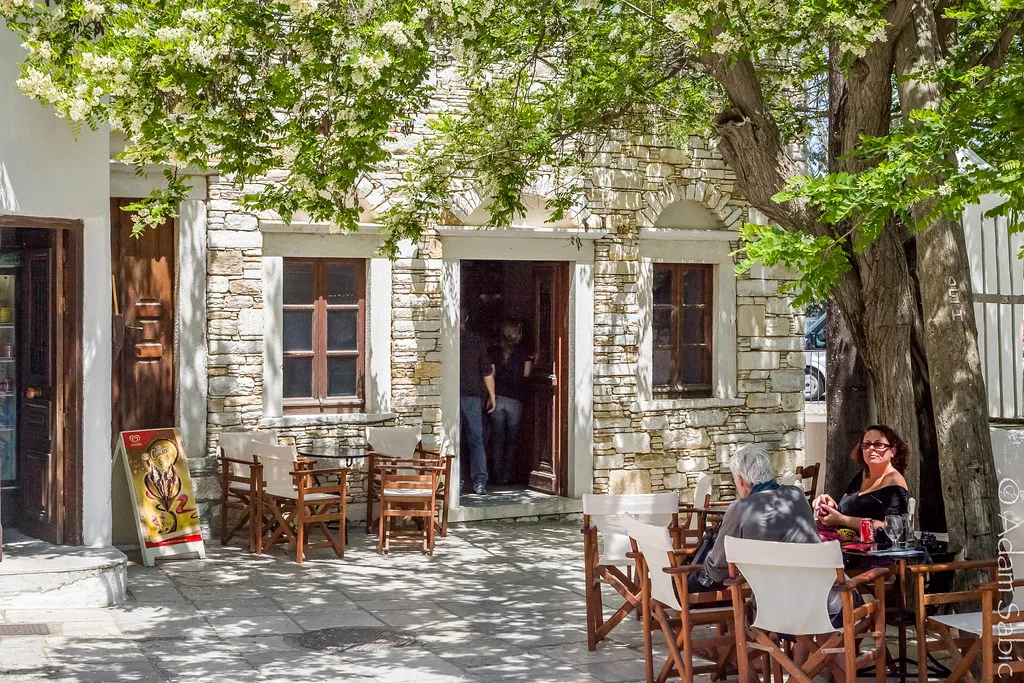
Naxos produces more dairy and meat than any other Cycladic island, and the mountain cooking here reflects that. Look for Naxos gruyere, a protected-designation cheese, along with local meats, Naxos potatoes, thyme honey and savory pies. Patoudo is the dish to know: goat or lamb stuffed with greens and rice, a hearty plate that suits the cooler altitude.
Build a taverna order around one stuffed meat dish, one cheese or pie to share, and potatoes on the side; portions in mountain village tavernas tend to be generous, so ordering less than you think you need is usually right. Ask what is local that day rather than defaulting to fish, which is the coast's strength, not the mountain's. No reliable source for menu prices exists for the village's eateries, so ask to see the menu or confirm prices at the table before ordering.
The trade-off is view versus value. A meal up in the village buys you stone lanes and cool air; a meal down at the coast buys you the harbor and the fish. Deciding which matters more to you shapes the whole day, and doing both in one day is too much food and too much driving. If you are weighing where to eat in Mykonos later in the same trip, that comparison works the same way.
Moutsouna: Harbour Versus Village Trade-off
Moutsouna, the old port of Apiranthos, is 9 km downhill from the village and has rooms to let and excellent fish tavernas. It was the terminal of an overhead railway that carried emery, the rock mined across eastern Naxos for millstones and for polishing metals and stones; the remains of that line are still visible today. That history is the reason to pair the village with the coast rather than choose one.
Practical rule: eat fish at Moutsouna and mountain food in Apiranthos. If you want a single lunch with a sea view, drive down first and work your way back up; if you want the village lanes without rushing, eat up top and treat Moutsouna as a late-afternoon detour for the railway remains and the water.
Remember that the 9 km is a mountain descent, not a motorway hop, and the return climb is slower. Budget the light accordingly and do not plan to be on that road for the first time after dark.
A Practical Half-Day or Full-Day Route
A workable half day looks like this: arrive mid-morning, park at the edge of the village, walk the lanes past the Zevgolis tower, visit the weaving cooperative at the entrance, then choose one museum. Lunch in the village, a second short walk, and out before the light goes. That covers the essentials without turning the visit into a checklist.
For a full day, add Moutsouna. Descend after lunch, see the emery railway remains and the harbour, and either eat fish there or return to the village for an early dinner. The drive back to Naxos Town is the constraint, so leave the coast with enough margin to climb the mountain road in daylight.
If you want to stretch the mountain day further, nearby villages make natural add-ons, and a Halki stop fits the same inland loop of old houses and local produce. Keep the number of stops modest; three villages in one day on winding roads is tiring, and Apiranthos deserves more than a rushed hour.
Where to Stay
There are three realistic bases. Rooms to let at Moutsouna put you by the water and the fish tavernas but add a climb every time you want the village. Staying in Apiranthos itself gives you the lanes in the early morning and evening, when the day-trippers have gone, but the village is small and the choice of beds is limited. Basing in Naxos Town gives you the widest choice and the easiest transport but turns Apiranthos into a day trip.
Choose by what you want at the edges of the day. If evening light on marble lanes matters, sleep up in the village; if swimming and seafood matter, sleep at Moutsouna. If you want restaurants, ferries and shops on your doorstep, stay in town and drive up, accepting the winding road twice.
One area to weigh: Agios Georgios, on the edge of Naxos Town, is a beach base that keeps you close to the port while still giving you sand. It does not shorten the mountain drive, but it makes the non-Apiranthos parts of the trip easier.
Winter and Off-Season Reality
At around 600 metres, snow is not unusual in Apiranthos; a heavy snowfall in January 2022 was notable enough to be reported, and winter here is genuinely colder than on the coast. That makes the village one of the more interesting off-season destinations in the Cyclades, but it also means checking road conditions before setting out.
Museum and eatery opening in the cold months is not published in any dependable single place, and many small island businesses simply close for the season. Before a winter trip, ask your accommodation what is open in the village that week, and carry cash in case card machines are down.
Common Mistakes to Avoid
The most common error is treating Apiranthos as a 30-minute photo stop. The museums, the cooperative and the lanes need at least a half day to feel like a visit rather than a drive-by, and the winding approach makes a rushed detour poor value for the time spent.
Two more practical ones: arriving without cash or fuel, and underestimating the drive back after dark. Fill up in Naxos Town, carry cash for small purchases, and plan the return in daylight. If you are continuing to another mountain village such as Filoti, keep the route simple and do not try to chain too many stops onto one tank of fuel.
Plan Your Apiranthos Visit
Apiranthos works best as a deliberate half or full day: marble lanes and the Zevgolis tower on arrival, one or two of the five museums, the weaving cooperative at the entrance, and a meal built around Naxos gruyere and patoudo. Add Moutsouna for fish and the emery railway remains if you have the light, and leave the coast with time to climb back in daylight.
Decide first whether you are sleeping in the village, at the harbour or in town, because that choice shapes everything else about the day. Then confirm museum hours and whether the places you want are open, especially outside summer, and set off early enough that the winding road is not the last thing you remember.
Explore more Naxos sauna guides
Frequently Asked Questions
How far is Apiranthos from Naxos Town?
It is roughly 25 to 30 km from Naxos Town (Chora), following the mountain road into the island's centre. Because the road winds, the drive takes longer than the distance suggests, so allow more time than a simple kilometre count would imply. A car or organized transfer is the practical way to get there.
What is there to see in Apiranthos?
The core sights are the marble-paved lanes and stone houses, the 17th-century Zevgolis tower at the entrance, the Traditional Art Cooperative of the Women of Apeiranthos with its handwoven textiles, and five small museums covering archaeology, natural history, geology, folklore and children's culture. The village also has the largest library in the Cyclades, dedicated to Nikos Glezos.
Are there restaurants in Apiranthos?
The village has eateries serving mountain cooking built around local produce such as Naxos gruyere, local meats, potatoes, pies and thyme honey, with patoudo, a goat or lamb dish stuffed with greens and rice, as the plate to look for. Menu prices are not published in a dependable source, so ask to see a menu or confirm prices at the table.
Is Apiranthos worth visiting?
It is worth it if you want architecture, small museums and a different side of Naxos from the beaches. The village is classed as a traditional settlement and keeps its Venetian-era character largely intact, and its distinct local culture and cuisine are the reasons to make the drive. It suits travelers who enjoy walking and slower days rather than beach and nightlife.
Can you drive to Apiranthos and park there?
You can drive there, but most of the village is accessible only on foot, so cars are left at the edge and the rest is walked. The lanes are stone and marble and uneven underfoot, which is worth knowing for anyone with limited mobility. Fuel up in Naxos Town before you go.
What is the weather like in Apiranthos in winter?
At roughly 600 metres, the village is noticeably cooler than the coast and snow is not unusual; a heavy snowfall in January 2022 was reported as remarkable. Winter is a real season here rather than a mild extension of summer, so check road conditions and what is open before a cold-month visit.
How many museums are in Apiranthos?
There are five: the Archaeological, Natural History, Geological, Folklore and Children's Culture museums, all within a small village. Trying to see all five in one visit is unrealistic, so pick one or two that match your interests and leave time for the lanes and a meal. Confirm opening days locally before building a day around a specific museum.
Should you eat in Apiranthos or at Moutsouna?
Eat mountain food in Apiranthos and fish at Moutsouna, 9 km downhill, where the old port has fish tavernas and rooms to let. Doing both in one day means two meals and a mountain drive, so pick the one that matters more. Moutsouna also has the remains of the overhead railway that once carried emery to the ships.