
Kiafa, Hydra: A Guide to the Old Town's Upper Quarter
Kiafa sits above Hydra Town, south-south-west of the harbour, in the upper part of the old town. It is a lived-in neighbourhood of lanes, archways and house fronts rather than a sightseeing circuit, and everything in it is reached on foot. This guide covers what the quarter is, what you see walking it, who it suits and how it links to the coast below.
The trade-off is simple and worth accepting deliberately: you get quiet, privacy and long views, and in exchange you carry your bags uphill from the port and walk back down for harbour life, ferries and most eating. Plan around that walk rather than assuming the climb is short.
Where Kiafa Is on Hydra
Kiafa occupies the high ground above Hydra Town, in the south-south-west of the settlement, and it is one of the oldest populated parts of the island. Its position was chosen for lookout value: high enough to watch for ships approaching the island. Nothing here is level for long, and the quarter is a network of steps and narrow lanes rather than streets.
Distances in Kiafa are measured in minutes uphill, not kilometres. One property in the quarter describes itself as a 10 to 15 minute walk from the port and about 100 metres above the centre of town, which is a fair way to picture the climb. Treat those figures as the property's own directions and allow more time with luggage or in heat.
Why Kiafa Was Settled First
The name is usually explained as meaning top, and the quarter's history follows from that height. It grew as a defensible place to live, with lookouts able to spot approaching ships before they reached the harbour. That origin still shapes the architecture you walk past today.
Hydra Town itself grew below and around the harbour, and the two are continuous on foot even though they feel different. If the maritime history of the port interests you, read up before you climb; the contrast between the busy waterfront and this residential upper quarter is the point of staying here.
What You Will See Walking Kiafa
The most distinctive feature is a series of archways that once supported covered bridges between neighbouring houses, giving families a route out without stepping into the street. Many houses also keep iron grilles over street-level windows, a defensive habit from the same period. Look up as much as ahead: the arches are easy to walk under without noticing.
Views open between the houses toward the sea and, on clear days, the Peloponnese across the water, with the mountainside of Mount Eros rising behind the quarter. The lanes are steep and irregular, so wear shoes with grip rather than sandals for the climb. This is a residential area, so keep voices low past doorways and courtyards.
The Church of Agios Konstantinos
Agios Konstantinos, patron saint of Hydra, has his church in Kiafa, built on the site of his birthplace according to local tradition. Most of the year it sits in a very quiet residential quarter off the main tourist routes. At the end of the year, the congregation makes a pilgrimage up from town for the patron saint's day, with bell chimes and chanting replacing the usual silence.
If you want to attend rather than simply pass by, ask locally or approach the parish of Ag. Konstantinos about the current year's programme, since the community organises the observance and published timings vary. Outside that period, treat the church as an architectural stop on a walk rather than a scheduled sight.
Who Kiafa Suits, and Who It Does Not
Kiafa suits walkers, people who want privacy and seclusion, and visitors staying long enough that a daily climb is a routine rather than a chore. It is popular with hikers, especially out of season, because the walking routes start at the top rather than at the port. The mix of local residents and international homeowners keeps it feeling like a neighbourhood.
It does not suit anyone who wants harbour-front convenience, easy luggage handling or a hotel with staff on site. There are no hotels or guesthouses in the quarter, so a stay here means a self-contained house. If your trip is built around ferries, waterfront meals and short transfers, stay lower down and walk up for the views instead.
Where to Stay in Kiafa
Accommodation here is holiday houses rather than serviced rooms, and the available stock tends to be large and set up for guests who plan to spend much of their time at the house. Expect multi-bedroom layouts, terraces and outdoor living space rather than a lobby or reception. Book well ahead for spring and autumn, when walkers and long-stay guests compete for the same few houses.
Kiafa House is one published example: an artist's home of three bedrooms and two bathrooms across two buildings, a mid-19th-century stone house and a mid-20th-century second building, joined by a courtyard and exterior staircase, with a large roof terrace and views toward the sea, the Peloponnese and Mount Eros. It was renovated in 2021 and hosts artists in residence in the off-season, so check availability windows directly with the property.
For longer stays or larger groups, the local property market lists houses and plots in Kiafa with details such as bedroom counts, floor area and whether there is a sea view or courtyard, which is useful for comparing layouts before you commit. Use those listings to judge size and setting, then confirm availability, minimum stays and access arrangements with the owner or agency.
Getting There and Around
You reach Kiafa on foot from Hydra Town, climbing through lanes and under the archways, and that is also how you get around once there. Steps are the norm, and the routes are not signed like a city grid, so a downloaded map or a landlord's directions matter more than usual. Allow the 10 to 15 minute climb from the port at an unhurried pace.
Luggage is the practical obstacle: carry what you can manage on stairs, or arrange help in advance through your accommodation. Once settled, the descent to the port for ferries, shops and harbour tavernas is quick, but the return is always uphill. Build that into evening plans rather than discovering it after dinner.
Walks Onward: Kamini, Vlychos and Plakes
From Kiafa the paths run down toward Kamini and its small harbour, roughly a 10 minute walk to the tavernas and swimming spots around it according to the Kiafa House directions, with the Kamini beaches and the Castello beach club about 15 minutes on. Continuing west, Vlychos and its pebbled beach are about 20 minutes away, and Plakes about 30. These are walking estimates given by one property, so judge them against your own pace.
Routes also cross the house line above Hydra and Kamini heading west, which makes Kiafa a practical base for beachgoers and walkers who want to move along the coast without returning to the port each time. A path leads toward Profitis Ilias monastery for those extending the day. Carry water and check the route before setting out, as signage is limited. The Vlychos, Hydra guide covers what waits at the end of that coastal stretch.
When Kiafa Gets Busy
The quarter's quiet breaks at two points in the year. At the start of April, when spring flowers are at their most colourful, residents come out to cheer runners during the Hydra Trail events. At the end of the year, the St Konstantinos pilgrimage brings bells, chanting and visitors up from town. Outside those moments, expect ordinary residential calm.
Off-season is a genuinely good time here for walkers, and some houses operate artist residencies then, which can affect availability. Confirm the exact event weekends and any house closures with organisers or owners before booking travel, since the community sets these each year.
Practical Notes Before You Book
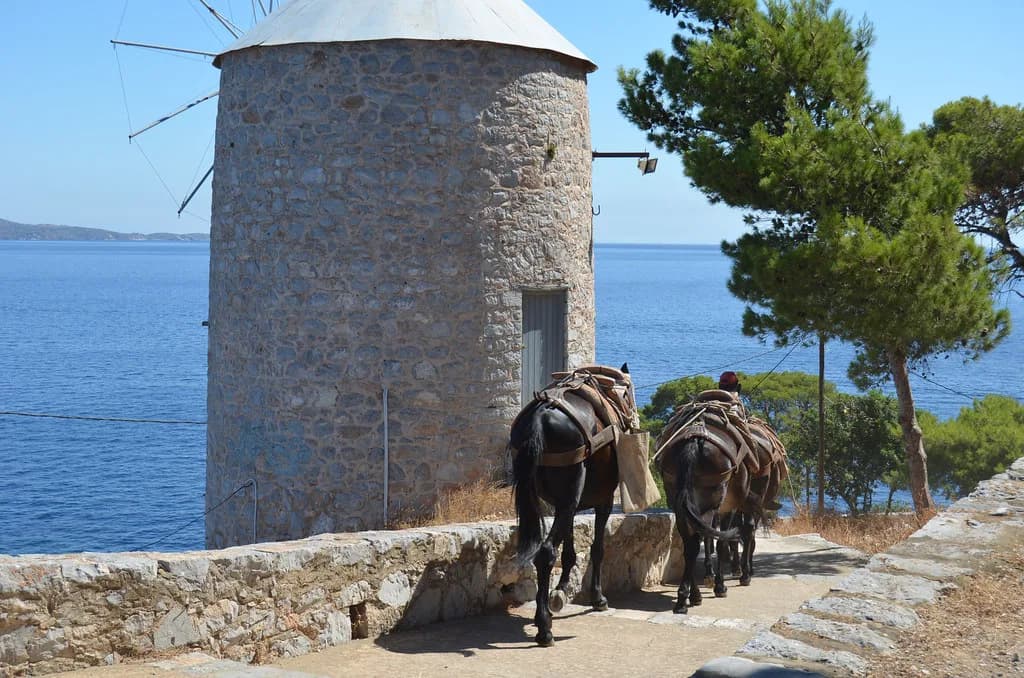
Hydra has no cars, so plan for foot traffic, mules or boats rather than taxis to your door. In Kiafa that means a final stretch on stairs, and it means packing light or arranging help with bags in advance. Horse treks in the area, including those run by Harriet's Hydra Horses, also pass through the quarter, another reason to keep lanes clear.
If you are weighing Kiafa against a waterfront base, compare it with Mandraki, Hydra's harbour area, where boats and services are on the doorstep but privacy is not. Kiafa asks you to trade convenience for quiet and views, and for the right trip that is a good bargain.
Plan Your Visit
Book a house in Kiafa if you want privacy, views and walking routes from the door, and accept the climb with luggage as part of the deal. If you need a hotel, harbour convenience or easy arrivals, choose a base lower in town and walk up for an evening.
Before travelling, check with your accommodation about access, stairs and luggage help, and check event weekends with the organisers via the Hydra Trail Events listings, as the quarter's calm depends on dates set locally each year.
Explore more Hydra sauna guides
Frequently Asked Questions
Where is Kiafa on Hydra?
Kiafa is the upper quarter of Hydra Town, south-south-west of the harbour and above the centre of the settlement. It is reached only on foot, through lanes and under stone archways, and the climb from the port is short but steady. Allow extra time with bags or in summer heat.
Are there hotels in Kiafa, Hydra?
No. The quarter is residential and has no hotels or guesthouses, so a stay means renting a holiday house, often a multi-bedroom one with a terrace. Confirm availability, minimum stays and stair access directly with the owner or agency before booking.
How long does it take to walk from Hydra port to Kiafa?
One property in the quarter gives its own directions as a 10 to 15 minute walk from the port, roughly 100 metres above the centre of town. Treat that as the property's estimate and add time for luggage, heat or a slow pace.
What is there to see in Kiafa?
The main things to look for are the archways that once carried covered bridges between houses, the iron grilles on street-level windows, and the Church of Agios Konstantinos, built on the site of the patron saint's birthplace according to local tradition. Views open between the houses toward the sea and the Peloponnese.
Can you walk from Kiafa to Kamini or Vlychos?
Yes, paths run down toward Kamini and its small harbour in roughly 10 minutes by one property's estimate, with Vlychos about 20 minutes and Plakes about 30 minutes beyond. Routes also head toward Profitis Ilias monastery. Judge the times against your own pace and carry water.
When is Kiafa busiest?
Two moments break the quiet: the start of April, when residents cheer runners during the Hydra Trail events, and the end of the year, when the St Konstantinos pilgrimage brings the congregation up from town. Otherwise the quarter stays calm, and off-season suits walkers.