
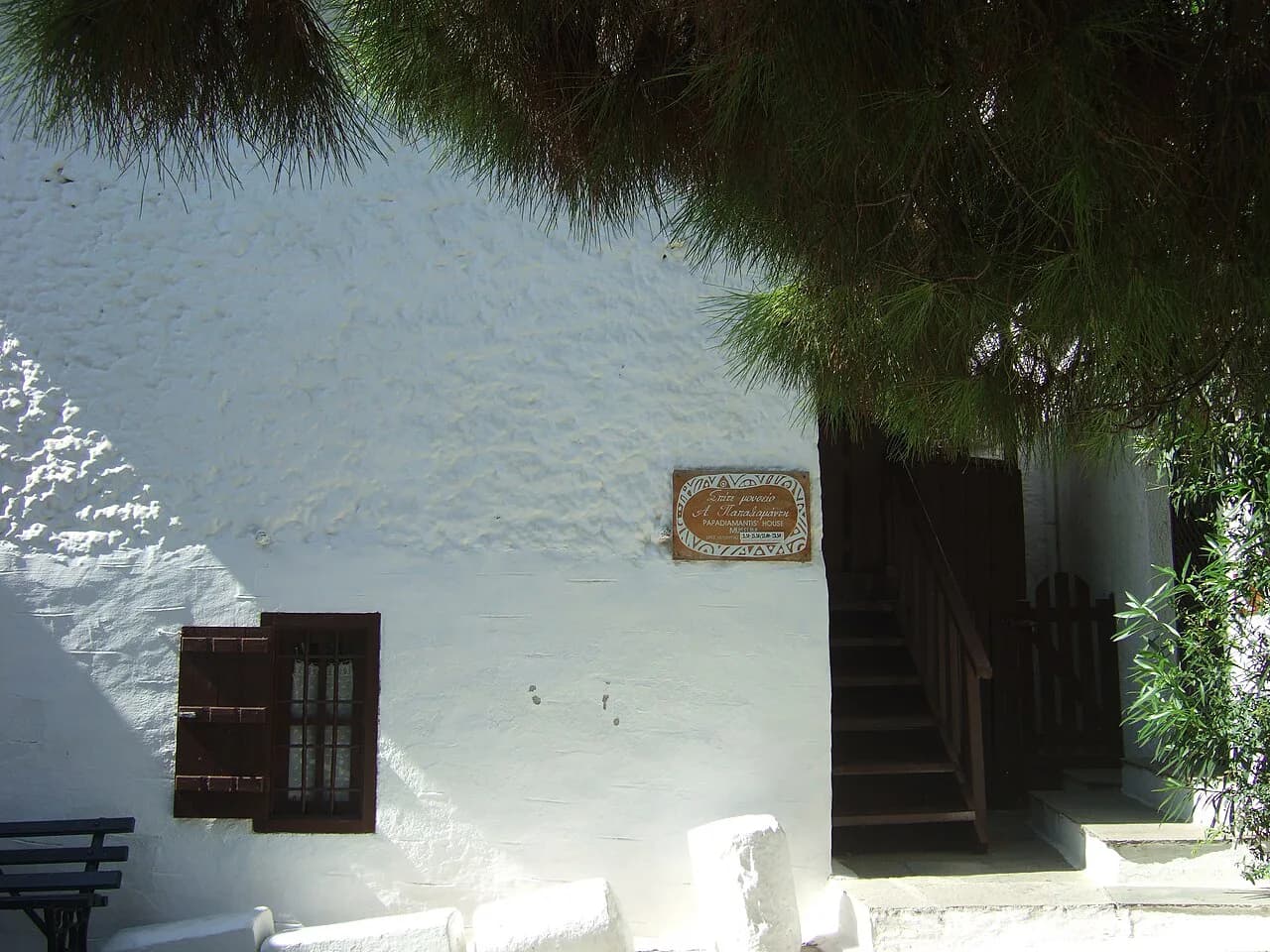
Papadiamantis House Museum, Skiathos: What to See and How to Visit

The Papadiamantis House Museum is the family home of Alexandros Papadiamantis (1851–1911), the Skiathos-born writer whose short stories and novels made his small island a recurring literary landscape. The house stands in Skiathos Town, and it is a compact stop rather than a full morning out: two floors, a handful of rooms, and a courtyard well. This guide covers where it is, what the small space actually contains, and how to slot it into a walk around town.
What the Papadiamantis House Museum is, and why it matters here
Papadiamantis is the writer most closely identified with Skiathos, and the Greek Gastronomy Guide notes that no other Greek place is so tied to a single author. The same source records that he was the son of a priest, was born on the island in 1851, and died in 1911, and that recognition came largely after his death, when his scattered stories were collected and translated. The house itself is his family home, kept as a small museum devoted to his life and work.
One detail confuses many visitors: the house where Papadiamantis was born no longer exists. According to the Greek Gastronomy Guide it was sold and demolished by its buyers, and the building now shown to visitors is the newer family house his father built. The Greek Gastronomy Guide gives its construction as 1860, stated on a wall inscription, while Skiathos Mystery describes it as built around 1850; treat the date as mid-19th century.
Where it is in Skiathos Town
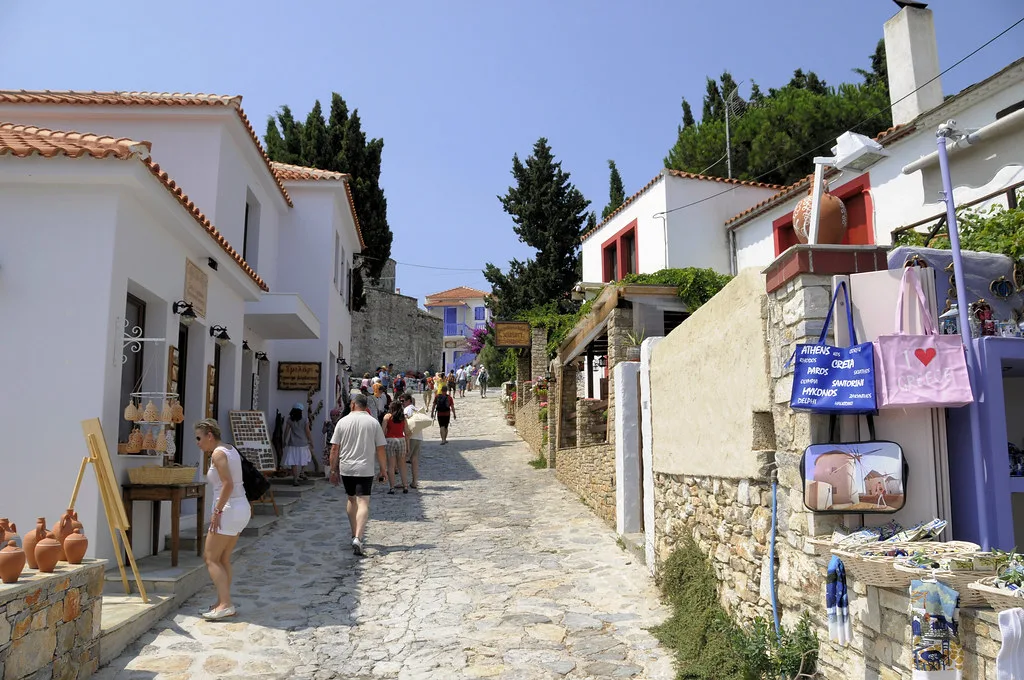
The house sits about 100 metres from the east beach of Skiathos Town, up a narrow dead-end lane that runs off today's Papadiamanti Street, according to the Greek Gastronomy Guide. Skiathos Mystery places it near the old port and describes a quiet small square beside it. In practice, look for the lane rather than a grand facade: it is a modest, two-storey Sporadic-style house that is easy to walk past.
If you are coming from the ferry quay, the walk through the old port and into the lanes of Skiathos Town is short and mostly flat, which makes the museum easy to combine with a wander through the old town. The Greek Gastronomy Guide lists a postal address of Skiathos 37002 and a contact number, 24270 22240, which is the practical way to confirm the exact entrance and whether the house is open on your dates.
How to get there and how much time to allow
There is no separate transport leg to plan: the museum is inside Skiathos Town, so it is reached on foot from the port area and the surrounding lanes. Allow roughly 30 to 45 minutes inside if you read the display material and look through the rooms, plus the walk there and back. Because the space is small, the visit works best as one stop in a town walk rather than a destination in itself.
Skiathos Town is compact enough that the house pairs naturally with the waterfront and the old lanes, so build it into a loop rather than making a special trip. Skiathos Mystery notes the house is close to the old port, which makes it a sensible first or last stop before a ferry or a meal.
What to see inside, room by room
The house is two-storey with an outdoor space behind, and the Greek Gastronomy Guide describes a courtyard with a well at its centre. Inside, an attic level holds three rooms reached by a narrow entrance passage; the left-hand room is the winter room with the house's historic fireplace. The smaller room to the right was originally the father's, where the priest kept his books and robes, and later became Papadiamantis's own study and bedroom, furnished as a plain monk-like cell with a narrow bed and a window.
Skiathos Mystery adds that the ground floor, once the family's storage area, now serves as an exhibition floor with items such as his pen, an inkwell and original manuscripts, while the upper rooms hold family furniture. Expect authentic but sparse furnishings rather than a polished modern museum: the appeal is the ordinary domestic scale of the place and the objects tied to the writer. Read the labels if you want context, because the rooms themselves are few.
The writer in brief
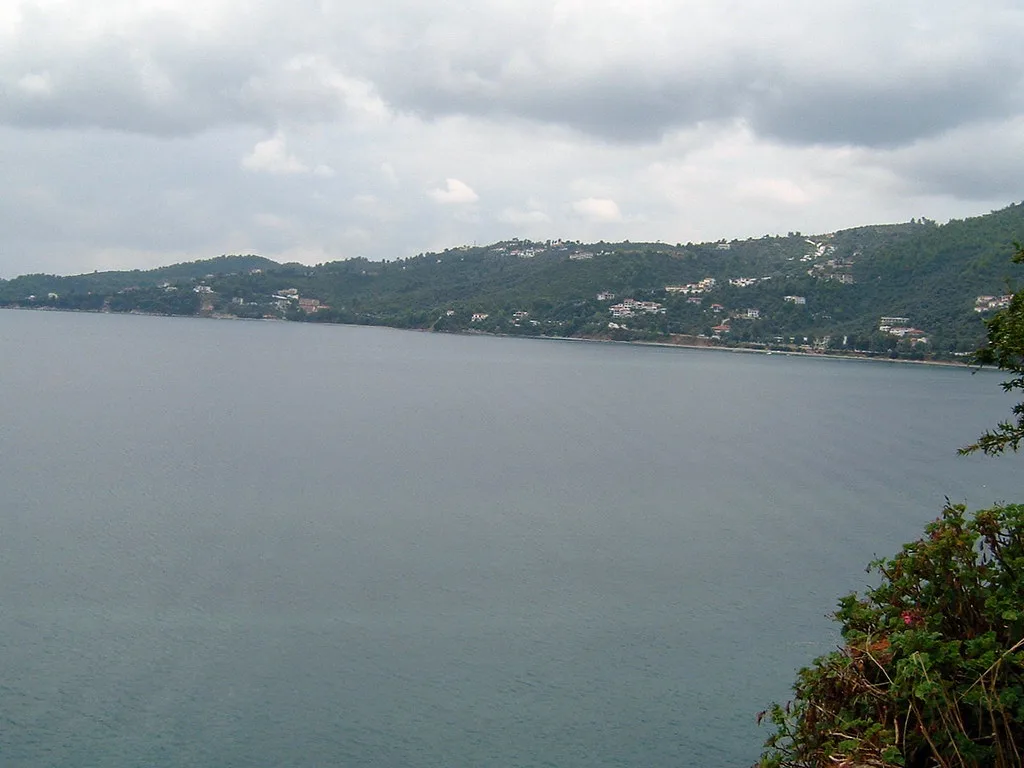
Papadiamantis trained unevenly and never finished university, taught to support himself, and from 1879 wrote and translated for newspapers and magazines, according to the Greek Gastronomy Guide. He set much of his work among the poor and overlooked of his own island and of Athens, drawing on Skiathos beaches, harbours and hillsides. That bond is why the house is treated by many visitors as a literary pilgrimage rather than a period-house curiosity.
Skiathos Mystery records that he died at the house in the winter of 1911 after a bout of pneumonia, and that the Greek Ministry of Culture bought the property in 1954, four decades after his death, and placed it under the municipality's care. Those dates help explain the house's status: it is preserved because of the writer, not because of its architecture.
Tickets and opening hours: what to verify before you go
Opening hours, closing days and any seasonal shutdown are not set out in the sources consulted here, so do not plan around assumed times. Phone the listed number, 24270 22240, or ask at the Skiathos Town tourist information point on arrival. This is the one detail worth settling before you make the walk.
A small admission fee is reported by a third-party review summary rather than an official page, so treat the amount as unconfirmed and check the current price at the entrance. Bring cash as a precaution, since small house museums on the islands do not always take cards. If the fee matters to your budget, ask before you go in.
Who it suits, and the trade-off
This is a good stop if you already know Papadiamantis's work, have an interest in 19th-century Greek domestic life, or want a short, cheap indoor break from the sun and the harbour. It suits slower travellers who read labels and like small house museums. It will disappoint anyone expecting a large interpretive centre, audioguides or reconstructed period drama, because the rooms are few and plainly furnished.
The trade-off is time against Skiathos's outdoor sights: a beach morning or a walk to a hilltop monastery gives you more of the island's landscape, while the house gives you the island's literary interior. If your stay is short and beach-led, keep the visit to half an hour within a town wander rather than cutting beach time for it. Pairing the house with other town sights is the sensible way to justify the stop.
Nearby in Skiathos Town
Bourtzi, the small pine-covered islet in the harbour, is a short walk from the house and makes an easy next stop for its views back over the town; see the Bourtzi, Skiathos guide before you go. The Museum of Nautical and Cultural Tradition of Skiathos, listed by the Greek Gastronomy Guide among the island's sights, is another compact town museum worth pairing with the house.
For food, stay in the town lanes rather than driving: a taverna lunch of grilled fish or a plate of meze is the natural follow-on. Skiathos also has its own cheese pie and a local stew of chickpeas, and the Greek Gastronomy Guide's Skiathos pages list named tavernas around the island, including harbour-side and beach spots, if you want to plan a specific table.
Practical etiquette and access notes for a small historic house
This is a preserved home, not a gallery: keep voices low, do not touch the furniture or manuscripts, and check before photographing any display. The lane is a dead end off a busy shopping street, so step aside at the entrance rather than blocking it. Stairs to the upper rooms are narrow, and anyone with limited mobility should ask at the door how much of the house is accessible.
Combine the visit with a wider look at the town's churches and lanes, or head out of town later to Kastro, the abandoned hilltop settlement on the north coast, if you want a half-day excursion after a town morning. Both work as separate outings rather than add-ons to the house itself.
Plan Your Visit
Treat the Papadiamantis House Museum as a 30-to-45-minute literary stop inside Skiathos Town, reached on foot from the port and the Papadiamanti Street lanes. Confirm the opening hours and the admission fee by phone or on arrival, since published details are thin, and then build the rest of your day around the harbour, Bourtzi and a taverna lunch.
If you have time for a second excursion, the Evangelistria Monastery, inland from town, is the other heritage sight most often paired with a Skiathos town day. Keep the house as the short, quiet counterpoint to the island's beaches and boat trips.
Frequently Asked Questions
Is the Papadiamantis House Museum worth visiting?
It is worth it if you are interested in Alexandros Papadiamantis, in 19th-century Greek domestic life, or simply want a short, inexpensive indoor stop in Skiathos Town. The house is small, with a courtyard and a few upstairs rooms, so it will not fill an afternoon. Treat it as a half-hour literary stop within a town walk.
How much does entry to the Papadiamantis House Museum cost?
A small admission fee is reported, but the figure comes from a third-party review summary rather than an official page. Confirm the current price at the entrance or by phone before you commit. Bring cash as a precaution, since small island house museums do not always accept cards.
Where exactly is the Papadiamantis House in Skiathos Town?
It is in Skiathos Town, up a narrow dead-end lane off today's Papadiamanti Street, roughly 100 metres from the town's east beach and close to the old port. Look for a modest two-storey house beside a quiet square rather than a large sign. Ask locally if the lane is hard to spot.
How long does a visit to the Papadiamantis House take?
Allow about 30 to 45 minutes if you read the labels and look through both floors, plus walking time from the port or your hotel. The rooms are few, so the visit is short by design. Build it into a town walk rather than making a separate trip.
Is the house where Papadiamantis was born still standing?
No. The Greek Gastronomy Guide states that his birth house was sold and later demolished by its buyers. The building shown today is the newer family house his father built in the mid-19th century, given as 1860 in one source and around 1850 in another.
What are the opening hours of the Papadiamantis House Museum?
Opening hours, closing days and any seasonal shutdown are not published in the sources available here, so do not plan around assumed times. Phone the listed number, 24270 22240, or ask locally in Skiathos Town on the day. This is the detail most worth checking before you walk over.