
Evangelistria Monastery, Skiathos: A Practical Visitor Guide

Evangelistria Monastery is the hilltop religious site most often paired with a Skiathos beach day, and it rewards a little planning. It stands roughly four kilometres north of Skiathos Town, high enough that the view back over the island and out across the Aegean is part of the reason to go. This guide covers the route, what is inside the walls, and how to build the visit into a half day.
The monastery is dedicated to the Annunciation of the Virgin Mary and was founded in 1794 by monks who came from Mount Athos, the monastic peninsula in northern Greece, according to the Amira Suites account of the site. Its main church, side chapels, restored stone buildings and small museum can be seen in a single visit, but the approach on foot is steep in places, so the transport choice matters as much as the sightseeing. Thomas Cook describes it as perched on a hill around four kilometres north of Skiathos Town, with stunning views back down over the island and out across the Aegean.
What and Where Evangelistria Monastery Is
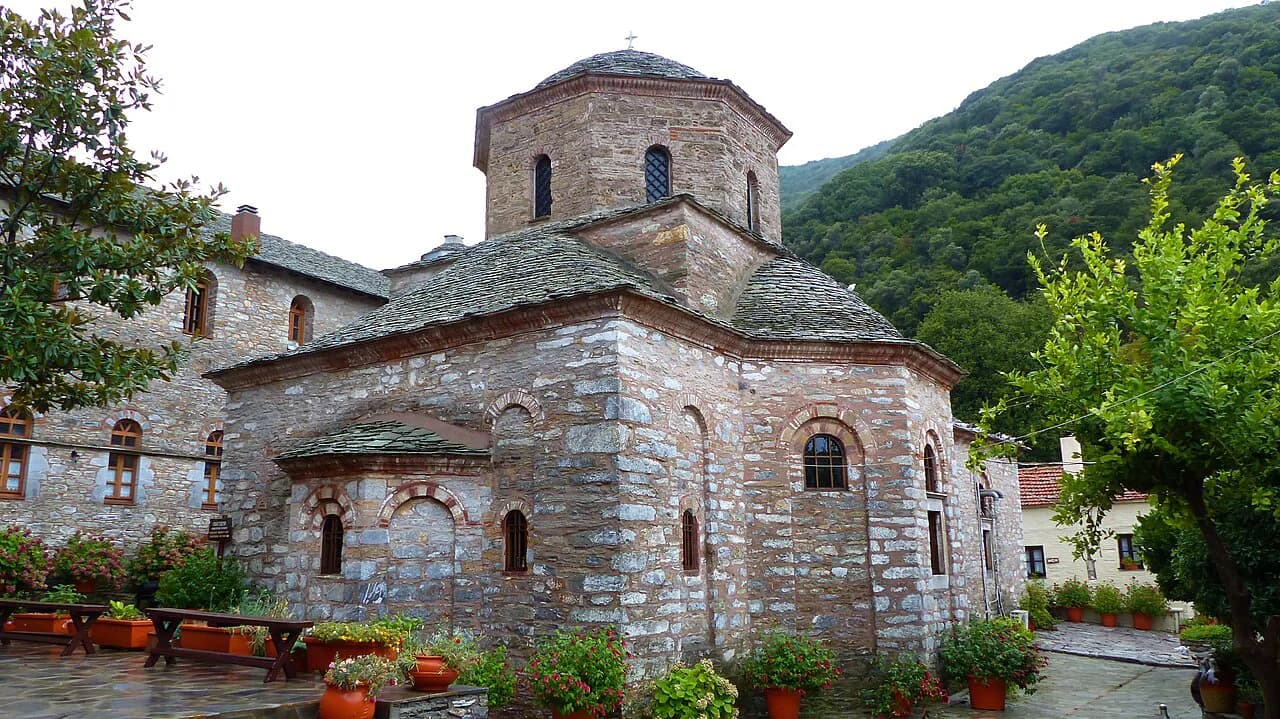
Evangelistria is a walled monastery complex on a hillside north of Skiathos Town, not in the town itself, so treat it as a separate excursion. The main church, chapels and outbuildings sit inside the enclosure, with the hill falling away on the side that faces the sea. Several of the buildings were once ruined and have since been restored, which is why the complex reads as a mix of old stonework and repaired structures.
The founding date commonly given is 1794, with the first monks arriving from Mount Athos, which places the monastery in the late Ottoman period of the island's history. The dedication is to the Annunciation of the Virgin Mary, which is why the site is also referred to simply as Evangelistria, a name referring to the annunciation. Knowing this helps you read the iconography in the church, where the Annunciation is likely to appear among the scenes on display.
There is no evidence that the monastery operates as a staffed community with a cafe or shop, and the sources do not describe visitor facilities beyond the church and museum. Plan on bringing your own water, particularly if you walk up, and do not count on buying anything on site.
The History Behind the Visit
The story most often told about Evangelistria is that the first Greek flag was raised here in 1807, during the years before Greek independence. Thomas Cook states that the monastery was built towards the end of the eighteenth century and that the first Greek flag was raised here in 1807. Treat it as reported history rather than a documented ceremony you will see reenacted: no ceremony dates or events are published in the sources consulted here.
The combination of an eighteenth-century foundation and an early nineteenth-century flag story makes the monastery one of the more historically layered stops on the island. If you are also visiting the town, the old quarter and its churches give context to what you see on the hill, and the Agios Nikolaos Church and Clock Tower in Skiathos Town is a useful orientation point for the harbour area afterwards.
How to Get There from Skiathos Town and Troulos
The simplest public transport route is the bus to the terminus in Skiathos Town, followed by one of the minibuses that run up to the monastery. The sources describe the minibuses as regular but do not publish frequencies, fares or a timetable, so confirm the current service locally or with your accommodation before you set out. From Troulos, the drive to the monastery is around half an hour by road.
A taxi from Skiathos Town is the quickest option if you want to arrive fresh and spend your energy on the site rather than the climb. Ask the driver to agree a pickup time, because the return leg is harder to arrange on the spot than the outward one. This is the sensible choice in high summer, when the exposed upper section of the road is hot by mid-morning.
Walking from Skiathos Town takes around an hour and passes through pine forest, but the route is uphill for large parts of the way, as Thomas Cook notes. It suits early starts and cooler days rather than a midday attempt, and it is not a shaded stroll the whole way. Wear shoes with grip, since the surface and gradient vary more than a town pavement does.
On Foot or by Minibus: Choosing the Approach
The walk is the better experience for anyone comfortable with sustained uphill effort, because the pine forest and the gradual reveal of the view are part of the visit. The trade-off is time and heat: an hour up, plus the visit, plus the descent, can consume a morning.
The minibus removes the effort but compresses the approach into a short ride, so you arrive with more energy for the church and museum. It also suits anyone travelling with children or older relatives, or visiting on a day when you plan to combine the monastery with something else. Check the last return service before you go up, since the sources do not confirm how late the minibuses run.
If you are staying near Troulos Beach, the monastery pairs naturally with a late afternoon back on the sand. Going up early and returning for a swim and sunset keeps the day balanced and avoids the worst of the hill's midday heat.
The Main Church and Its Icons
Inside the main church, the focal point is a wood-carved iconostasis, the screen that separates the sanctuary from the nave and carries the main icons. According to Amira Suites, the iconostasis is wood-carved and adorned with icons dating from the seventeenth and eighteenth centuries, which makes the interior the artistic highlight of the visit rather than the buildings themselves. Look at the carving before the paintings; the detail rewards a slow read.
The setting is a working Orthodox church interior, so keep voices low, avoid flash photography where it is posted as prohibited, and do not step behind the iconostasis. Covering shoulders and knees is the safe standard at Greek monasteries, and it costs nothing to carry a light layer for the purpose.
The Museum in the Old Olive Press
The monastery's museum occupies the old olive press building and holds priestly vestments, seventeenth-century books and manuscripts, and Byzantine icons, per the Thomas Cook description of the site. It is small, but the manuscripts and textiles give the visit a second layer beyond the church interior. Allow a focused twenty to thirty minutes rather than treating it as a full museum.
Because the collection is displayed in a historic building rather than a purpose-built gallery, lighting and case space are limited. That is part of the appeal, but it also means the museum is best appreciated without rushing.
Chapels, Courtyard and Stone Buildings
Within the complex you can see the chapels of Agios Ioannis and Agios Demetrios alongside the main church, each small and simply arranged, as Thomas Cook lists them. Wandering the old stone buildings and the courtyard between them gives a sense of the scale of the foundation, which is modest rather than monumental. The restored accommodation wings are what make the enclosure feel like a self-contained place rather than a single church.
The courtyard is also where you will find the shade and the quiet. It is a good place to pause between the church and the museum, especially if you walked up and need to cool down before the descent.
The View from the Hilltop
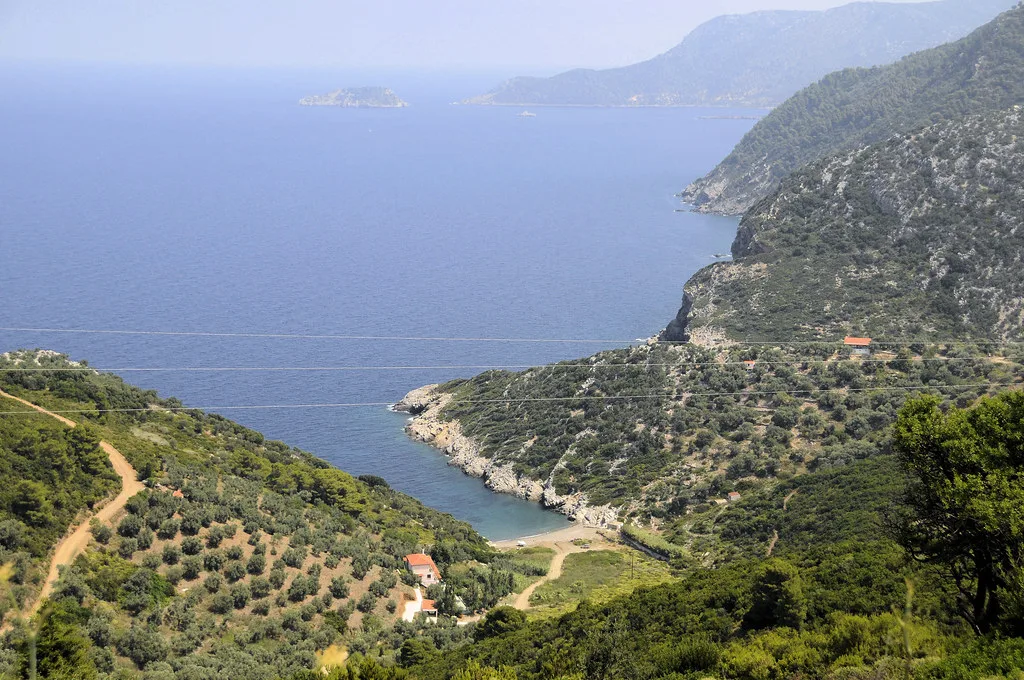
The hilltop position gives sweeping views back down over Skiathos and out across the Aegean Sea, which is the reason to bring a camera rather than rely on a phone. Thomas Cook notes these views over the island and the sea, and the light is best earlier in the day, when the haze is thinner and the sea reads clearly.
This is the photography stop of the visit, so budget a few minutes outside the walls before you go in, when the light is still soft and you are not yet tired. On a clear day the view alone justifies the trip up, even for visitors with limited interest in the church interior.
How Long to Allow
A realistic visit to the monastery itself, covering the church, the chapels, the courtyard and the museum, takes about an hour to ninety minutes. Add the travel: roughly half an hour by road from Troulos, or around an hour on foot from Skiathos Town, each way, both per Thomas Cook. From Troulos, a half day including transport is a fair estimate.
If you are combining the monastery with a walking trail in the surrounding countryside, allow more time and start earlier. If you are pairing it with the town, put the monastery first and the town afterwards, when cafes and streets are busier and you are happy to sit down.
Opening Hours, Tickets and Closures
The sources consulted for this guide do not confirm the monastery's opening hours, any entry charge, or closure days. Rather than guess, check the current position with your accommodation or the local tourist information point in Skiathos Town before you travel up, since a wasted climb is the main risk of an unplanned visit. This is the one detail worth confirming in advance.
Religious sites on the Greek islands often keep shorter hours outside the main season, and many island businesses wind down from roughly November to April, though no source here confirms the monastery's own seasonal pattern. If you are visiting in the shoulder months, ask specifically whether it is open on the day you plan to go. The Jet2holidays page for the monastery is one place to watch for updated visitor information.
Dress and Behaviour at an Orthodox Site
Cover shoulders and knees, and keep conversation quiet inside the church. Women are not required to cover their heads at all Greek monasteries, but a scarf is a small, useful item to carry if you want to follow local custom. Photography rules vary, so follow any posted signs rather than assuming flash is allowed.
Do not touch the icons or the carved woodwork, and keep children close in the church. The monastery is a place of worship first and a sight second, and behaving accordingly is what keeps it open to visitors.
Combining the Monastery with the Rest of the Day
After the monastery, the surrounding countryside has walking trails that suit anyone who came up on foot and wants to continue. Otherwise, return to Troulos and finish with sunset from the beach, which is the low-effort option after a morning on the hill.
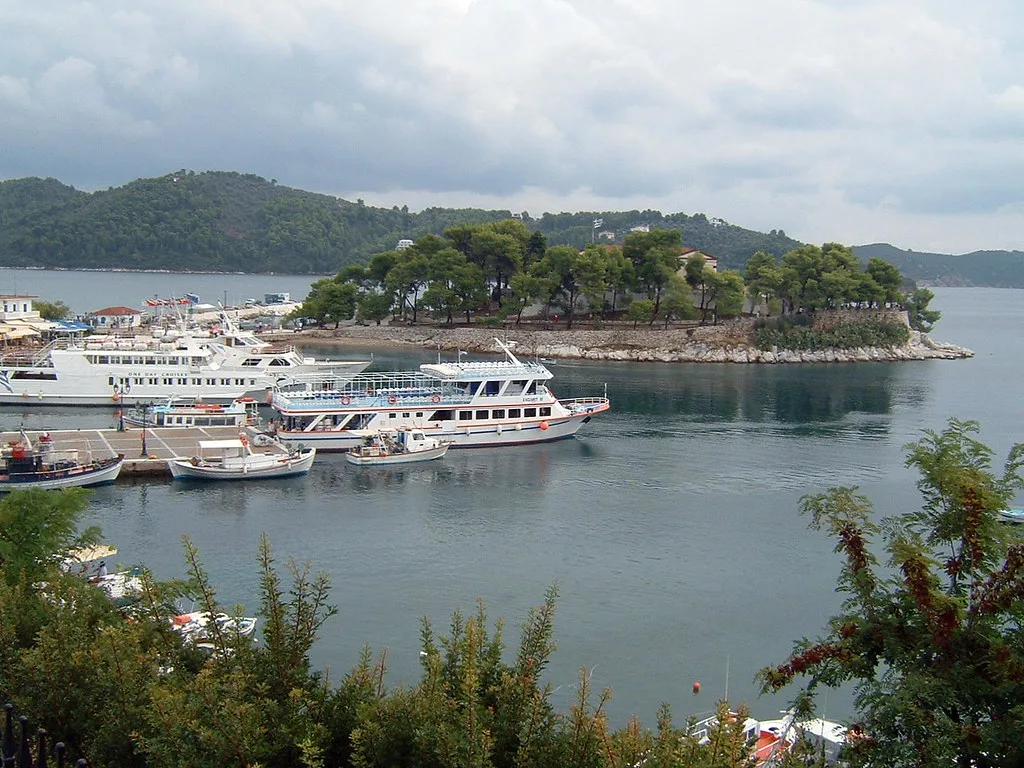
If you are staying in or near the town, the waterfront is the natural next stop: the Bourtzi, the small wooded peninsula with a cultural venue, sits right by the harbour and makes an easy late-afternoon walk. Pairing the monastery with the Bourtzi, Skiathos Town's compact old quarter and a harbour-side meal gives a full but manageable day.
For a different kind of island history, the ruins of Kastro on the northern headland show where islanders once took refuge from pirates, and Kastro beach below is a separate outing rather than a quick add-on to the monastery. Keep it for a different day unless you have a car and a full afternoon.
Nearby Options in the Same Area
Panagia Kounistra, another monastery, sits in pine forest on the south-western side of the island and is named for the swinging icon of the Virgin Mary found there. According to Amira Suites, its wooden iconostasis, frescoes and icons date to the eighteenth and nineteenth centuries, and a copy of the icon is kept on site while the original is in the cathedral in Skiathos Town. It is a separate trip, but a natural companion for visitors working through the island's religious sites.
In Skiathos Town itself, the Papadiamantis House Museum commemorates the island's best-known writer, Alexandros Papadiamantis, and the Agios Nikolaos Church and Clock Tower give a viewpoint over the harbour. Both are small stops that fit around a meal rather than a full outing. Details on hours and any charges should be confirmed locally on the day.
The island's other sights, from the castle ruins at Kastro to the town's waterfront monuments, are gathered in our Skiathos Attractions: 5 Visitor Guides, which is a sensible starting point if you are building several days around the monastery rather than a single morning.
Practical Notes Before You Go
Shade is limited on the upper walk, so carry water, a hat and sun protection even if the lower path feels cool. Start early if you are walking, and allow for the fact that the return is downhill but still takes time on uneven ground.
The visitor season on Skiathos is short and concentrated, so transport and opening patterns can shift between spring and autumn. Confirm the day's plan before setting out rather than relying on a schedule from a previous year.
Plan Your Visit
Evangelistria Monastery is best treated as a half-day excursion from Skiathos Town or Troulos, built around the church, the chapels and the small museum in the old olive press. Decide on the minibus or the walk based on the heat and your energy, bring water, and dress for a place of worship.
Before you go, confirm the day's opening arrangements and the return transport, since neither is published in the sources used here. Everything else, from the iconostasis to the view over the Aegean, is there once you make it up the hill.
Frequently Asked Questions
How do I get to Evangelistria Monastery on Skiathos?
Take the bus to the terminus in Skiathos Town, then one of the regular minibuses that run up to the monastery, or take a taxi. The sources consulted do not publish minibus frequencies or fares, so confirm the current service locally before setting out. From Troulos, the drive is around half an hour by road.
Can you walk to Evangelistria Monastery from Skiathos Town?
Yes. The walk takes around an hour and passes through pine forest, but it is uphill for large parts of the way. It suits early starts and cooler days rather than a midday attempt, and shoes with grip are sensible because the surface and gradient vary.
How long does it take to visit Evangelistria Monastery?
Allow about an hour to ninety minutes on site to cover the main church, the chapels, the courtyard and the museum. Add travel each way: roughly half an hour by road from Troulos, or around an hour on foot from Skiathos Town. A half day including transport is a fair estimate.
What can you see inside Evangelistria Monastery?
The main church has a wood-carved iconostasis with icons dated to the seventeenth and eighteenth centuries. The chapels of Agios Ioannis and Agios Demetrios sit alongside it, and the museum in the old olive press building holds priestly vestments, seventeenth-century books and manuscripts, and Byzantine icons.
When was Evangelistria Monastery founded?
The founding date commonly given is 1794, by monks from Mount Athos, according to the Amira Suites account. Travel sources also report that the first Greek flag was raised here in 1807. Treat that as reported history rather than a documented ceremony you will see reenacted.
Is there an entry fee for Evangelistria Monastery?
The sources consulted do not confirm any entry charge, opening hours or closure days. Check the current position with your accommodation or the tourist information point in Skiathos Town before you travel up. That is the detail most worth confirming in advance.
What is the dress code for Evangelistria Monastery?
Cover shoulders and knees, keep conversation quiet inside the church, and follow any posted photography rules; flash may not be allowed. A scarf is a small, useful item to carry if you want to follow local custom. Do not touch the icons or the carved woodwork.
What else is near Evangelistria Monastery?
Panagia Kounistra, another monastery in pine forest on the south-western side of the island, is a natural companion for visitors working through the island's religious sites. In Skiathos Town, the Bourtzi peninsula, the Papadiamantis House Museum and the Agios Nikolaos Church and Clock Tower are small stops that fit around a meal.