
Panagia Kera Church Near Kritsa: What to See and How to Visit
Panagia Kera sits in the hills of the Lasithi region of eastern Crete, close to the village of Kritsa and above the coastal town of Agios Nikolaos. It is a small Byzantine church rather than a museum, and its reputation rests on the wall paintings inside, described by travel sources as among the best preserved of their kind on the island. This guide treats it as a single destination: where it stands, how to reach it, what the paintings show and what to pair with the trip.
What Panagia Kera Is
The name needs unpacking before the visit makes sense. Panagia is the everyday Greek Orthodox name for the Virgin Mary, so a church with this dedication is hers; Kera, also written Kerá, is the local epithet attached to this particular shrine near Kritsa. Byzantine, in this context, means the Christian Greek world of the eastern Mediterranean in the centuries before the Ottoman period, an era whose church interiors were painted rather than left bare stone.
Sources place the church in the Lasithi regional unit southeast of Heraklion, in the Dikti Mountains area, and near Kritsa. They do not agree on a tidy one-line address, so treat any precise street reference you see online with suspicion and navigate to Kritsa instead. Once you are on the road toward the village, the church is the kind of roadside stop you find by following local signage rather than a numbered city address.
One description calls it a monastery rather than a simple parish church, which is a reminder that the site's status has shifted over the centuries. For a visitor the practical point is the same: you are going for the interior, not for a large complex of buildings to wander. Budget your interest around the painted walls.
Where Exactly It Sits
Think of the church as lying on the approach to Kritsa, in the foothills below the Dikti range, with the coast and Agios Nikolaos down the slope to the north. That position matters when you plan a day: it is a short detour off the Agios Nikolaos to Kritsa road rather than a separate expedition, but it is not in the town itself. If you are heading up to the Lasithi Plateau, the church fits naturally as a stop on the way rather than as a return trip.
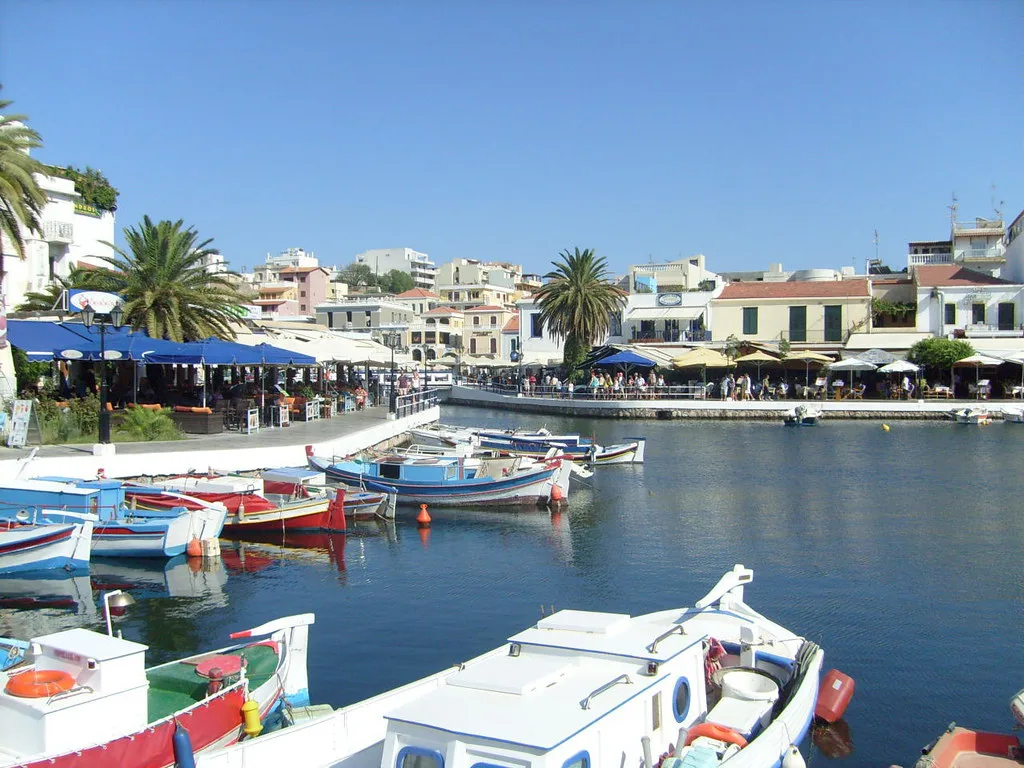
The town end of the journey is easy to picture too. Agios Nikolaos curves around its own small lake and harbour, and the road up to Kritsa climbs away from that waterfront into olive country. Read up on what else the town holds, from the Agios Nikolaos Attractions collected in one place, so you know what you are leaving behind for a half day in the hills.
How to Get There
By car is the simplest option. From Agios Nikolaos the drive up to Kritsa is short and the road is straightforward; from Heraklion it is a longer run southeast, best done as part of a day that includes the village and, if time allows, Ancient Lato. Parking near the church is informal, so arrive expecting to pull off the road rather than find a marked car park with an attendant.
Public transport gets you close but not to the door. Buses run from Agios Nikolaos to Kritsa several times a day, and the nearest stop for the church is in Kritsa village itself. From Kritsa, a taxi to Lato is the convenient option, or a walk of about three kilometres north to the site, according to the Ancient Lato page. For Panagia Kera, which sits on the approach to Kritsa, the final stretch from the village is short. The bus is cheap and the taxi is convenient, and that trade-off is the main decision for anyone without a car.
If you are basing yourself in town rather than inland, the harbour area is walkable and well served. Cruisers who stop in the marina describe it as very close to the centre of Agios Nikolaos, which makes a car rental or taxi pickup for the Kritsa run easy to arrange from the waterfront.
What to See Inside
The draw is the fresco cycles, the painted bands of figures and scenes that cover the interior walls. Rather than trying to decode every panel, pick out the recurring figures: the Virgin Mary, the Pantocrator image of Christ that traditionally fills a church dome or upper vault, and the ranks of saints along the lower walls. Frescoes of this age were painted onto wet plaster, so they sit in the wall rather than on top of it, which is why damage and loss are part of what you see.
Good conservation practice usually means low light and no flash inside painted churches, and many such sites restrict photography or tripods. The specific rules for this church are set on site rather than published in the travel sources, so plan to ask at the entrance and to carry no expectations of photographing the paintings. Bring binoculars or simply stand close to see detail that photographs would flatten anyway.
Read the walls as a sequence rather than a checklist. Narrative scenes tend to run in order along the upper registers, with individual saints below, and the placement tells you what the painters wanted a congregation to see first. Give yourself permission to look at three or four scenes properly instead of attempting every figure.
How Long to Allow
The church itself is a compact building, so the visit is short: think in terms of time spent looking rather than distance covered. Most travellers will spend a modest stretch inside and around the outside walls, and the total stop is easily folded into a morning or afternoon that also includes Kritsa village. If you are a slow reader of painted programmes, add time; if you are passing through, it can be a brief pause.
Pairing the church with the village changes the shape of the day. Kritsa has narrow streets and shops to wander, and the church sits on its approach, so combining the two on foot is realistic for anyone reasonably mobile. The alternative trade-off is driving on to the Lasithi Plateau instead of lingering in the village, which suits travellers more interested in landscape than in village streets.
Opening Hours and Tickets
No source in hand gives opening hours or an admission price for Panagia Kera itself, so this guide will not guess. Churches of this type in Crete are often kept locked outside visiting periods and opened by a custodian, which means a published timetable is not always reliable. Check with the local ephorate of antiquities or the ticket office before you drive out, and ask whether any weekday closure applies on the day you plan to visit.
Do not confuse the church's arrangements with those of the archaeological site above Kritsa. Ancient Lato publishes its own summer and winter hours of 08:30 to 15:30 with Tuesday and major holiday closures, and an adult ticket with a reduced rate for eligible visitors, and its page lists phone numbers for enquiries. Those figures belong to Lato, not Panagia Kera, so use them only to plan the second half of your day.
Nearby Stops Worth Adding
Ancient Lato is the obvious companion sight, a Doric hilltop city above Kritsa with views over the Mirabello Bay and as far as Agios Nikolaos. The site is roughly 11 kilometres from town and about a 20-minute drive, and its own page is candid about constraints: no WC, no facilities for visitors with disabilities, no wi-fi, and uneven ground. The same page notes that most visitors stay up to an hour, which is a fair allowance for the climb through the gate to the agora.
Back in Agios Nikolaos, the town's own sights fill an afternoon: the small church dedicated to the town's patron, the local archaeological collection, and the circular lake ringed by bars and restaurants. The Archaeological Museum of Agios Nikolaos is worth checking for its own opening arrangements before you build a plan around it, since small regional museums keep their own schedules. And if you want a break from ruins and paintings, the church of agios nikolaos in the town centre is a quick, free stop.
The lake at the centre of town is a natural end to the day, since it sits a short walk from the information centre and is lined with places to eat. Its dimensions are modest but memorable: a circular basin 137 metres across, joined to the sea by a canal dug by the French army in 1870, with a recorded depth of just under 49 metres. A small park above it gives the panoramic view, and the lights on the water make the evening version of the walk the better one.
Practical Tips and Trade-Offs
Footwear matters more than you might expect. The ground around the church and on the path up to Lato is uneven, and the advice published for the Lato site — sturdy shoes with grip, sun protection and your own water — applies just as well to the church and the road between it and the village. There are practically no facilities at either spot, so plan food and drink for Kritsa or for town.
Timing is the other lever. A midday visit in summer puts you on hot, shadeless ground with the harshest light, while morning tends to be cooler for the walk and easier for parking on the approach road. If you have a car, the trade-off is simple: an early start buys you the church and Lato before the heat, at the cost of leaving Agios Nikolaos before its own sights open.
Finally, weigh the bus-plus-taxi plan against hiring a car. Without wheels you are limited to what you can reach from the Kritsa stop, which makes the church and the village the realistic pairing; with a car you can add Lato and swing on toward the plateau. The full set of Agios Nikolaos Attractions guides is a useful place to map the rest of the day.
Before You Drive Up to Kritsa
Panagia Kera rewards a short, well-planned stop: a small Byzantine church near Kritsa whose painted walls are the reason to go, with the village and Ancient Lato close enough to fill the same half day. Go early if you are walking, take the car if you want to add the hilltop site, and don't count on facilities. Confirm the current opening arrangements with the local ephorate or ticket office before setting out, since no reliable timetable for the church is published in the usual travel sources.
Explore more Agios Nikolaos sauna guides
Frequently Asked Questions
Where is Panagia Kera Church?
It stands near the village of Kritsa in the Lasithi region of eastern Crete, in the foothills of the Dikti Mountains southeast of Heraklion and above Agios Nikolaos. It sits on the approach to the village rather than inside it, so navigate to Kritsa and look for local signage rather than a street address.
How do you get to Panagia Kera from Agios Nikolaos?
The easiest way is by car: the drive up to Kritsa is short and the road is straightforward. Public buses run from Agios Nikolaos to Kritsa several times a day, but the nearest stop is in the village, so the final stretch is a taxi or a walk of roughly three kilometres.
What frescoes are inside Panagia Kera?
The interior is painted with cycles of Byzantine wall paintings rather than left as bare stone. Look for the Virgin Mary, the Pantocrator image of Christ in the upper vault, and rows of saints along the lower walls, plus narrative scenes running in sequence along the upper registers.
How long does a visit to Panagia Kera take?
The church is a compact building, so the visit is short and is measured in looking time rather than walking distance. It works best folded into a half day that also covers Kritsa village, with Ancient Lato as an optional extra that most visitors allow up to an hour for.
Is there an entrance fee for Panagia Kera?
No published source gives an admission price or a reliable opening timetable for the church. The hours and ticket prices published for Ancient Lato above Kritsa apply to that archaeological site only, not to the church. Check current details with the local ephorate of antiquities or the ticket office.
What is nearby Panagia Kera Church?
Kritsa village is the nearest stop, and Ancient Lato lies on the hill above it, around 11 kilometres from Agios Nikolaos with views over Mirabello Bay. Back in town, the circular Lake Voulismeni, the local archaeological museum and the town church make an easy afternoon.
What does Panagia mean?
Panagia is the everyday Greek Orthodox name for the Virgin Mary, so a church with this dedication is dedicated to her. The additional word Kera is the local epithet attached to this particular shrine near Kritsa.