
Oia, Santorini: What the Cliffside Village Is Really Like
Oia is the whitewashed village on the northern tip of Santorini, built along the caldera rim and known for windmills, blue-domed churches and a view across the flooded volcanic basin. It is also the island's most crowded single place, with around 1,000 permanent residents and millions of visitors arriving across Santorini each year. This guide covers the village itself and the bay directly below it, so you can decide how much of your trip it deserves and plan the hours that work.
What Oia Is and Why It Looks the Way It Does
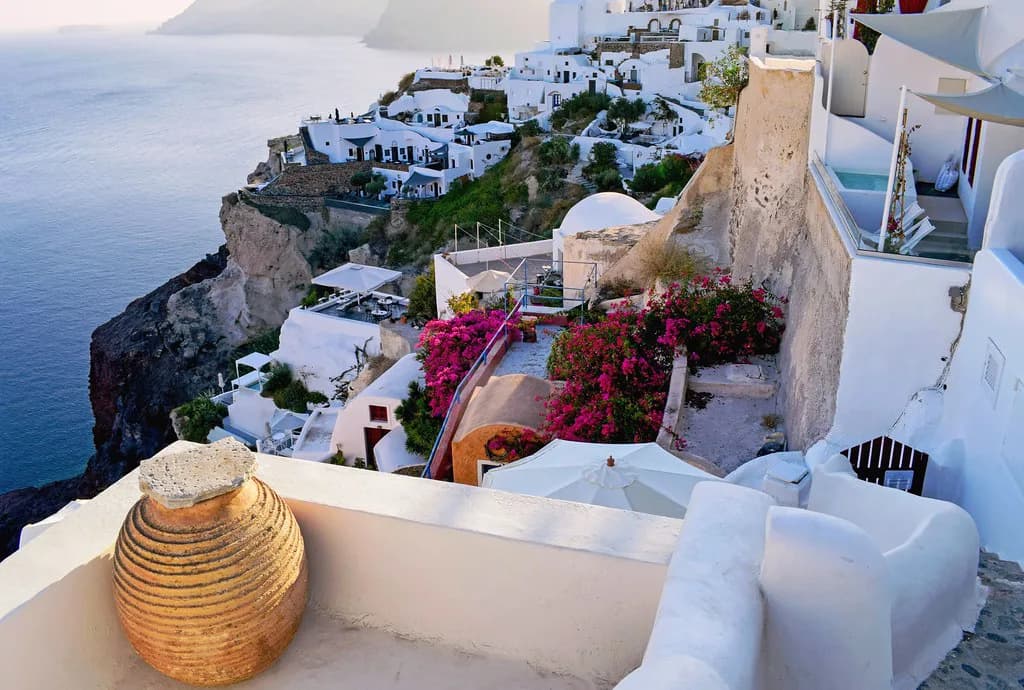
Oia, also written Ia, is a small village and former community on the islands of Thira, better known as Santorini, and Therasia in the Cyclades. The part visitors picture is the caldera edge, a ribbon of cave houses, churches and terraces stacked down a cliff that drops to the sea. Because the village clings to that slope, almost every lane is narrow, stepped and shared by residents, guests and day visitors at once.
The settlement is most often described as having roughly 1,000 permanent residents, while Santorini as a whole is estimated to receive more than 3 million tourists a year. That ratio explains the texture of a visit: the scenery is genuinely extraordinary, but the lanes were never built for the volume that fills them by late morning. Plan around the rhythm rather than expecting to have the place to yourself.
Who Oia Suits, and Who It Does Not
Oia is a natural fit for romantics, honeymooners and anyone who wants a caldera view from a balcony. It rewards travelers who accept that the village is a polished, highly popular version of a Greek island town and who are willing to pay for position. Two nights or more lets you see the sunsets without turning every evening into a scramble for space.
If crowds are the thing you most want to avoid, the honest advice from one account of visiting is to skip Oia and head for quieter villages such as Pyrgos, about 30 minutes south, which offers similar whitewashed alleys and blue doors with a fraction of the foot traffic. That is a real trade-off, not a compromise: you give up the postcard composition and gain room to walk. Staying somewhere other than Oia on Santorini also tends to cost less, which buys more slack in the rest of the trip.
When to Arrive: Morning Versus Midday
The single most useful timing rule is to be in Oia before 10am in high season. One traveler's comparison puts the difference between 10:30 and 11:30 in the morning at roughly a thousand people, and the busloads arriving around midday are what transform the narrow lanes into a slow-moving queue. Early morning also puts the light on the caldera side, which is what most people came for.
If you are driving, arrive early for a second reason: parking in and around Oia is limited and gets chaotic once the coaches start unloading. The alternative is to come by bus from Fira and walk in, which removes the parking problem entirely. Either way, aim to walk the main lanes and reach the viewpoints before the tour groups settle in.
September is worth considering as a shoulder-season window. One five-night stay in early September reports warm, sunny weather, swimming still possible, and no sense of the village being overwhelmed once the peak European August holidays had passed. Conditions vary year to year, so treat that as a pattern to check against your own dates rather than a guarantee.
Sunset in Oia: The Castle, the Windmills and the Alternatives
The classic sunset spot is the area around the Oia Castle, which looks out over the village windmills and down toward Ammoudi Bay. It is popular precisely because the composition is the one on every cover, and it fills accordingly; one account of the village notes that securing a sliver of space for the perfect shot can mean staking out a position hours ahead. If that sounds like work rather than pleasure, you are not obliged to do it.
A calmer strategy is to book a table with a view and let the sunset come to you. Restaurants and cliff-side cafes with caldera terraces fill fast for the golden hour, so reserve ahead rather than arriving hopeful, and confirm the booking directly with the venue since policies differ. Dining at the water's edge in Ammoudi Bay is another version of the same idea: one traveler had a taxi driver call Sunset in Ammoudi on arrival day to secure a table by the boats, which is a reminder that reservations there are expected rather than optional.
Santorini's west side faces the sunset almost everywhere, so Oia is not the only place to watch it. One family's verdict after visiting was to skip the Oia sunset crush and take a table at Santo Winery instead, a short drive away. The trade-off is simple: you lose the windmills in the foreground and gain room to breathe and a glass in your hand.
The Blue Domes and the Village Lanes
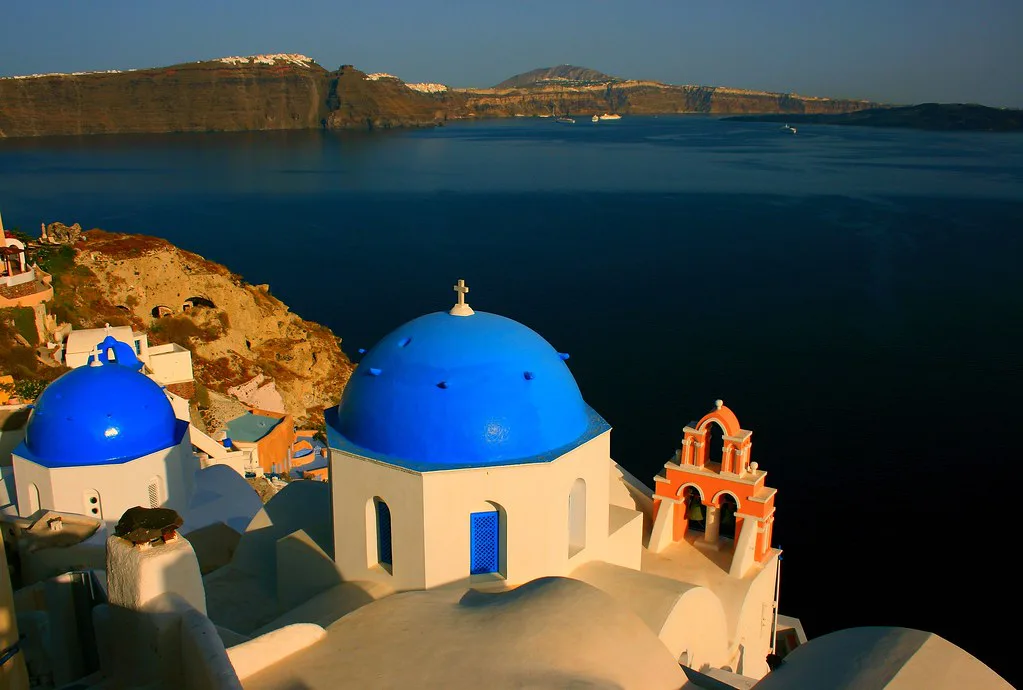
The three blue domes are Oia's other famous image, and they are easy to locate by searching for Domes Viewpoint or simply Viewpoint on a maps app, which will pull up the established spots. Arriving early matters here too, since these are small terraces rather than viewing platforms. One traveler had a clear view over the domes from a terrace lunch at Lotza, which is a reminder that a table can be a better vantage point than a ledge.
Beyond the two headline sights, the pleasure of Oia is walking: narrow lanes, boutiques, and side alleys that lead away from the main flow. Keep in mind that these are people's homes and the only route between the upper village and the bay. Step aside to let residents and porters pass, avoid blocking doorways for photos, and you will find the village far more agreeable than the people treating it as a set.
Ammoudi Bay Below Oia
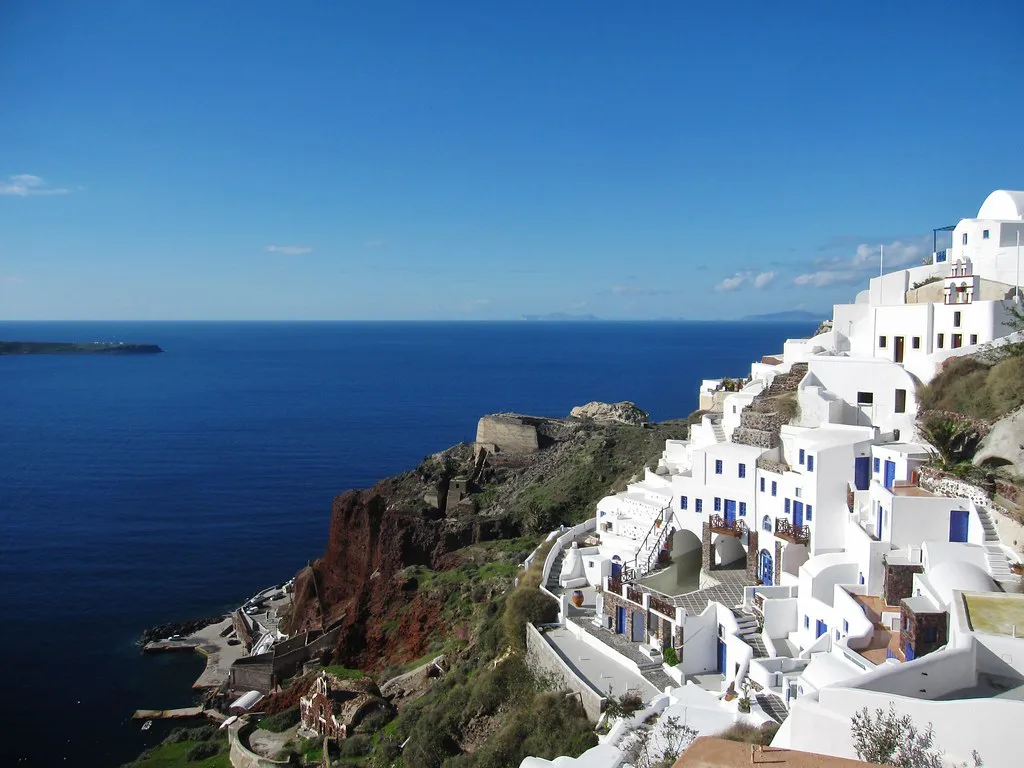
Oia has two levels. Most exploring happens on the cliff top, but the Oia Steps lead down to Ammoudi Bay, a small harbour at the foot of the cliff with waterfront restaurants and rocking boats. The climb back up is genuinely demanding, so plan the descent for a cooler part of the day and allow more time for the return than you think. Anyone with mobility limitations should treat the stairs as a serious constraint rather than a minor inconvenience.
From the bay, a short walk continues to Ammoudi Beach, which is less a sandy beach than a rocky landing where you find a flat spot for a towel and get into the water. It is a practical swim stop rather than a lounger-and-umbrella scene, so bring what you need and expect uneven ground. The bay's best-known table is Sunset in Ammoudi, where a seat by the water is the whole point and reservations are needed.
Eating in Oia: Terraces, Wine Bars and the Bay
Oia's restaurant scene splits roughly into three: cliff terraces with caldera views, village-level tavernas and wine bars, and the fish-led tables down in Ammoudi. The view premium is real, and it is paid for in both price and advance planning. A reasonable approach is one splurge meal with a view and the rest of your eating at village level or in the bay, where the cooking is the draw rather than the angle. If you are island-hopping, the same calculus applies elsewhere, so it is worth reading where to eat in Naxos before you book the next ferry.
Among the named places in the village, Lotza serves Greek food on a terrace with a view of the blue domes, described as affordable in one account, and Oia Oenosart is a local wine bar that a visitor returned to twice for dinner. Neither publishes details here, so check current opening days and book ahead in season, especially for any table you want at sunset.
For a different setting, Kookoo Bar Lounge is where one traveler ate breakfast before catching the bus between Oia and Fira, which makes it a useful early-morning stop if you are arriving by public transport. Greek menus in the village run to the familiar: tomato fritters, fava, grilled fish and village salads, all ordered to share. Prices vary widely between the cliff terraces and the back lanes, so read the menu posted at the entrance before sitting down.
Where to Stay in Oia
Oia is effectively a small resort town, with the cliffside packed with hotels and private rentals and a real premium attached to a caldera view. Staying up on the cliff buys you sunsets from your own terrace and the village on foot at dawn; it also means paying for position and hauling luggage through stepped lanes. Two nights is the minimum that makes the splurge feel worthwhile rather than rushed.
At the other extreme, Anelia House in Ammoudi Bay is a two-level apartment at the bottom of the cliff, described as a more affordable and private option for couples. The catch is access: reaching the cliff top means climbing the Oia Stairs, so it is a poor fit for anyone with physical limitations. As reported, it can be booked for under 300 euros per night depending on the time of year, but treat that as one traveler's figure rather than a live rate.
Le Cote Oia sits at the very edge of the village, a studio with a private balcony and hot tub and no passing foot traffic, which suits honeymoons and anniversaries. It was reported at under 500 euros per night, again season-dependent, so it is the pricier end of the comparison. Weigh privacy against convenience: the edge of the village is quieter but further from the lanes and the steps down to the bay.
Getting to Oia and Around
Oia sits at the northern end of Santorini, and the standard approach from the main town is the public bus between Fira and Oia. Buses remove the parking problem, which is the main argument against driving yourself in peak hours. For broader orientation on where the island's main towns sit relative to each other, the guide to Fira, Santorini covers the capital just south along the caldera rim.
Driving gives you flexibility for the rest of the island. One family rented a small five-seat car for about 56 dollars per day and used it to move between villages at their own pace, which is a reasonable benchmark rather than a current quote. The catch remains parking at Oia itself, which is limited and busiest once the morning coaches arrive.
The third way in is on foot, along the cliff path from Fira to Oia. It runs about 10 km and takes roughly three hours or more depending on pace, passing through Imerovigli and past small churches, with rocky sections that call for proper shoes. If you want the walk plus a sunset in Oia, start early enough to arrive with time to spare, and consider walking the other direction to finish in Fira.
How Long to Give Oia
A day trip covers the essentials: two or three hours is enough to walk the lanes, see the domes and have a meal if you arrive by bus from elsewhere on Santorini. If you want the village at its best, though, spend the night or two up on the cliff, when the day visitors leave and the lanes empty out. That contrast between late morning and late evening is the argument for staying over.
If you have already allocated your nights elsewhere, the pattern still works: arrive before 10am, take the viewpoints first, eat and walk down to Ammoudi in the middle of the day, then leave before the sunset crowds converge. It is a tighter day than staying in the village, but it avoids the worst of both the midday buses and the evening crush.
Practical Notes on Steps, Luggage and Bookings
Oia is a village of stairs, and that shapes every practical decision: which property you book, what you pack, how far you plan to walk. If your accommodation is below the cliff top or in Ammoudi, ask directly about luggage handling and access before confirming. The same applies to any sunset dinner reservation, since a caldera-facing terrace is a finite resource on a busy evening.
Two reminders are worth keeping: ferry and bus schedules change by season, so confirm your onward transport before you commit to a sunset in Oia, and restaurant booking policies vary by venue, so contact the place itself rather than relying on a listing. For a wider look at what else the island offers, from beaches to archaeological sites, the Santorini Attractions: 7 Visitor Guides gives the ranges to plan around.
Plan Your Visit
Oia is worth seeing and worth arguing about. The view is as good as its reputation, and the village is at its best early in the morning or after the day-trippers leave. The question is not whether to go but how: arrive before 10am, decide deliberately where to watch the sunset, and reserve any caldera table in advance.
If you want the postcard and can accept the crowds, stay a couple of nights and treat Ammoudi Bay as part of the trip. If crowds would spoil it, consider Pyrgos or another base and visit Oia once, early, before the buses. Either way, plan the steps, book the sunset table, and check transport times before you go.
Explore more Santorini sauna guides
Frequently Asked Questions
Is Oia, Santorini worth visiting?
For most first-time visitors, yes, but with a plan. The caldera views and the blue-domed churches are genuinely remarkable, and the village is small enough to walk in a morning. The trade-off is heavy midday crowding: aim to arrive before 10am in high season and expect the lanes to be busy from late morning.
What time should you arrive in Oia to avoid crowds?
Before 10am in high season is the practical rule. Accounts of the village describe a steep jump in visitor numbers between 10:30 and 11:30 as coach groups arrive, and parking becomes chaotic at the same time. Early morning also gives you the viewpoints with fewer people in your photos.
Where do you watch the sunset in Oia?
The area around the Oia Castle, looking toward the windmills and Ammoudi Bay, is the classic spot and fills up hours ahead. Alternatives include booking a caldera-view restaurant table in the village or eating down in Ammoudi Bay. Santorini's west side faces the sunset from many points, so Oia is not the only option.
How do you get down to Ammoudi Bay from Oia?
On foot, via the Oia Steps that descend from the village to the small harbour at the base of the cliff. The climb back up is demanding, so allow extra time and carry water, and skip the descent if stairs are a problem for you. The bay has waterfront restaurants and a rocky swim spot nearby.
Is Oia or Fira better to stay in?
Oia trades convenience and a wider choice of everyday services for the caldera view and the postcard lanes, while Fira is the larger town with the main bus connections. Staying in Oia suits romantics and anyone who wants sunsets from a balcony; staying in Fira makes moving around the island easier.
How long do you need in Oia?
A couple of hours covers the lanes and the main viewpoints on a day trip. To experience the village after the crowds leave and to catch more than one sunset, plan at least two nights. Staying longer only makes sense if a view from your own terrace is the point of the trip.
Can you walk from Fira to Oia?
Yes. The cliff path runs about 10 km and takes roughly three hours or more depending on pace, passing through Imerovigli and past small churches with rocky sections underfoot. Wear proper shoes and start early in warm weather, or walk the other direction and finish in Fira.
Do you need reservations for restaurants in Oia?
For caldera-view tables at sunset and for waterfront restaurants in Ammoudi Bay, booking is strongly advised and sometimes expected. Booking policies differ by venue, and opening days can change with the season, so contact the restaurant directly rather than relying on a listing.