
Fira, Santorini: What to See, Where to Eat, and Who It Suits
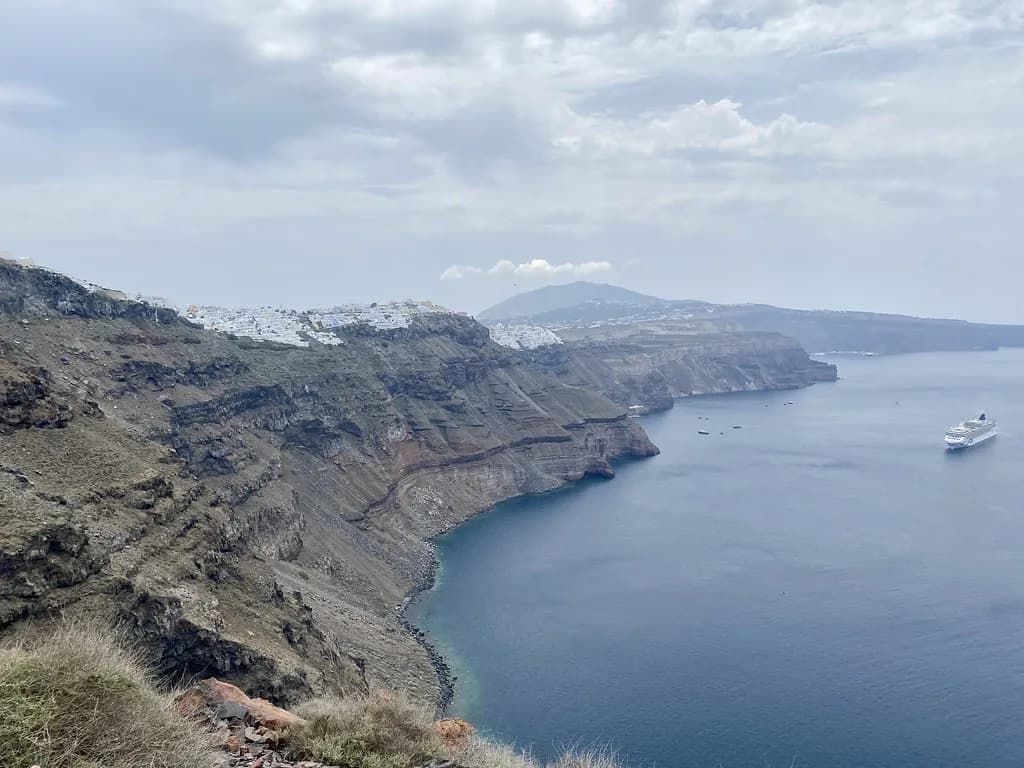
Fira, also written Thera, is the capital of Santorini and sits along the top of the caldera, the flooded volcanic basin that gives the island its famous cliff views. It is a compact, busy town with a genuine centre rather than one terrace viewpoint, and it works well as a base because restaurants, shops and island bus services are all clustered within walking distance. This guide covers what to see inside the town boundary, where to sleep and eat, and the trade-offs that decide whether Fira is right for you.
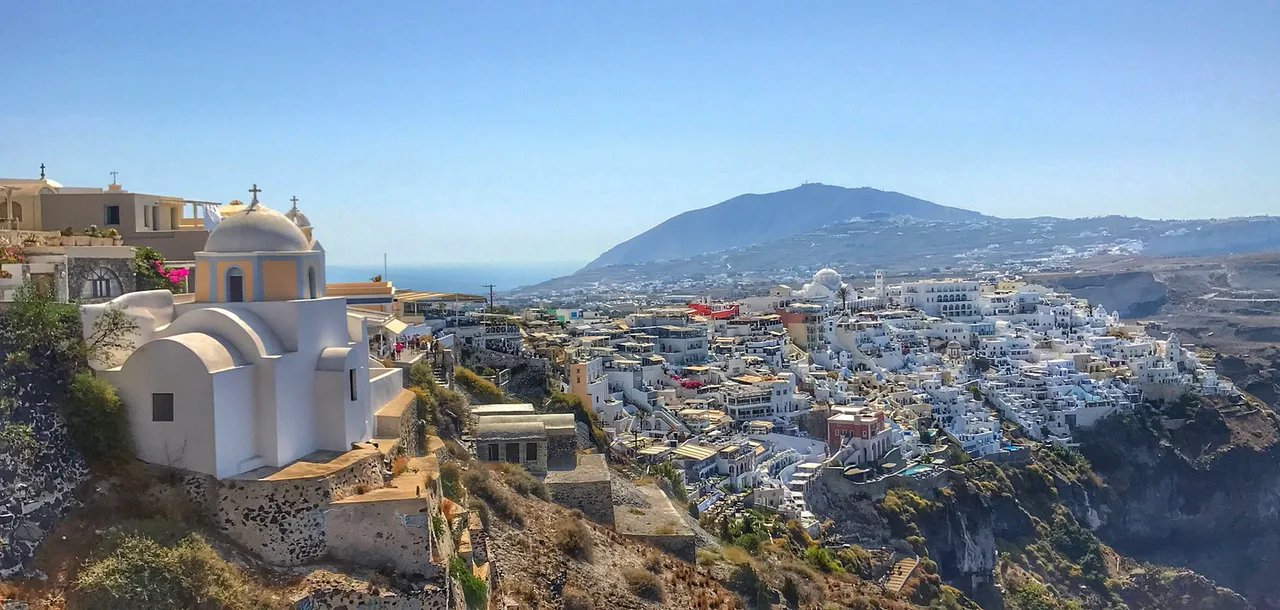
Most of Fira's sights are linked by the caldera walkway, the paved path that hugs the cliff edge past whitewashed houses and churches. Two pedestrian areas do much of the everyday work: Ipapantis Street for shops and Fira Main Square for cafes, restaurants and street life. Below the town, the Old Port of Gialos is reached on foot down a steep stairway or by cable car, and most boat excursions leave from there.
What kind of place Fira is
Fira is the administrative heart of Santorini and one of the island's main places to stay, not a village that empties in the evening. The caldera rim runs through it, so cliffside hotels, terraces and viewpoints sit directly above the water while the inland side holds ordinary town streets, schools and services. The result is a place with more daily rhythm than the postcard villages: you can buy groceries, catch a bus and choose between a cheap lunch and a formal dinner without leaving the centre.
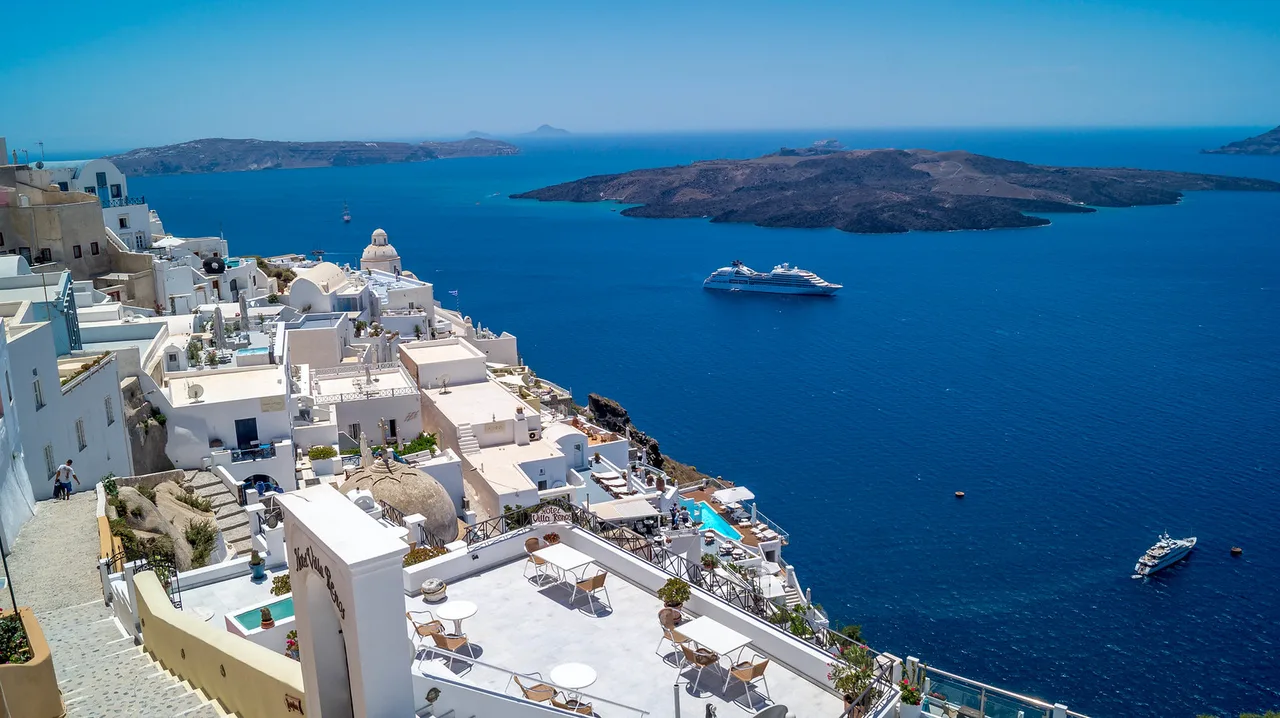
The setting is volcanic. Santorini is the southernmost of the Cyclades islands and is really a group of five, with the main island of Thira ringed by Thirasia, Aspronisi and the two Kameni islets formed by eruptions. Fira is one of the places promoted for the caldera view, alongside Oia, Imerovigli, Firostefani and others. That geography explains both the attraction and the crowds: the town has a front-row seat over the water, and everyone wants to stand on it at once.
Fira does not have a beach on its doorstep, so anyone who wants to swim daily will be travelling to the coast. The island's beaches are listed separately, at places such as Kamari, Perissa, Perivolos and the Red Beach, which means a bus ride rather than a short walk from your room. If sand and sea are the priority, base in Kamari on the coast and visit Fira as a day trip instead, or compare it with neighbouring Naxos, where the beaches sit beside the main town in our Naxos food guide.
Who Fira suits and who it does not
Fira suits travellers who want choice and convenience: many restaurants across budget ranges, souvenir shops along a pedestrian lane, and the main bus station for connections around the island. It is also the obvious base for anyone without a car, since services to Oia and the beaches leave from here and the airport is a short shuttle ride away. Solo travellers, couples splitting a short break and anyone planning day trips will find the logistics simple.
It suits people less well if the goal is silence on a caldera terrace. The centre is lively, the walkway gets crowded once day visitors arrive, and the town is a stop for cruise passengers. Travellers chasing quiet, or a beach within walking distance, are better off in a coastal village or a smaller caldera settlement and should treat Fira as an excursion. Those who want the caldera without the bustle can stay in neighbouring cliff towns and walk in.
Orientation: walkway, Ipapantis Street and the Main Square
Think of Fira in three layers. The caldera walkway traces the cliff edge and connects the churches, viewpoints and the Three Bells. One level inland, Ipapantis Street is the pedestrian shopping lane, lined with souvenir shops, handicrafts and small galleries; prices here run higher than elsewhere on the island, so compare before buying. Fira Main Square is the social hub, surrounded by cafes and restaurants and often animated by street performers and artists. Below everything, the Old Port sits at the foot of the cliff.
The practical consequence is that distances are short but vertical. Moving between the walkway, the square and the port involves stairs and slopes, which matters when you are carrying luggage or travelling with someone who finds steps difficult. Choose accommodation according to how much climbing you want each day, and ask the property directly whether porters or a vehicle can reach the door.
The caldera walkway and the Three Bells of Fira
The Three Bells of Fira stands on the northern side of town and is reachable on foot from the centre along the caldera walkway. The bell tower is what remains of the Catholic church of the Assumption of the Virgin Mary, destroyed in the 1956 earthquake that damaged much of Santorini. The blue dome, three bells and the sea and volcano behind them have made the spot the town's signature image.
Timing is the main decision. Early morning is calmer, because the walkway fills as day visitors arrive and stays busy through the middle of the day. As you climb towards the bells, look back: the view over Fira's domed churches and whitewashed houses, with the southern part of the island beyond, is the reason to walk this path rather than photograph it from one spot.
Two cathedrals and three separate sites
The Holy Cathedral of Saint John the Baptist sits on the cliff edge overlooking the caldera, with a dome and clock tower painted in yellow, white and blue. It is an easy stop on the walkway walk and a quiet place to step out of the summer heat, with frescoes inside. It is a working church, so dress and behaviour should follow the usual respect for Orthodox places of worship.
The Candlemas Holy Orthodox Metropolitan Cathedral, on the southern edge of the centre, is a large Greek Orthodox church known for Byzantine-style architecture, frescoes and mosaics. Its history dates to the nineteenth century, and it was rebuilt after the 1956 earthquake. It sits in the pedestrian area, is free to enter and is described as open to visitors year-round; hours can still change on feast days, so check locally before planning a visit around it.
Down to the Old Port (Gialos)
Gialos, the Old Port, lies directly below Fira and served as the island's main commercial harbour until a few decades ago, when it was moved south. It is now given over to restaurants, cafes and shops by the water, and most boat tours departing from Fira leave from here. Two routes connect it with the town: a steep set of stairs, or the cable car from the Fira Cable Car Station.
The cable car is the low-effort option and gives a caldera view on the way down. The guide that documents the route puts the one-way ride at roughly 10 EUR per person, with departures every 10 to 20 minutes, but treat that as indicative and confirm the current fare and timetable at the station before you commit. The stairs cost nothing and suit anyone comfortable with a long climb, though the ascent in summer heat is the harder half of the trip.
Walking to Imerovigli along the rim
From the Three Bells you can continue north along the caldera walkway to Imerovigli, a cliffside town roughly 30 minutes away on foot. The route is exposed, with no shade along the way, so start early, carry water and cover up rather than attempting it in the midday heat of summer. The walk is the point as much as the destination, since the path keeps the caldera in view almost throughout.
At the far end, Imerovigli has the Church of the Resurrection of the Lord and the Skaros Venetian Fortress, a thirteenth-century cliffside stronghold. Skaros Rock is a further short hike for a wider view of the coastline; allow half a day if you want to combine the walk with the fortress. Anyone wanting more walking can continue on the long cliff route towards Oia, which is described as taking more than three hours.
Where to eat around Fira Main Square and Ipapantis Street
Fira Main Square is the most convenient place to eat in town, and opinion on it divides. It offers restaurants and cafes across a wide range of budgets, from street food such as gyros for a few euros to sit-down seafood, but it is also described as pricey for what you get. The square is lively, with performers and a constant flow of people, so it suits a sociable lunch or dinner rather than a quiet meal.
Food terms are worth knowing before you order. Gyros is meat, usually pork or chicken, shaved from a vertical rotisserie and wrapped with salad, onion and tzatziki, a yogurt, cucumber and garlic dip. Souvlaki is skewered grilled meat, often served in a pita or on a plate. For a cheaper meal, look to the streets behind the square and the pedestrian lanes rather than the tables with caldera views.
Ipapantis Street is for browsing rather than eating: souvenirs, handicrafts, local artists' paintings and figurines of figures in traditional dress. Prices there are higher than elsewhere on the island, so treat it as a place to compare and buy something specific rather than to shop casually. Many kitchens in the centre run long hours in season, but individual opening days and closures are not published in one place; check the restaurant's own listing or ask at your accommodation for the current situation.
Where to stay in Fira
Fira covers the full range of accommodation. For budget travellers, Bedspot Hostel offers dorm beds; for mid-range, Villa Roussa offers double rooms; and at the top end, Villa Bordeaux offers high-end double rooms. Each is named by the source as representative of its price band rather than as a single recommendation, and rates vary sharply by season, so compare dates directly with the property before booking.
Location within town matters more than star rating. Caldera-edge rooms buy the view and usually cost more, while rooms set back from the rim are cheaper and quieter but leave you walking to the viewpoint. In Fira you can also choose between the bustle of the centre and the calmer northern side towards the Three Bells. Whichever you pick, ask about steps, luggage access and whether a vehicle can reach the entrance.
Getting to Fira
By air, fly into Santorini Airport and take the shuttle bus, which reaches Fira in about 20 minutes; a private transfer is the alternative for heavy luggage. By sea, ferries from the Port of Piraeus are the usual route from Athens, and the port bus into Fira takes roughly 20 minutes. The same guide puts Seajets fast ferries at about 89.70 EUR per person with a crossing of around five hours, and Blue Star Ferries at about 46.50 EUR with a journey of six to nine hours that can run late; these are indicative seasonal numbers, and reserve a seat on the slow ferry.
Getting around and onward from Fira
The KTEL local buses link the island's towns, and the Fira to Oia service is the most useful for visitors. It runs from early morning until around 9:20 PM, roughly every 30 to 60 minutes, takes about 25 minutes through Imerovigli and tickets are published at around 2.20 EUR per person. Buses leave from the main bus station in Fira, and the exact timetable changes with the season, so check it on arrival.
Oia is even more crowded than Fira, and the practical advice is to go early or accept the crush. The lookout at the tip of the peninsula gives the widest view over the whitewashed houses and coastline, and it is less congested than the village lanes because most people stay in the centre. Use the guide to Oia, Santorini to plan where to walk and where to eat down at Ammoudi Bay before you set off.
Walking between the caldera towns is free and often faster than the road, but the full Fira to Oia hike on the cliff path takes more than three hours. Do it only if you are prepared for exposed terrain and carry enough water, and consider a one-way bus back rather than committing to the return on foot. For shorter outings, the walkway to Imerovigli is the better-value use of an afternoon.
Practical trade-offs and crowd timing
Fira's central trade-off is view versus value. A room or table on the caldera edge costs more and delivers the panorama; a room or meal one street inland costs less and delivers the same town. The square and back streets give cheaper eating, while the rim and the walkway command a premium. Decide which you want before you book, because Fira lets you have either but rarely both for the same money.
Crowds follow a predictable pattern. Day trippers arrive mid-morning and build through the afternoon, so the Three Bells and the walkway are calmest early. Cruise passengers come ashore in waves, and the cable car queues reflect that, which is a reason to go down to the port early or late. Sunset draws everyone rim-side, and one way to avoid the crush is to watch it from the water on a boat tour that departs from Gialos.
Two checks are worth making before you commit. Confirm the current cable car fare and departure frequency, and confirm that any hotel or restaurant you have chosen is open for your dates, since seasonal patterns on the island mean some businesses operate only part of the year. Beyond that, the town's small scale does the planning for you.
Plan Your Visit
Fira rewards travellers who treat it as a working town with a spectacular edge rather than a single photograph. Walk the caldera path early, see the Three Bells before the day crowds, step into both cathedrals, and decide in advance whether the cable car or the stairs suits you for the descent to Gialos. Book a caldera-edge room only if the view is worth the premium to you; otherwise stay a street back and spend the difference on dinner.
Use the bus station for Oia and the beaches, keep the Imerovigli walk for a cool morning, and leave sunset to the water if the rim is too busy. Compare Fira with its neighbouring areas before you commit to a base, since the island's caldera villages and coastal resorts offer very different stays.
Explore more Santorini sauna guides
Frequently Asked Questions
Where is Fira and is it the same as Thera?
Fira is the capital of Santorini and is also called Thera, the older name for the island itself. It sits on the caldera rim in the southern Cyclades, with cliffside terraces above the water and the main bus station and shops inland from the edge. Most of the town's sights are within walking distance of the centre.
Does Fira have a beach?
No beach sits within the town centre, which is built on the cliff above the caldera. Santorini's beaches, including Kamari, Perissa, Perivolos and the Red Beach, are elsewhere on the island and reached by bus or car. Travellers who want to swim daily should base on the coast and visit Fira as a day trip.
How do you get from Fira down to the Old Port?
Two routes lead down to Gialos: a steep stairway, or the cable car from the Fira Cable Car Station. The cable car is quicker and gives caldera views, while the stairs are free but hard work on the return climb. Confirm the current fare and departure frequency at the station before you go.
How long is the walk from Fira to Imerovigli?
The caldera walkway reaches Imerovigli in roughly 30 minutes from the Three Bells. The route has no shade, so start early, carry water and cover up in summer. At the far end you reach the cliffside town, its church and the Skaros fortress.
Is it better to stay in Fira or Oia?
Fira is the larger, busier capital with more restaurants across budget ranges and the island bus station, which makes it easier for day trips without a car. Oia is more crowded with day visitors and further from the main transport hub. Choose Fira for convenience and choice, or a quieter caldera village if you want to avoid the bustle.
How do you get to Fira from the airport or ferry port?
A shuttle bus connects Santorini Airport with Fira in about 20 minutes; a private transfer is the alternative with heavy luggage. Buses timed to ferry arrivals also run from the port into town. Check current timetables locally on arrival, as services change with the season.